Speakers 

Emily Benson, Employee Success Officer, Bensonwood
Emily Benson is the employee success officer at the homebuilding firm Bensonwood, where she leads strategic planning and workforce development. Before joining Bensonwood, Benson spent 12 years as a business management professor at Keene State College, working closely with students on career readiness, applied management, and workforce trends. She launched Bensonwood’s apprenticeship program in 2023 and continues to expand it through new cohorts, trainer support, and partnerships with regional schools and industry organizations. Her work focuses on creating realistic entry points and long‑term career paths in construction. Benson supports company planning efforts, helping leadership teams clarify priorities, connecting staffing decisions to business needs, and preparing for future growth. Outside of Bensonwood, she serves on several regional housing and economic development boards, contributing to efforts that strengthen housing access, workforce readiness, and the local economy. Benson holds an MBA from Plymouth State University and a PhD in management from UMass Amherst, where her work focused on the intersection of organization development, career pathways, and regional economic development initiatives.
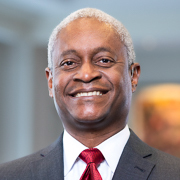
Raphael Bostic, Former President and CEO, Federal Reserve Bank of Atlanta
Raphael Bostic is the former president and CEO of the Federal Reserve Bank of Atlanta, having served in that role from 2017 until February 2026. He was responsible for all the bank’s activities, including monetary policy, bank supervision and regulation, and payment services, and served on the Federal Open Market Committee. From 2009 to 2012, Bostic was the assistant secretary for policy development and research at the U.S. Department of Housing and Urban Development. In that capacity, he led a 150-person interdisciplinary team with broad expertise in housing, community development, and economic development. He also previously held the Bedrosian Chair and served as the chair of the Governance, Management and Policy Process Department at the University of Southern California Sol Price School of Public Policy. Bostic’s work has appeared in leading economic, public policy, and planning journals. He graduated from Harvard University with a combined major in economics and psychology, and he earned his doctorate in economics from Stanford University.
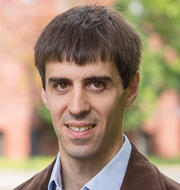
Gabriel Chodorow-Reich, George Fisher Banker Professor of Economics, Harvard University
Gabriel Chodorow-Reich is the George Fisher Baker Professor of Economics at Harvard University, a research associate at the National Bureau of Economic Research, a visiting scholar at the Federal Reserve Bank of Boston, and co-editor of American Economic Review: Insights. His research focuses on macroeconomics, housing, finance, and labor markets. He has published articles in the leading economics and finance journals, and his research has been covered by outlets including the Economist, the Financial Times, the New York Times, the Wall Street Journal, and the Washington Post. He has also been a contributor to the New York Times opinion page and is frequently quoted in national news stories covering the economy. From 2009 to 2010, Chodorow-Reich served as an economist on the White House Council of Economic Advisers. He is a 2020 recipient of a Sloan research fellowship. Chodorow-Reich received his AB in social studies from Harvard and his PhD from the University of California, Berkeley.
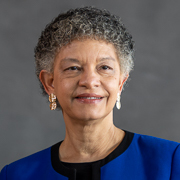
Susan M. Collins, President and CEO, Federal Reserve Bank of Boston
Susan M. Collins is president and CEO of the Federal Reserve Bank of Boston, which is part of the U.S. central bank. She is a participant on the Federal Open Market Committee, which sets U.S. monetary policy. Collins, who took office in 2022, oversees all the Boston Fed’s activities, including economic research and analysis, banking supervision and financial stability efforts, community economic development activities, and a wide range of payments, technology, and finance initiatives. Collins is a widely published international macroeconomist with a lifelong interest in policy and its impact on living standards. She began her career on the economics department faculty at Harvard University and then spent many years dividing her time as a professor of economics at Georgetown University and a senior fellow in economic studies at the Brookings Institution. Prior to leading the Boston Fed, Collins spent 15 years at the University of Michigan, most recently serving as provost and executive vice president for academic affairs and the Edward M. Gramlich Collegiate Professor of Public Policy and Professor of Economics. She previously served for a decade as the Joan and Sanford Weill Dean of the university’s Gerald R. Ford School of Public Policy. In 2025, she was named a distinguished fellow of the American Economic Association. Collins earned a PhD in economics at the Massachusetts Institute of Technology and her undergraduate degree at Harvard.
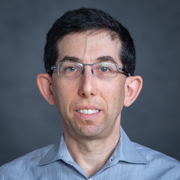
Daniel H. Cooper, Vice President and Economist, Federal Reserve Bank of Boston
Daniel H. Cooper is a vice president and economist in the Federal Reserve Bank of Boston Research Department, where he heads the Household Decision-making group. Cooper regularly contributes macroeconomic analysis to aid in the monetary policy deliberations of the Boston Fed’s president. His main research interests involve household behavior, although he also focuses on topics related to monetary policy, the labor market, and economic forecasting. Cooper's recent work has centered on the effect of credit access on consumption, measuring sustainable consumption, the impact of monetary policy shocks on consumption, and the impact of the pandemic-related stimulus payments on the expenditures of lower-income, unbanked or underbanked individuals. He is currently working on projects related to student loans, on spending across the income distribution, and on how economic conditions impact retirement decisions. Cooper has a bachelor of arts in economics from Amherst College and a master's and PhD in economics from the University of Michigan.
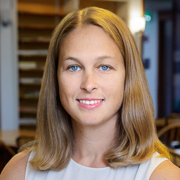
Rebecca Diamond, Martin Feldstein Professor of Economics, Harvard University
Rebecca Diamond is the Martin Feldstein Professor of Economics at Harvard University. Her research spans housing, urban, and labor economics, studying how housing markets, local labor markets, and public policy shape prices, location choices, inequality, and welfare across cities and households. In one line of work, she studies rent control using a San Francisco expansion, showing how landlord responses and supply adjustments reshaped rents and residential mobility. In related work, she analyzes workers’ location choices across U.S. cities, documenting how rising spatial sorting by skill has contributed to widening inequality. Her work combines reduced-form empirical designs with structural models of household location choice, housing supply, and firm behavior, using rich administrative and spatial data to quantify welfare and distributional effects. She is the recipient of the Sherwin Rosen Prize (2024) and the Elaine Bennett Research Prize (2022). Diamond received her PhD in economics from Harvard University and her undergraduate degree in physics and economics and mathematics from Yale University.
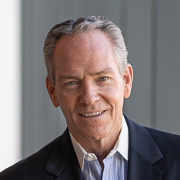
John F. Fish, Chairman and CEO, Suffolk
John F. Fish is chairman and CEO of Suffolk, one of the nation’s leading privately held building contractors. Fish is the former chair of the Real Estate Roundtable, a national public policy advocate for the U.S. commercial real estate industry. He is a founding member and director of the Massachusetts Competitive Partnership, and he is a former chair of the Federal Reserve Bank of Boston Board of Directors. Fish serves on the Real Estate Board of New York, the Partnership for New York City, and the National Business Roundtable. He chairs the Brigham and Women’s Hospital Board of Trustees and serves as vice chair of the Mass General Brigham Board of Directors. He sits on the board of the Feinstein Institutes for Medical Research. Fish also is serving his second nonconsecutive term as chair of the Boston College Board of Trustees. He is the first non-alumnus in the history of Boston College to serve in that role. Fish is a graduate of Bowdoin College.
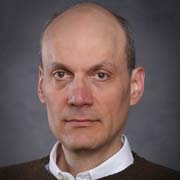
Christopher L. Foote, Principal Economist and Policy Advisor, Federal Reserve Bank of Boston
Christopher L. Foote is a principal economist and policy advisor in the Federal Reserve Bank of Boston Research Department. His research and policy interests include the macroeconomics of the labor market, health economics, and housing. After graduating from the College of William and Mary in 1987, he worked for two years as a newspaper reporter in Harrisonburg, Virginia. He earned a PhD in economics from the University of Michigan in 1996. From 1996 to 2002, Foote taught in the economics department at Harvard University. In 2002, he was named the senior staff economist for macroeconomics at the Council of Economic Advisers, where he was later appointed chief economist. In 2003 and 2004, he served for several months as an economic advisor to the Coalition Provisional Authority in Baghdad, Iraq. He joined the Boston Fed’s research department in 2003. Each spring, he teaches intermediate macroeconomics at Harvard, where he was named a professor of the practice of economics in 2012.
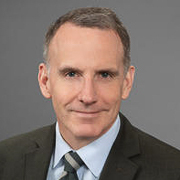
Edward L. Glaeser, Fred and Eleanor Glimp Professor of Economics, Harvard University
Edward L. Glaeser is the Fred and Eleanor Glimp Professor of Economics at Harvard University, where he has taught economic theory and urban economics since 1992. He also leads the Urban Economics Working Group at the National Bureau of Economics Research, co-leads the Cities Programme of the International Growth Centre, and co-edits the Journal of Urban Economics. He has written hundreds of papers on cities, infrastructure, and other topics and written, co-written and co-edited many books including Triumph of the City, Survival of the City (with David Cutler) and Fighting Poverty in the U.S. and Europe: A World of Difference (with Alberto Alesina). He has served as director of the Taubman Center for State and Local Government and the Rappaport Institute for Greater Boston, editor of the Quarterly Journal of Economics, and chair of Harvard’s Economics Department. He is a fellow of the National Academy of Sciences, the American Academy of Arts and Sciences, the American Academy of Political and Social Science, and the Econometric Society, and he received the Albert O. Hirschman prize from the Social Science Research Council. He received his AB from Princeton University and his PhD in economics from the University of Chicago.
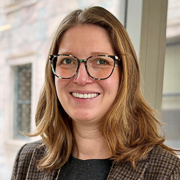
Lara Loewenstein, Senior Research Economist, Federal Reserve Bank of Cleveland
Lara Loewenstein is a senior research economist at the Federal Reserve Bank of Cleveland. She is an applied microeconomist whose current research focuses on residential and commercial real estate and mortgage markets. Prior to joining the Cleveland Fed, Loewenstein was a research associate in the Federal Reserve Bank of Boston Research Department. Loewenstein obtained her BS in mathematics from the University of California, Los Angeles; her graduate diploma in international relations and economics from Johns Hopkins School of Advanced International Studies; and her MS and PhD in international economics and finance from Brandeis University.
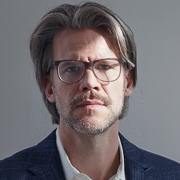
Konstantin W. Milbradt, Professor of Finance, University of California Los Angeles Anderson School of Management
Konstantin W. Milbradt is a professor of finance at the University of California Los Angeles Anderson School of Management. Milbradt’s research interests are in financial economics, specifically in how financial frictions affect asset prices, the macroeconomy, corporate decisions, and mortgage markets. In his recent work, he theoretically and empirically investigates how heterogeneity of homeowners’ prepayment decisions affects prices in the conforming mortgage market and monetary policy pass-through, as well as how different contract designs would change these prices. Before joining the Anderson School of Management, in 2026, Milbradt served as a professor of finance at Northwestern University Kellogg School of Management and as an assistant professor of finance at the MIT Sloan School of Management. He holds a PhD from Princeton University and a BA from Oxford University.
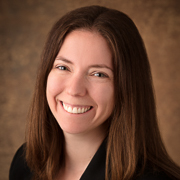
Elena Patel, Co-Director of the Urban–Brookings Tax Policy Center, Pozen Director’s Chair, and Senior Fellow in Economic Studies at the Brookings Institution
Elena Patel is co-director of the Urban–Brookings Tax Policy Center, the Pozen Director’s Chair, and a senior fellow in Economic Studies at the Brookings Institution. Her research examines how tax systems, health programs, and social safety nets shape economic behavior and well-being. She studies how tax policy affects investment and capital accumulation, how incentives and risks influence employment decisions, and how governance and health policy intersect with labor markets and economic security. Patel also serves as a fiscal policy impact scholar at the University of Utah’s Marriner S. Eccles Institute and as an editor at the National Tax Journal. She was the Sorenson Assistant Professor at the University of Utah’s David Eccles School of Business and held several federal government positions, including serving as senior public finance economist at the White House Council of Economic Advisers and as an economist at the U.S. Treasury. She holds a PhD in economics from the University of Michigan.
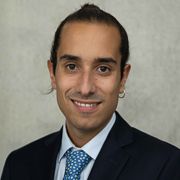
Gonzalo Paz-Pardo, Principal Economist, Directorate General Research in the European Central Bank
Gonzalo Paz-Pardo is a principal economist at Directorate General Research in the European Central Bank. His research areas are macroeconomics and household finance. His work focuses on household consumption and savings, earnings dynamics, housing and homeownership, household portfolio decisions, and income and wealth inequality. He holds an economics PhD from University College London.
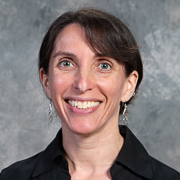
Raven Saks Molloy, Deputy Associate Director, Federal Reserve Board of Governors
Raven Saks Molloy is a deputy associate director of the Division of Research and Statistics at the Federal Reserve Board of Governors. In this capacity she oversees work related to residential and commercial mortgage credit conditions, real estate prices, and housing markets. Her primary fields of research are housing and urban and labor economics, and she has written on topics including housing supply regulation, housing affordability and valuation, shelter inflation, construction productivity, mortgage credit availability, migration, foreclosure, housing vacancy, and executive compensation. She is actively involved in the academic research community, including serving on the editorial boards of academic journals and on committees of academic associations. She is also a member of the National Bureau of Economic Research Conference on Research on Income and Wealth and a fellow of the Weimer School of Advanced Studies in Real Estate and Land Economics of the Homer Hoyt Institute. Molloy started her career as a research assistant at the Federal Reserve Board, an experience that laid the foundation for her interest in economics. She received a bachelor’s degree in economics and Asian studies from the University of Virginia and a PhD in economics from Harvard University.
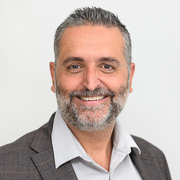
Albert Saiz, Daniel Rose Professor of Urban Economics and Real Estate, Massachusetts Institute of Technology
Albert Saiz is the Daniel Rose Professor of Urban Economics and Real Estate in the Department of Urban Studies and Planning at the Massachusetts Institute of Technology. His research focuses on housing markets, home value dynamics, urban growth, local public economics, land use regulation, global real estate, and the demographic and technological determinants of real estate markets. He has published extensively in economics journals, and his work has been cited more than 14,500 times, according to Google Scholar. Saiz has taught urban economics, microeconomics, housing economics, real estate investments, and global real estate. He previously worked as an assistant professor at the Wharton School of the University of Pennsylvania, where he received the MBA Excellence in Teaching Award. He has also served as a research economist at the Federal Reserve Bank of Philadelphia. He was an editor of the Journal of Housing Economics from 2012 to 2017, director of the MIT Center for Real Estate from 2014 to 2018, and vice president and president of the American Real Estate and Urban Economics Association from 2023 to 2025. He has worked in research or as a consultant with several organizations, including the Research Institute for Housing America, CREW, the World Bank, CBRE, Capital One, La Haus, Grupo Argos, BuildZoom, New Story, Conservatorio, Fundación Areces, the Spanish Ministry of Labor, the Rockwool Foundation, and others. Saiz obtained his PhD in economics from Harvard University.
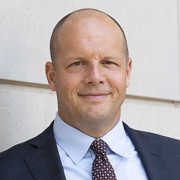
Chad Syverson, George C. Tiao Distinguished Service Professor of Economics, University of Chicago Booth School of Business
Chad Syverson is the George C. Tiao Distinguished Service Professor of Economics at the University of Chicago Booth School of Business. He has been on the University of Chicago faculty since 2001. He also serves as deputy director of the Becker Friedman Institute for Economics at the university. His research spans several topics, with a particular focus on the interactions of firm structure, market structure, and productivity. Syverson has authored or coauthored dozens of scholarly articles and is the coauthor (with Austan Goolsbee and Steve Levitt) of Microeconomics, an intermediate-level textbook. Syverson is a former editor of the Journal of Political Economy, a distinguished fellow of the Industrial Organization Society, a fellow of the Econometric Society, and a research associate of the National Bureau of Economic Research, and he has served on multiple National Academies committees. He teaches classes in industrial organization. Syverson received a PhD in economics from the University of Maryland and bachelor’s degrees in economics and mechanical engineering from the University of North Dakota.
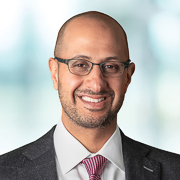
Jay Tuli, President of Leader Bank, Founder of ZSuite Technologies
Jay Tuli is president of Leader Bank and founder of ZSuite Technologies, a fintech firm that spun out of Leader Bank. Tuli joined Leader Bank in 2006, when the bank was in its fourth year of operations. In the last decade, Leader Bank has become one of the largest residential lenders in Massachusetts, originating consistently more than $3 billion in annual mortgage volume. Leader Bank has grown to $5 billion in assets and has more than 450 employees. Tuli focuses on new product development, growth strategy, recruiting, and overall operations for the residential lending, retail banking, product development, and marketing divisions of Leader Bank. He has introduced several innovative programs that use technology to fill in product gaps in the current banking marketplace. Tuli also spearheaded the bank’s expansion into Boston’s Seaport district. Previously, he worked at Revolution Partners, a Boston-based boutique mergers and acquisitions advisory firm, and at J.P. Morgan in New York as a member of the private bank structured investments group. Tuli graduated magna cum laude from Georgetown University with a double major in finance and technology management and a minor in economics. He earned his MBA from Harvard Business School.
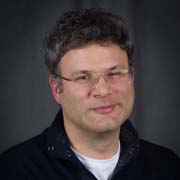
Paul S. Willen, Principal Economist and Policy Advisor, Federal Reserve Bank of Boston
Paul S. Willen is a principal economist and policy advisor in the Federal Reserve Bank of Boston Research Department. Willen conducts academic research with a focus on real estate and mortgage markets as part of the policy mission of the Federal Reserve. For many years, Willen studied the causes and consequences of the 2007–2008 global financial crisis, publishing articles in top scholarly journals, advising policymakers, and testifying in Congress. His research on the topic was featured in virtually every major newspaper in the country. More recently, Willen has analyzed the effects of race and ethnicity on access to mortgage credit. Willen has taught at Princeton University, the University of Chicago, the Massachusetts Institute of Technology, and Harvard University. He did his undergraduate work at Williams College and earned his PhD from Yale University.

Egon Zakrajšek, Executive Vice President and Director of Research, Federal Reserve Bank of Boston
Egon Zakrajšek is an executive vice president and the director of the Federal Reserve Bank of Boston Research Department. Among Zakrajšek’s primary responsibilities is oversight of the work of the department, including economic analysis for the monetary policy deliberations of the Bank’s president and board of directors. Zakrajšek’s policy and research interests focus on macrofinance, banking, inflation dynamics, and monetary policy. Previously, Zakrajšek was a senior advisor in the monetary and economic department of the Bank for International Settlements. He began his career in the research department of the Federal Reserve Bank of New York and later joined the Division of Monetary Affairs at the Board of Governors of the Federal Reserve System. He holds a PhD in economics from New York University.