New England Economic Conditions through October 13, 2026 


Key Takeaways
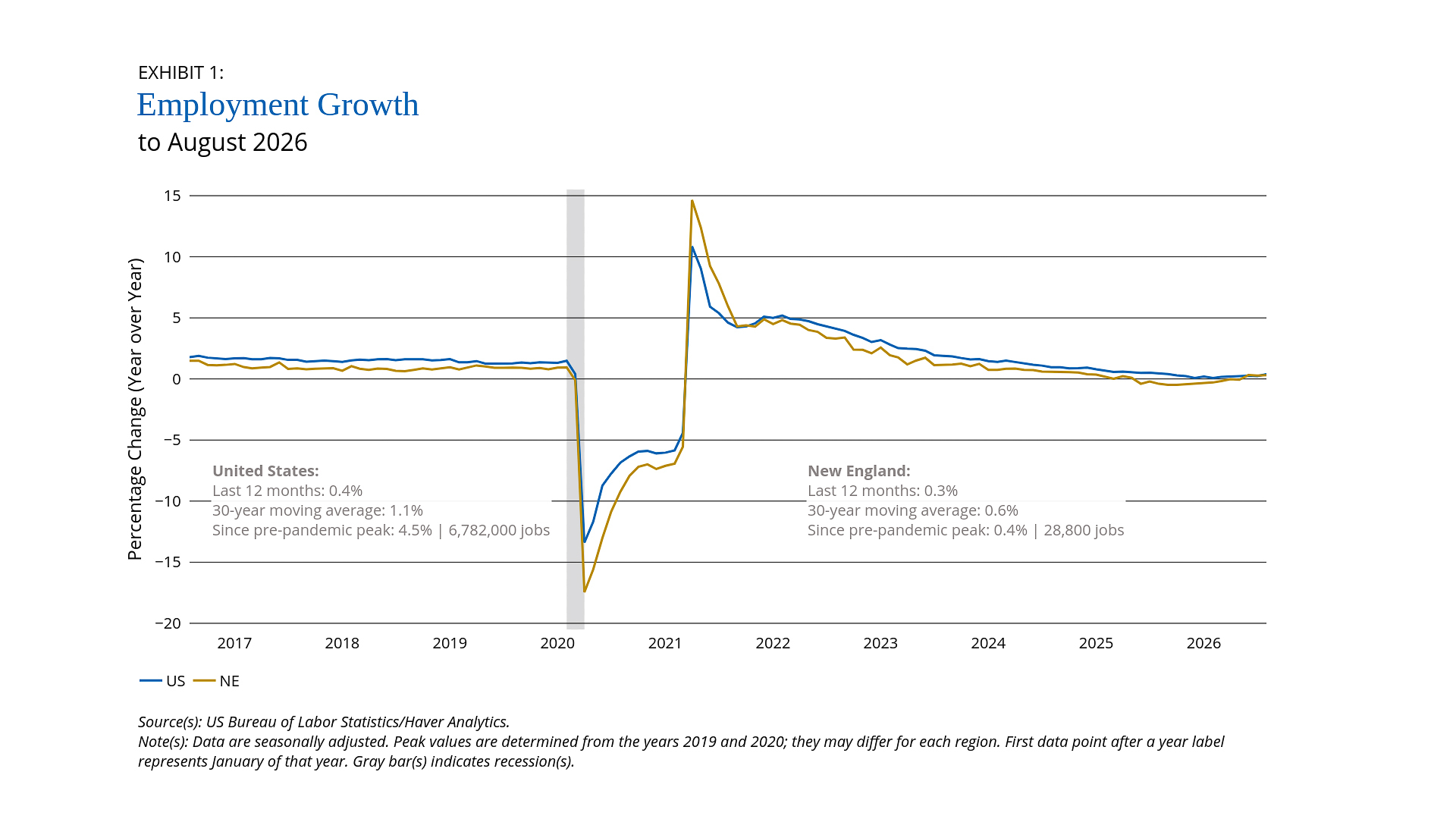
- Payroll employment growth in both New England and the United States accelerated modestly in 2026, signaling a recovery from 2025's weak labor market performance, which included a net job loss in the region and near-flat growth nationally. This rebound was echoed in unemployment trends, as rates in both New England and the United States declined gradually from February through August 2026, reversing the upward trajectory that had persisted from mid-2023 through the end of 2025.
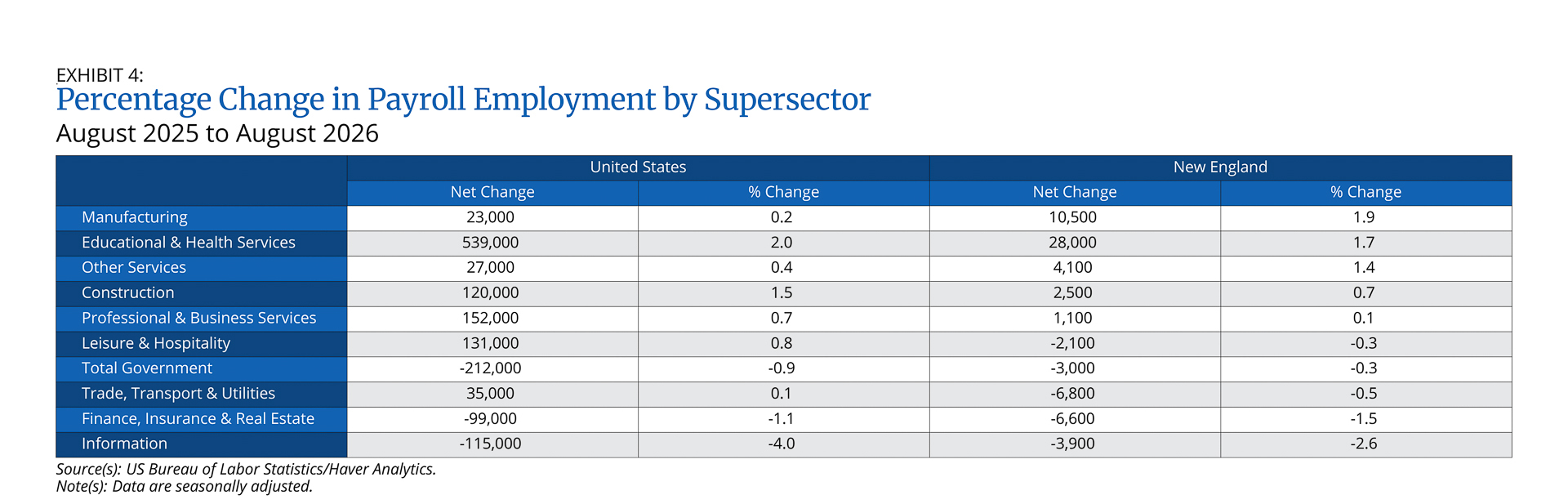
- The educational and health services sector remained New England's top driver of employment growth, but manufacturing emerged as a noteworthy secondary contributor, adding 10,500 jobs across the region despite its historically weak growth trend.
- Nominal wages and salaries in New England grew 2.3 percent year-over-year in 2026:Q2, the slowest among the nine census divisions, translating to a 1.9 percent decline in real wages given elevated inflation. This pattern reflects a longer-term trend from 2023:Q1 through 2026:Q2, during which New England's nominal wage growth lagged the nation's despite higher regional inflation, resulting in falling real wages in New England even as they grew nationally.
Sign up for new research and data on the New England economy.
Payroll Employment
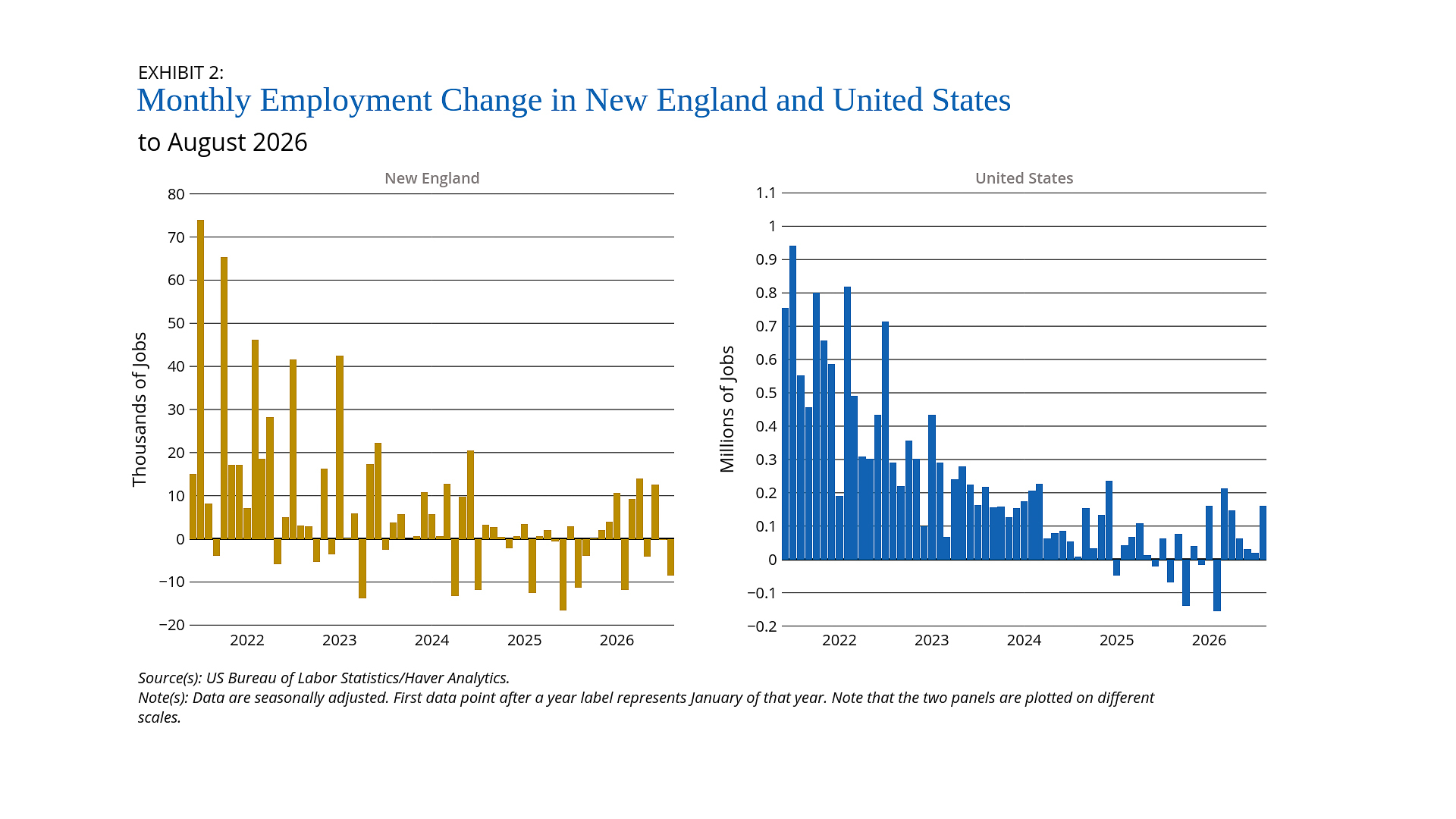
- Year-over-year payroll employment growth in August 2026 remained modest but positive in both New England and the United States, indicating a recovery from the region's net job loss and the nation's near-flat growth in 2025.
- The educational and health services sector remained New England's top driver of employment growth, but manufacturing emerged as a noteworthy secondary contributor, adding 10,500 jobs across the region despite its historically weak growth trend.
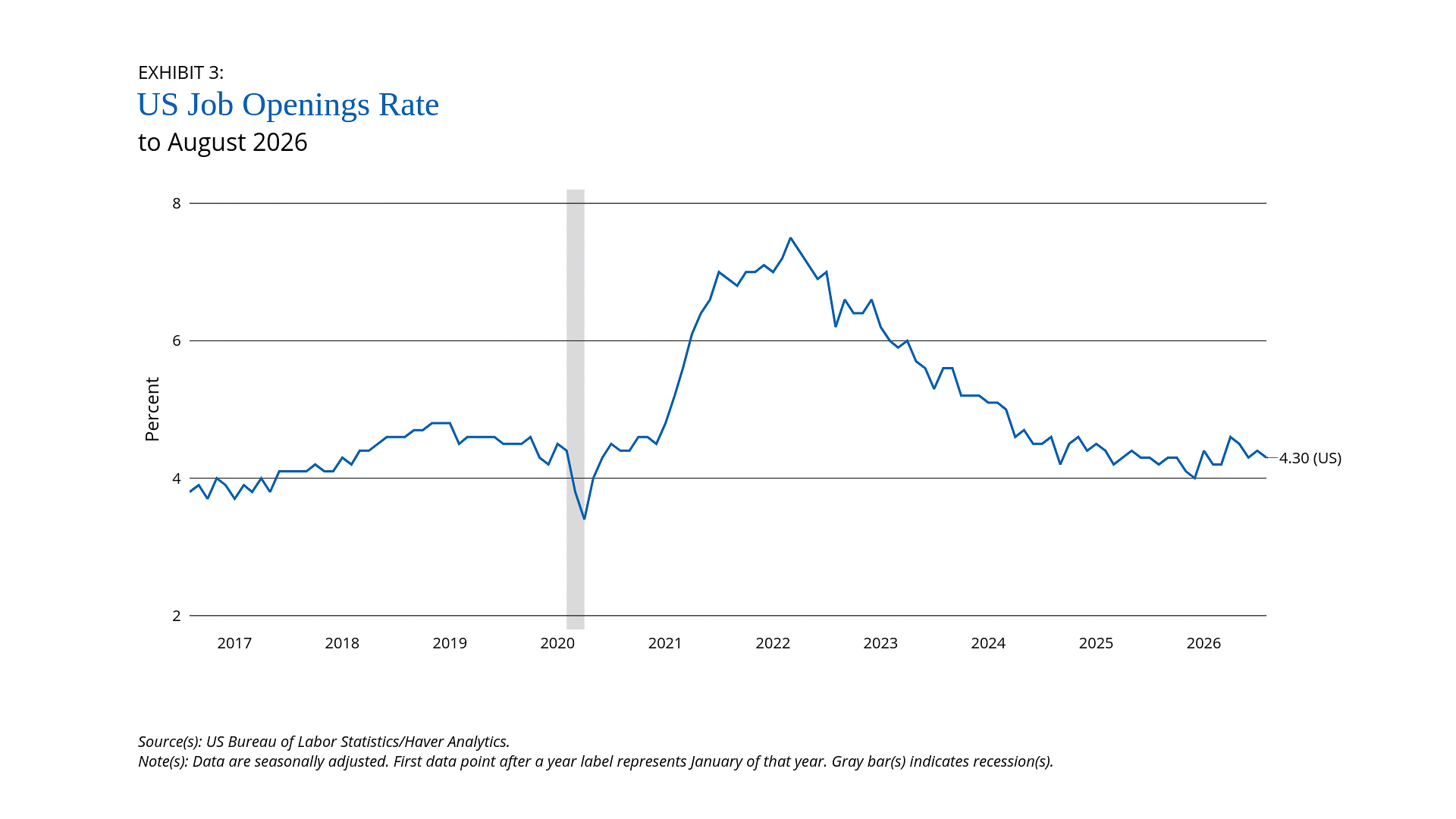
In August 2026, total nonagricultural payroll employment grew 0.4 percent year-over-year in the United States and 0.3 percent in New England (Exhibit 1). These modest but positive growth rates signal a recovery from 2025, when both the nation and the region recorded some of their weakest job gains since June 2011—employment growth in the United States was nearly flat, while New England experienced a net job loss (Exhibit 2). This employment recovery aligns with trends in job openings nationally. After declining steadily from March 2022 through December 2025, job openings began rising again in 2026, suggesting employers are moving past the "no-hire, no-fire" stance that characterized the 2025 labor market and becoming more willing to expand their headcounts (Exhibit 3).
In New England, the educational and health services sector remained the region's primary post-pandemic driver of employment growth, expanding 1.7 percent (28,000 jobs) from August 2025 through August 2026 (Exhibit 4). Manufacturing, a sector in which the average employment growth rate over the past decade ranks among the lowest of any private industry in New England, emerged as the second-largest contributor, adding 10,500 jobs over the same period. Connecticut, Massachusetts, and Rhode Island all posted notable gains, ranging from 1,300 jobs in Rhode Island to 4,100 in Massachusetts and 4,500 in Connecticut. By contrast, the trade, transportation, and utilities sector, the information sector, and the finance, insurance, and real estate sector each lost from 3,900 to 6,800 jobs, continuing the downward trends observed over the past three years.

Federal Reserve Bank of Boston

Federal Reserve Bank of Boston
Federal Reserve Bank of Boston
Federal Reserve Bank of Boston
Unemployment and Labor Force Participation Rate
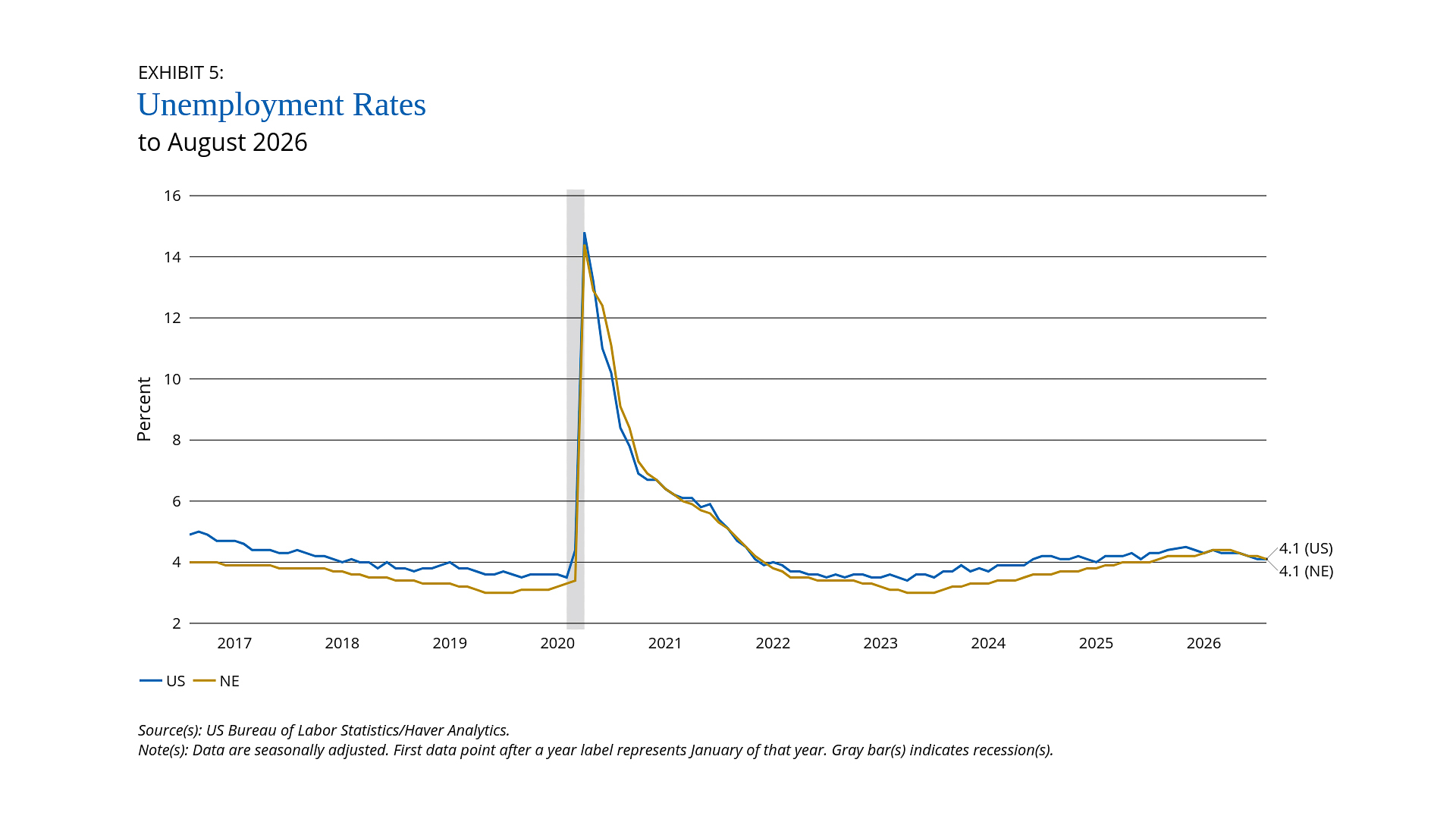
- The unemployment rate declined gradually from February through August 2026 in both New England and the United States, reversing the upward trend that began in mid-2023 and signaling that the labor market is warming relative to 2025.
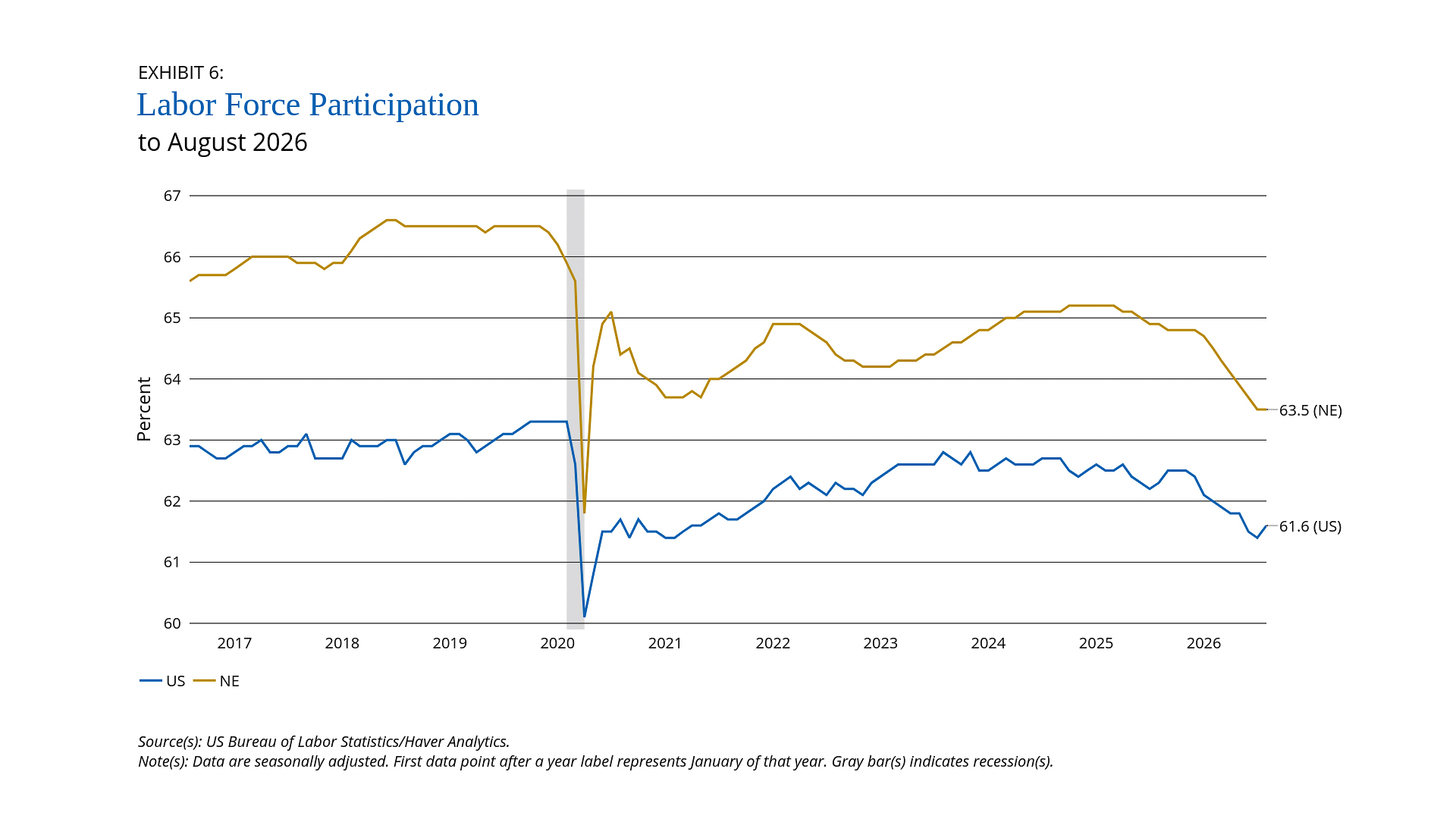
- Labor force participation rates fell below 2025 levels nationally and in New England, largely reflecting statistical adjustments and population aging.
The unemployment rate stood at 4.1 percent in both New England and the United States in August 2026 (Exhibit 5). The rates declined gradually from February through August 2026, breaking the upward trend that had persisted from mid-2023 through the end of 2025. This decline in unemployment is consistent with the signals observed in payroll employment and job openings, both of which point to a labor market that is warming relative to 2025.
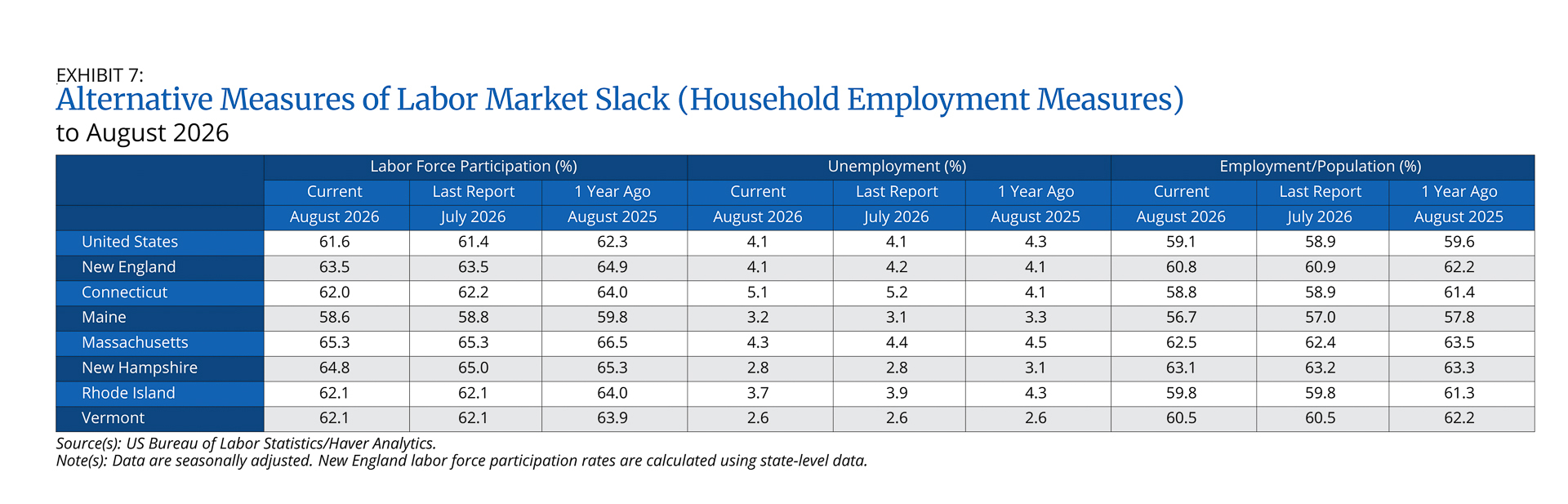
Labor force participation remained below 2025 levels (Exhibit 6). As of August 2026, labor force participation rates were 63.5 percent in New England and 61.6 percent nationally, 1.4 and 0.7 percentage points below their respective levels in August 2025 (Exhibit 7). This decline, however, largely reflects statistical adjustments and noise.
In January 2026, the US Bureau of Labor Statistics substantially revised upward its estimate of the population share aged 65 and older as part of the annual benchmarking of the Current Population Survey (CPS). Because this age group has the lowest labor force participation rate, the revision mechanically increased the group's weight in the calculation of the overall labor force participation rate for those aged 16 and older, producing a level shift beginning in January 2026.1 Separately, in June 2026, a new CPS rotation group entered the sample and reported markedly lower labor force participation than other rotation groups, a discrepancy more likely attributable to temporary sampling noise than to an underlying change in population behavior.2
These two factors, together with the ongoing effect of population aging, account for most of the national decline. In New England, declining labor force participation among the 16–24 age group has emerged as a separate factor, further pulling down the regional rate (not shown here). Because the sample size for this age group is relatively small, additional months of data are needed to determine whether this decline reflects a persistent, age-specific behavioral shift or a transitory pattern.
Federal Reserve Bank of Boston
Federal Reserve Bank of Boston
Federal Reserve Bank of Boston
Prices and Wages
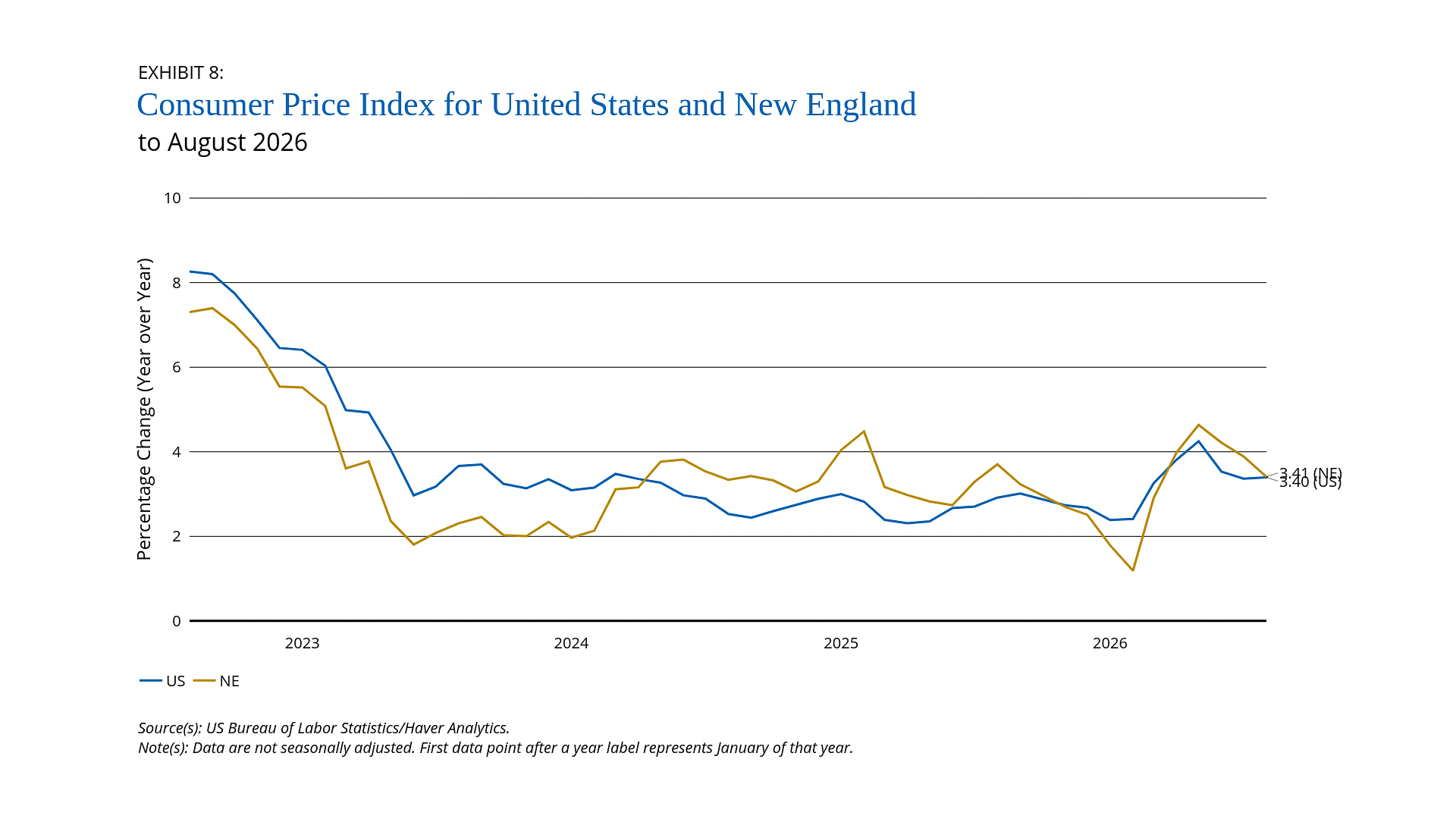
- Inflation eased to 3.4 percent in August 2026 in both New England and the United States but remained well above the Federal Reserve’s 2 percent target. The elevated rate was driven primarily by rising energy prices tied to the Middle East conflict. Core inflation, which excludes food and energy prices, was more moderate at 2.3 to 2.4 percent.
- New England's nominal wage growth continued to lag the national rate, both over the four quarters ending in 2026:Q2 and on average since 2023:Q1. As a result, real wages fell more sharply in New England than nationally over the past year and have declined in the region since 2023:Q1, even as they have grown nationally over this longer period.
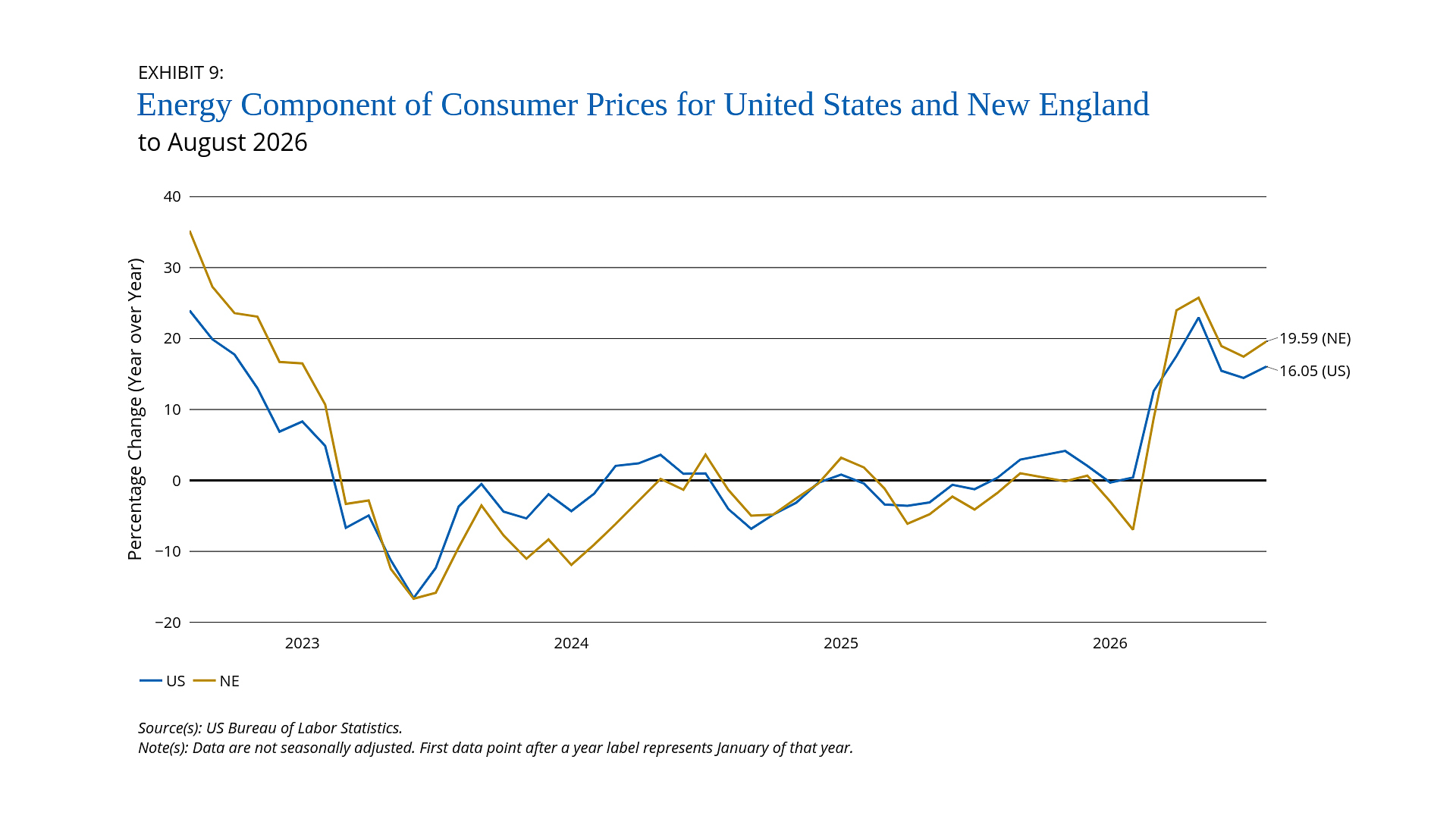
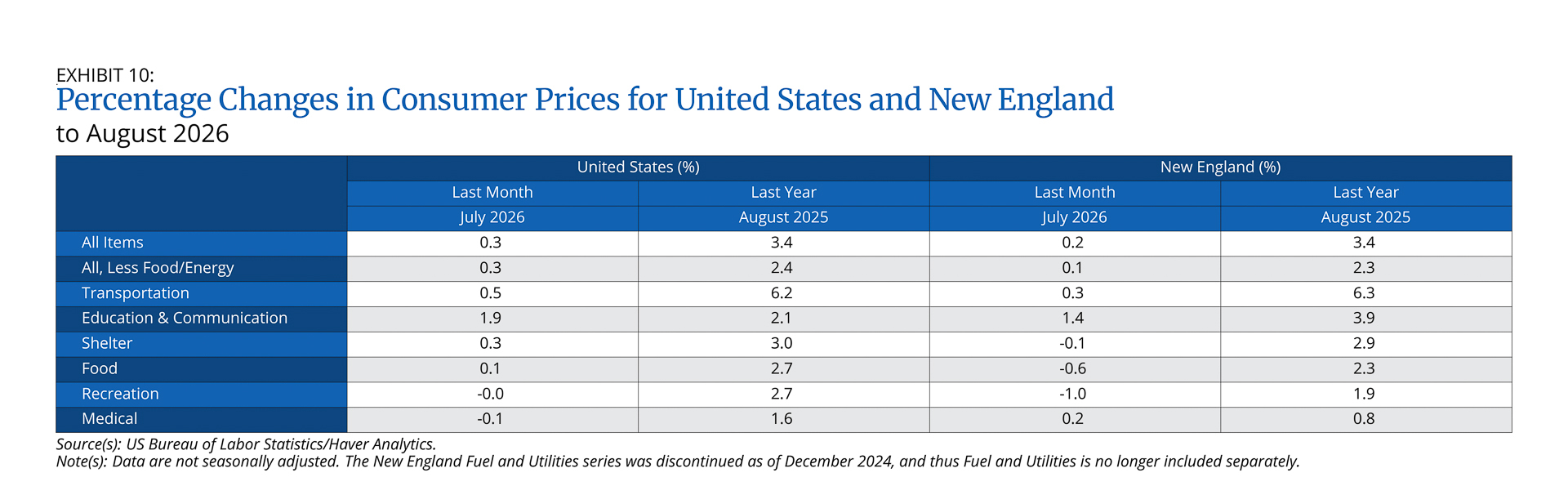
Inflation, as measured by the year-over-year change in the Consumer Price Index for All Urban Consumers (CPI-U), was 3.4 percent in both New England and the United States in August 2026, down from rates exceeding 4 percent in May but still well above the Federal Reserve's 2 percent target (Exhibit 8).3 Energy prices, driven higher by the conflict in the Middle East, remained the primary source of upward pressure on overall inflation (Exhibit 9). Core inflation, which excludes the more volatile food and energy categories, was more moderate, at 2.3 percent in the region and 2.4 percent nationally (Exhibit 10).
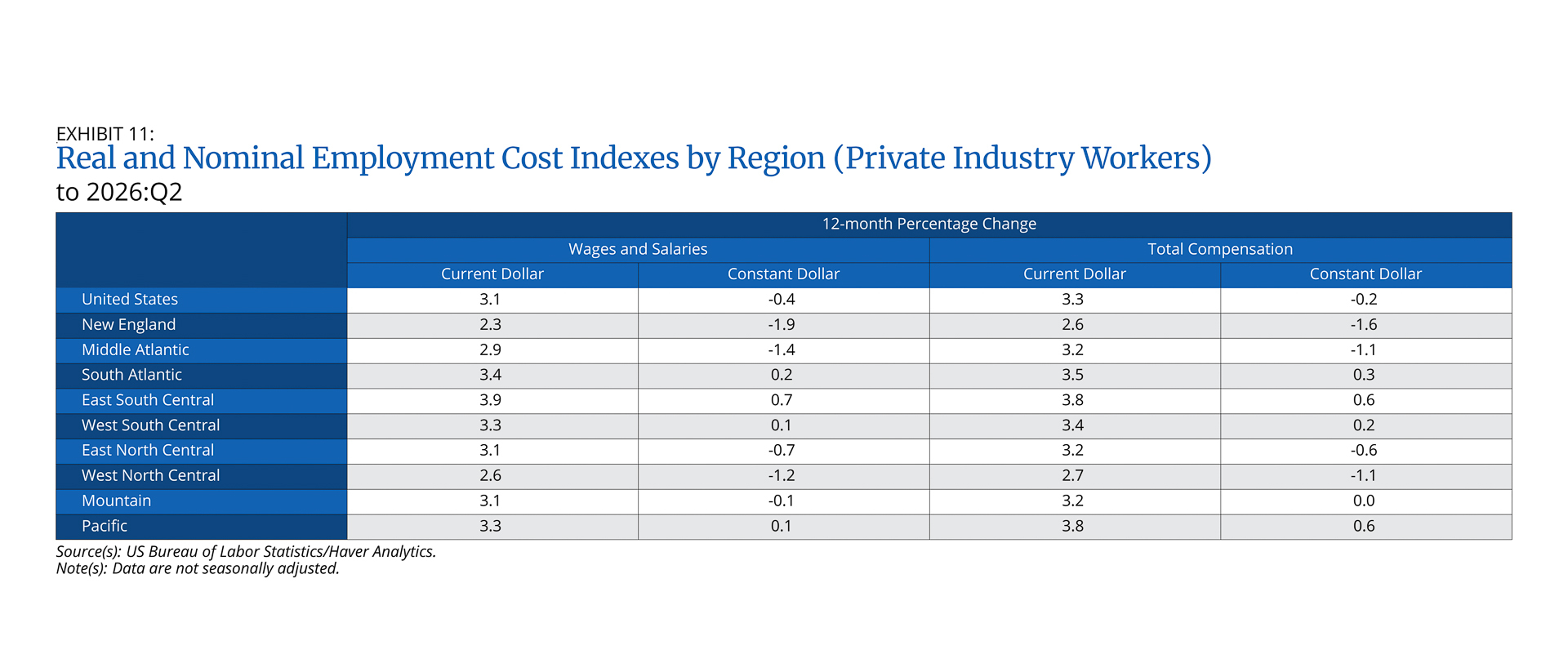
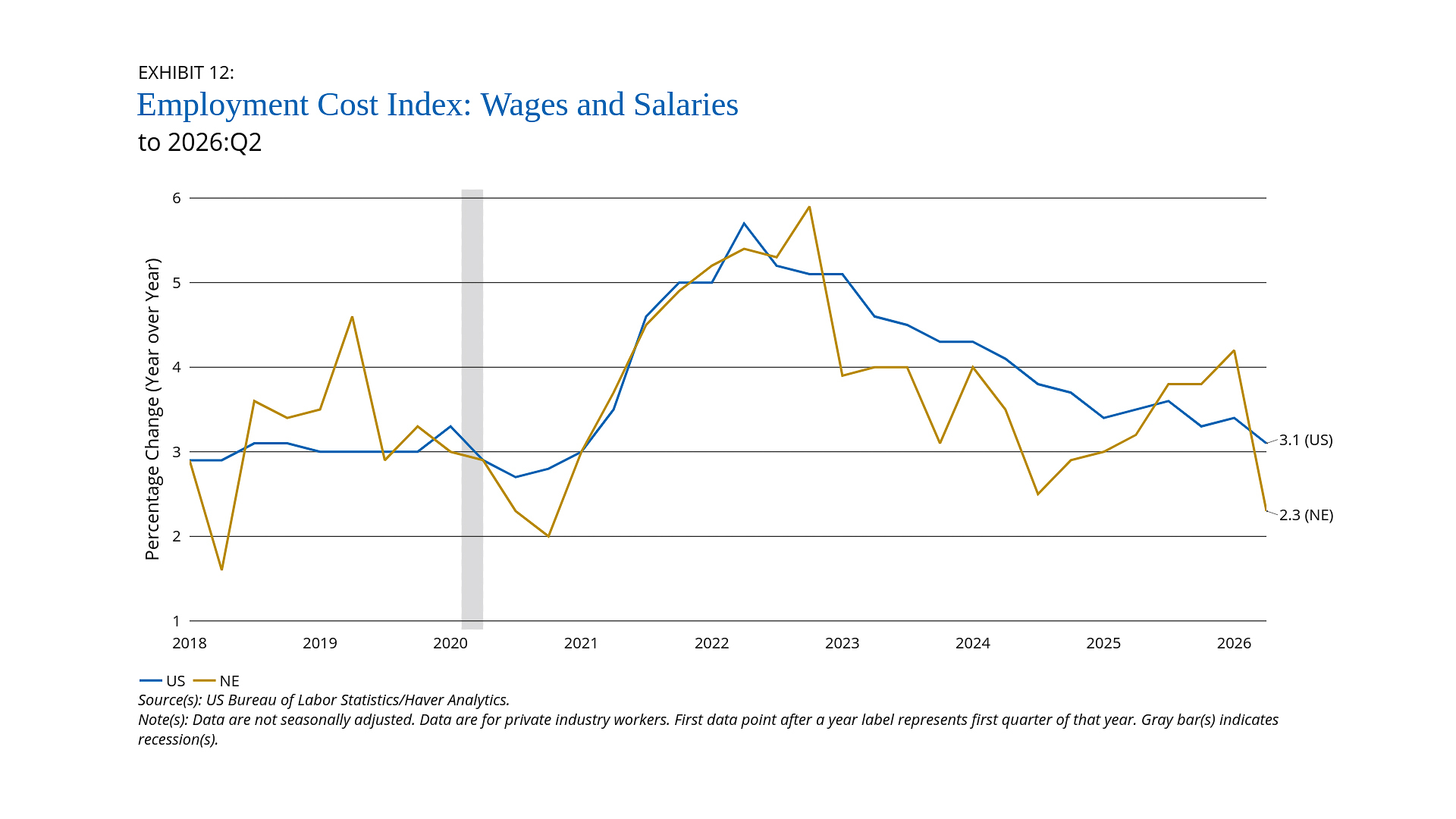
Nominal wages and salaries in New England grew 2.3 percent in 2026:Q2 from a year earlier, which was less than the 3.1 percent rate recorded nationwide and the slowest growth among the nine census divisions (Exhibit 11). Given the elevated inflation over this period, this translates to a 1.9 percent decline in real wages and salaries for New England workers, compared with a decline of only 0.4 percent nationally. Over the longer period from 2023:Q1 through 2026:Q2, nominal wage and salary growth in New England lagged the national rate, on average, despite the region's higher inflation (Exhibit 12). As a result, real wages and salaries fell in New England over this period, while nationally they grew.
Federal Reserve Bank of Boston
Federal Reserve Bank of Boston
Federal Reserve Bank of Boston
Federal Reserve Bank of Boston
Federal Reserve Bank of Boston
Consumer Confidence
- In New England, consumer confidence rebounded in August and September 2026 after following a modest downward, though noisy, trend from January through July 2026.
- Nationally, consumer confidence has shown a similar modest downward trend throughout 2026, reflecting deteriorating sentiment about the present situation and, more recently, growing pessimism about future conditions, with consumers citing high living costs and geopolitical tensions as key concerns.
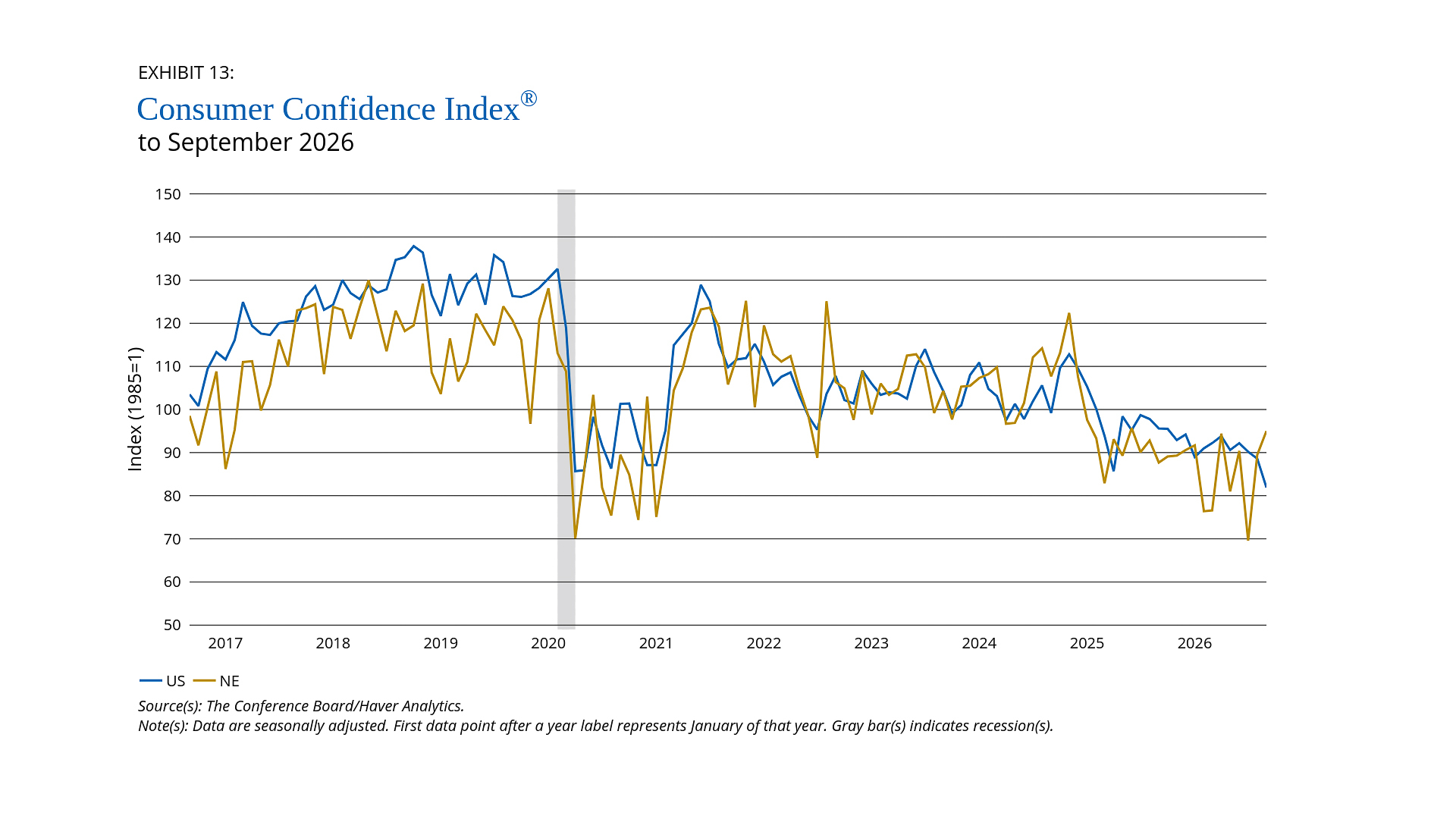
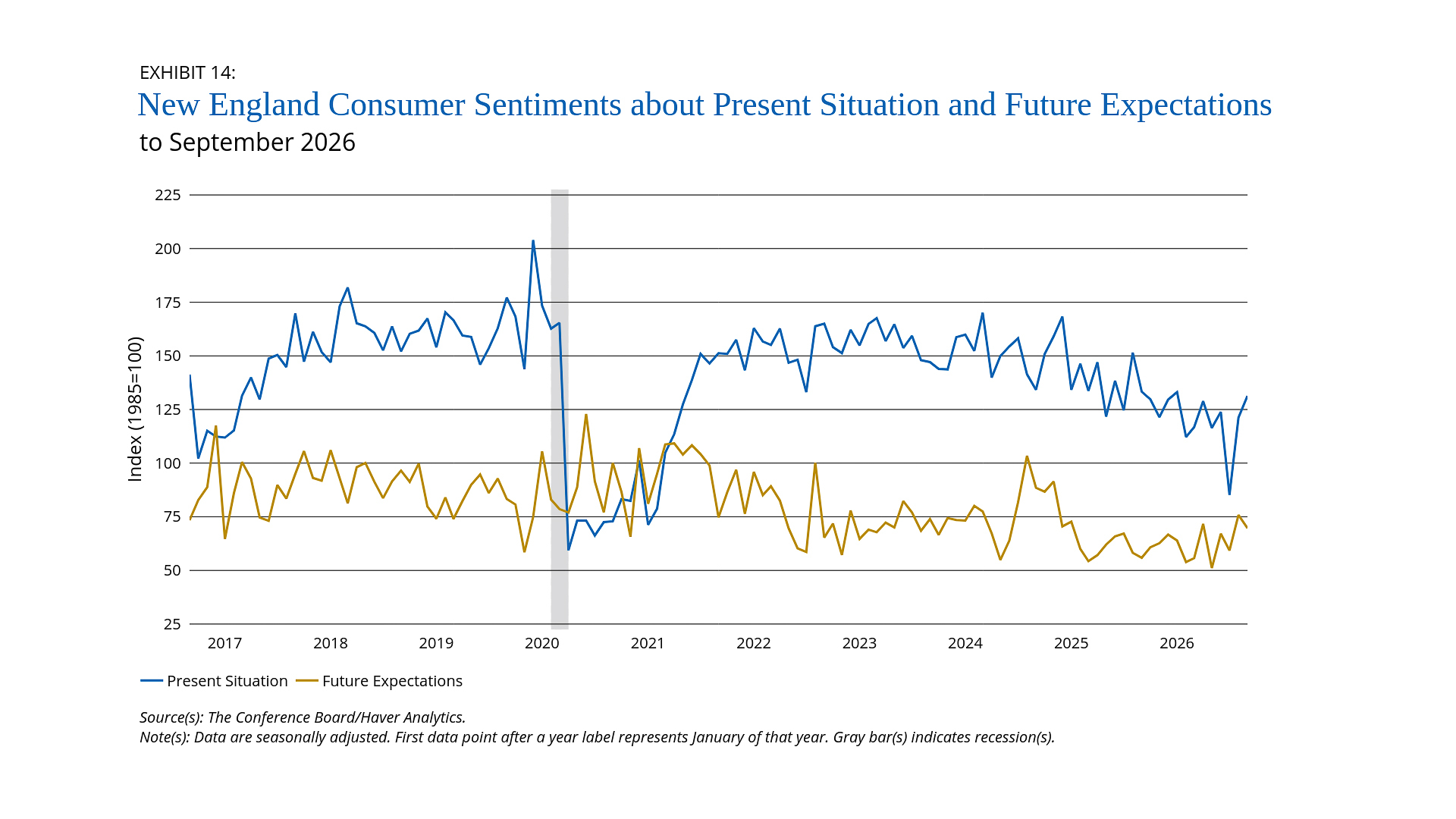
Consumer confidence in New England, as measured by the Conference Board's Consumer Confidence Index, rose 8 percent in September 2026 from a year earlier (Exhibit 13). This year-over-year gain followed a sharp decline in 2025 and a modest, though noisy, downward trend from January through July 2026, before confidence rebounded in August and September. From January through July, the index averaged 83, down from 91 in 2025. The earlier downward trend was driven largely by weakening sentiment about the present situation, which has since improved, while future expectations remained relatively stable (Exhibit 14).
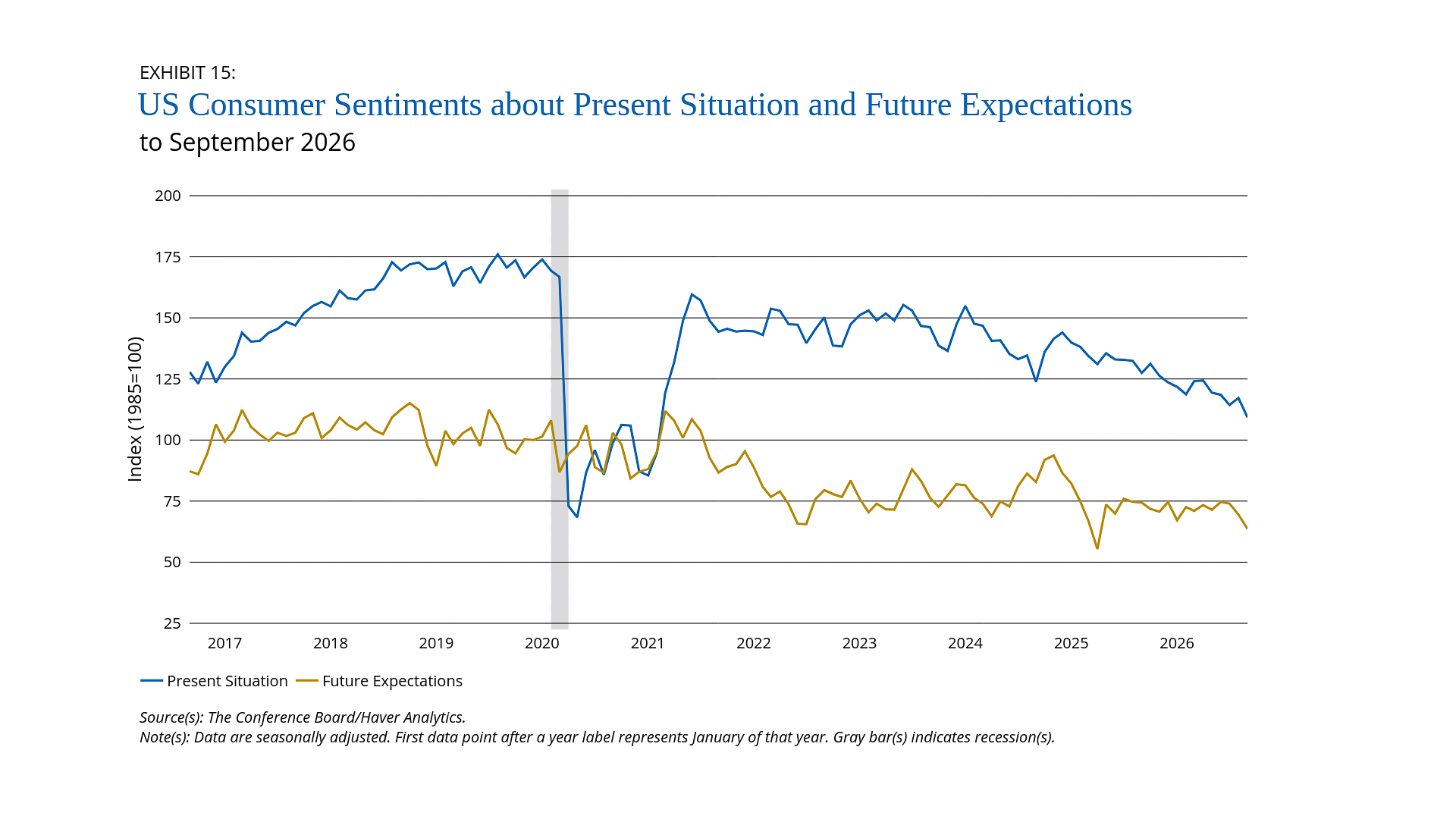
Nationally, consumer confidence has followed a similar modest downward trend throughout 2026, with the index falling from 89 in January to 82 in September. This national decline reflects deteriorating sentiment about the present situation primarily, along with growing pessimism about future economic conditions in August and September (Exhibit 15). The Conference Board noted that write-in responses in September frequently cited the high cost of goods and services, particularly oil and gas prices, as a key concern, while concerns about war and other geopolitical conflicts also remained elevated.
Federal Reserve Bank of Boston
Federal Reserve Bank of Boston
Federal Reserve Bank of Boston
Endnotes
- See Alexander Bick, “What’s Behind the Sharp Drop in Labor Force Participation?” On the Economy Blog, Federal Reserve Bank of St. Louis, August 4, 2026.
- See Preston Mui, “Labor Market Recap August 2026,” Employ America, September 4, 2026.
- The Federal Reserve's 2 percent inflation target is based on the Personal Consumption Expenditures (PCE) price index, not the CPI. CPI is reported here as a more accessible measure of regional price changes.

 About the Authors
Pinghui Wu,
Federal Reserve Bank of Boston
Pinghui Wu is a senior economist with the New England Public Policy Center at the Federal Reserve Bank of Boston.
Email: Pinghui.Wu@bos.frb.org
Spencer Ma,
Federal Reserve Bank of Boston
Spencer Ma is a research associate with the New England Public Policy Center in the Federal Reserve Bank of Boston Research Department.
Acknowledgments
Kelly Jackson, a senior data analyst in the Federal Reserve Bank of Boston Research Department, prepared the exhibits for this memo.
Resources
Keywords
- Regional economy ,
- Economic Conditions ,
- New England