How are workers handling childcare challenges and rising costs? 
Boston Fed president speaks with childcare, healthcare, labor leaders about Connecticut’s economy

Peter Davis/Federal Reserve Bank of Boston


DeVonna Lewis began working in childcare more than 20 years ago, when her daughters were small. And a temporary career switch to help formerly incarcerated people re-enter the workforce made her more committed to the field than ever.
The New Haven, Connecticut, resident said she once asked members of the re-entry program she helped run to recall a key thing that sent them down the wrong path. Many shared tough things they saw and experienced as very young children.
That’s when Lewis knew she had to get back into early childhood education.
Now, Lewis is preparing to launch her own childcare program in a new childcare facility in New Haven that’s being run by the education nonprofit CERCLE. She believes her experience at both jobs has better equipped her to help her students.
“I want more children coming through the early childhood programs than the re-entry programs (later on),” she said.
Lewis discussed her journey Tuesday during a tour of the soon-to-open childcare facility with Federal Reserve Bank of Boston President Susan M. Collins. Childcare access was a key focus of Collins’ visit to Connecticut, as were healthcare and labor market conditions.
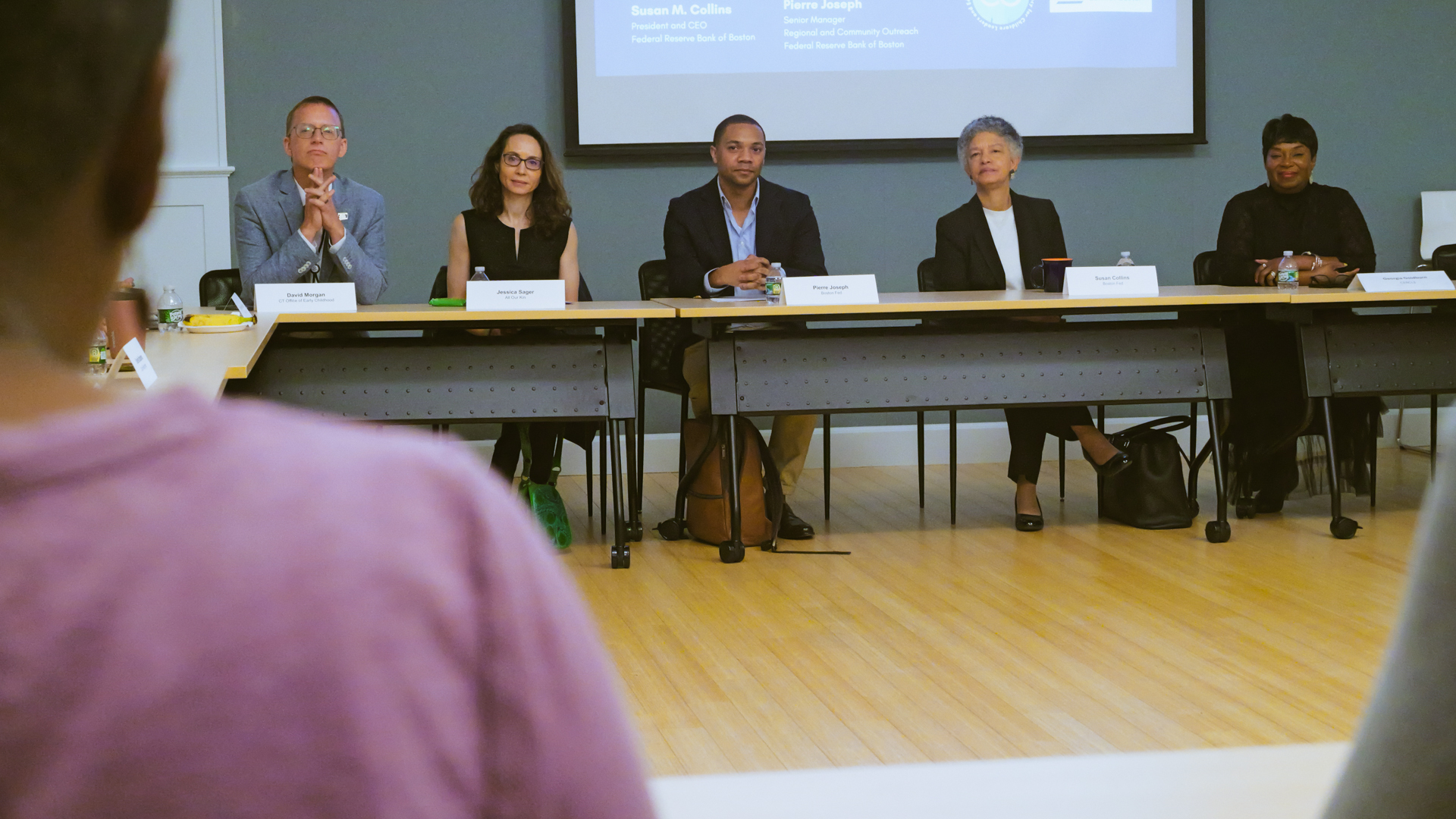
Boston Fed President Susan M. Collins speaks with childcare and early education providers in New Haven, Connecticut. Peter Davis/Federal Reserve Bank of Boston
State official: Childcare is an investment in current and future economy
During a roundtable discussion at CERCLE after the tour, Collins said childcare is a significant part of economic infrastructure. A lack of access to safe, affordable, and quality care is a significant barrier for working parents, she said. And employers have told Collins that can show up in lower retention rates, absenteeism, and lost productivity.
David Morgan, the Deputy Commissioner of the Connecticut Office of Early Childhood, said an investment in childcare is an investment in both the current and future economy.
He said that several Connecticut business leaders recently told him their workforces have mostly recovered from the economic shock of the COVID-19 pandemic, but employees that needed childcare are still struggling.
Kyle Kramer, the CEO of a rural community hospital in Putnam, Connecticut, told Collins that high childcare and housing costs are a major burden on his employees. Collins met with Kramer and other state healthcare leaders earlier Tuesday at the Connecticut Hospital Association in Wallingford.
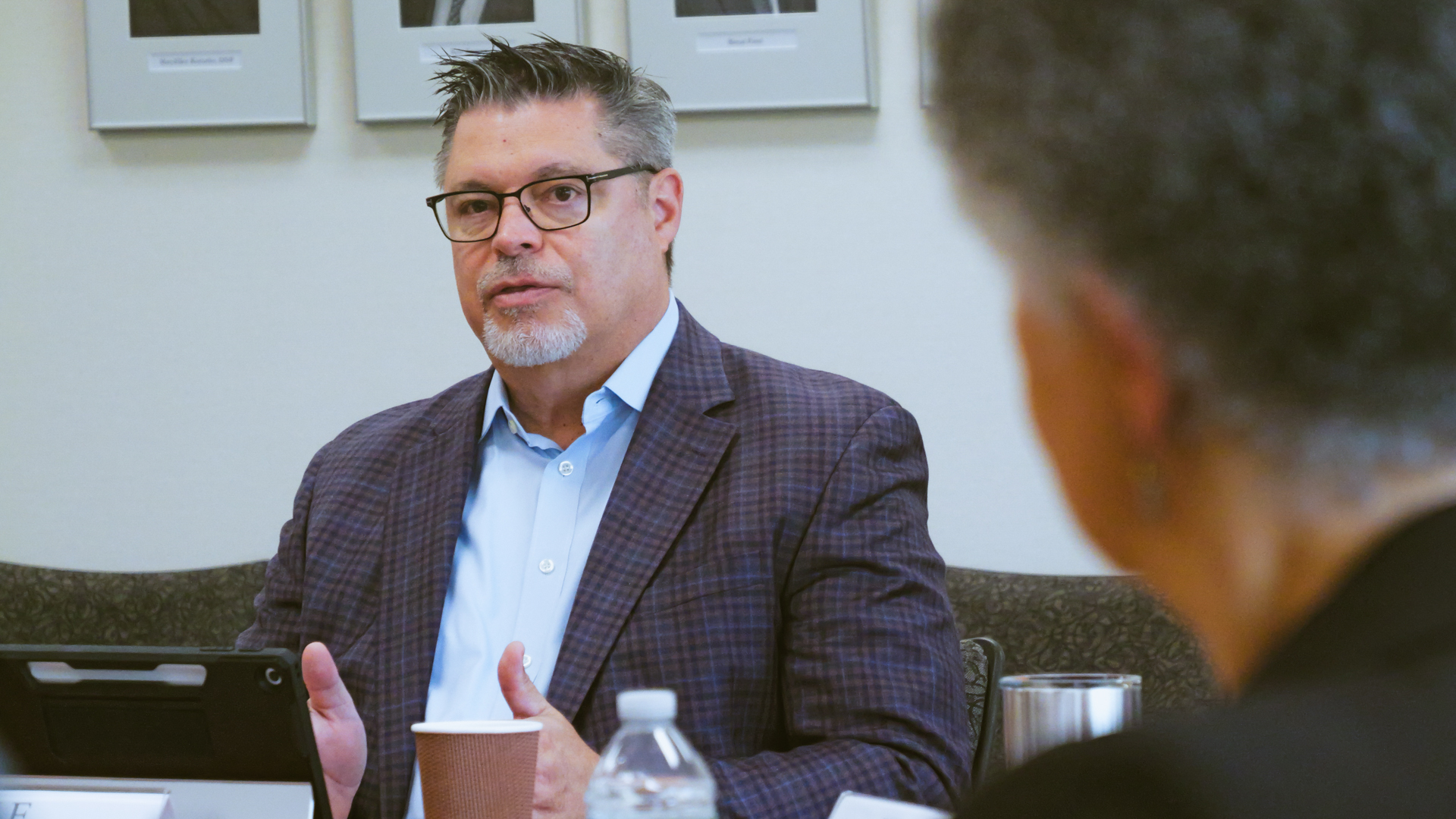
Kyle Kramer, CEO of Day Kimball Hospital, speak about the workforce and childcare challenges rural communities are facing. Peter Davis/Federal Reserve Bank of Boston
Kramer, who leads Day Kimball Hospital, said his employees are “basically working to pay your rent and your childcare, and you have nothing left.”
Kramer said parents often leave their jobs if they can’t find or afford suitable care, and that’s tough on rural hospitals already facing worker shortages.
“You end up losing good people,” he said.
Healthcare and labor leaders discuss concerns about inflation
Hospital and labor leaders told Collins during their discussions that rising prices for housing and other necessities are hurting their employees.
Kathleen Silard, the president and CEO of Stamford Health, said staffers are asking for raises to cover rising gas and food prices.
Silard said that many hospital employees are looking to learn new skills so they can land better-paying jobs, but they can’t afford to work and go to school at the same time. She added that creative public-private sector partnerships could potentially provide more support for continuing education for employees – and for housing and childcare costs.
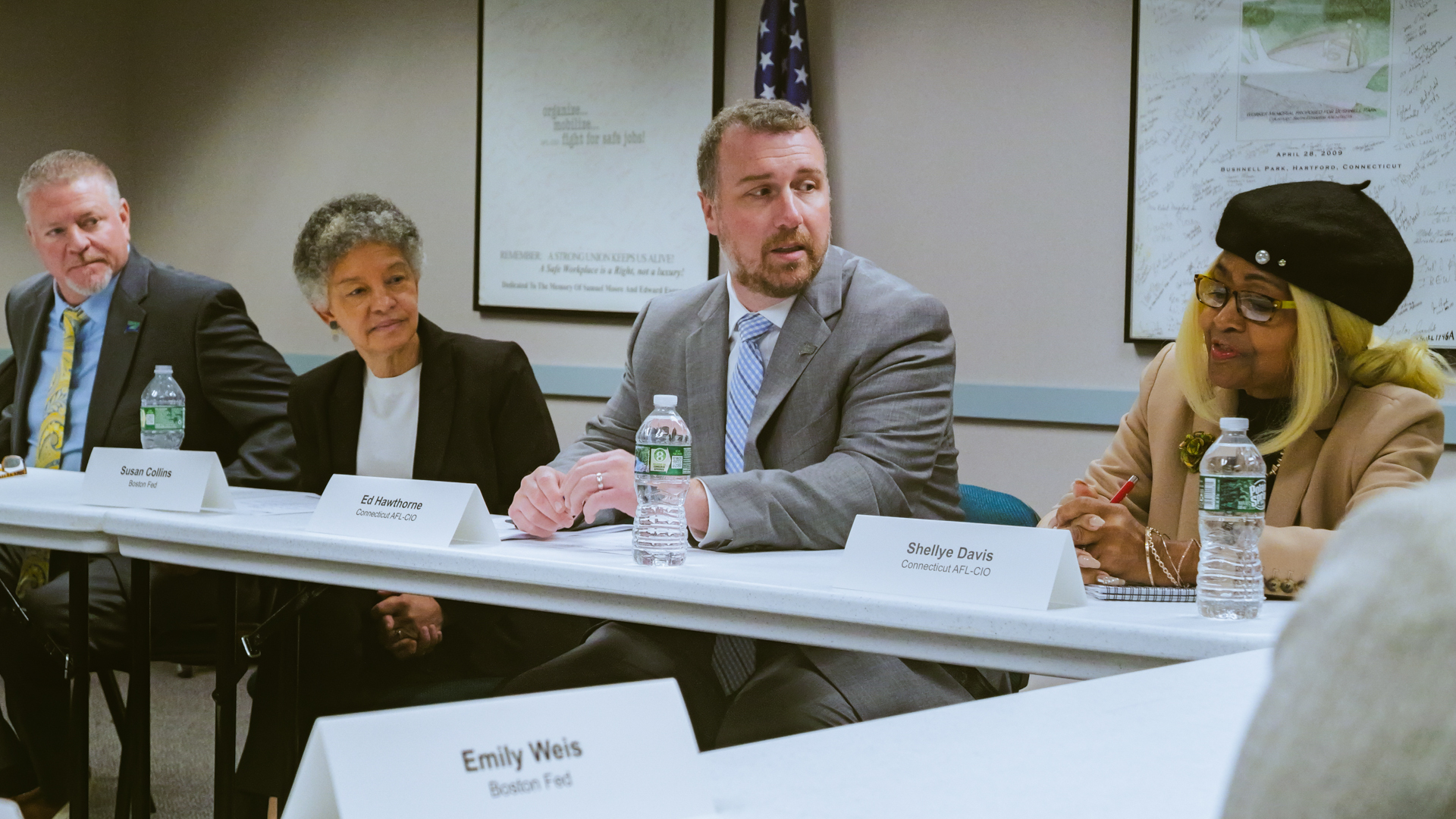
Shellye Davis, the secretary and treasurer of Connecticut AFL-CIO, discusses the impacts of rising costs on paraeducators. Peter Davis/Federal Reserve Bank of Boston
Labor union leaders who spoke with Collins on Tuesday afternoon in Rocky Hill also said their members are struggling with the high cost of living. Shellye Davis, the secretary and treasurer of Connecticut AFL-CIO, said many paraeducators have told her they’re working two or three jobs just to keep their families afloat.
“People get off work at 3 p.m., then they go to another job from 4 p.m. to midnight. Then, they have another job all weekend,” she said. “And they’re not seeing any help.”
Media Inquiries?
Contact our media relations team. We connect journalists with Boston Fed economists, researchers, and leadership and a variety of other resources.

 About the Authors
Amanda Blanco is a member of the communications team at the Federal Reserve Bank of Boston.
Email: Amanda.Blanco@bos.frb.org
Site Topics
Keywords
- Connecticut ,
- workforce development ,
- child care access ,
- healthcare workers