New England Economic Conditions through July 14, 2026 


Key Takeaways
- New England experienced negative year-over-year growth in payroll employment in May 2026 (–0.1 percent), while corresponding job growth in the United States was positive but modest (0.3 percent).
- Unemployment in New England was 4.3 percent in May 2026, which was equal to the national rate but represents a year-over-year increase of 0.3 percentage point, whereas the US rate was unchanged relative to the previous year.
- Year-over-year inflation for June 2026 was higher in New England (4.2 percent) compared with the United States (3.5 percent), with multiple categories including transportation and recreation contributing to a regional slowdown in annual price growth relative to the preceding month.
- In the first quarter of 2026, annual house-price growth in the region was 2.9 percent, exceeding the 1.7 percent national rate. The growth rates for Vermont (4.9 percent, ranked third) and Connecticut (4.7 percent, ranked fourth) were among the nation’s top five.
Sign up for new research and data on the New England economy.
Payroll Employment
- Payroll employment in New England fell year-over-year by 0.1 percent in May 2026, with the region losing 5,400 jobs during the month.
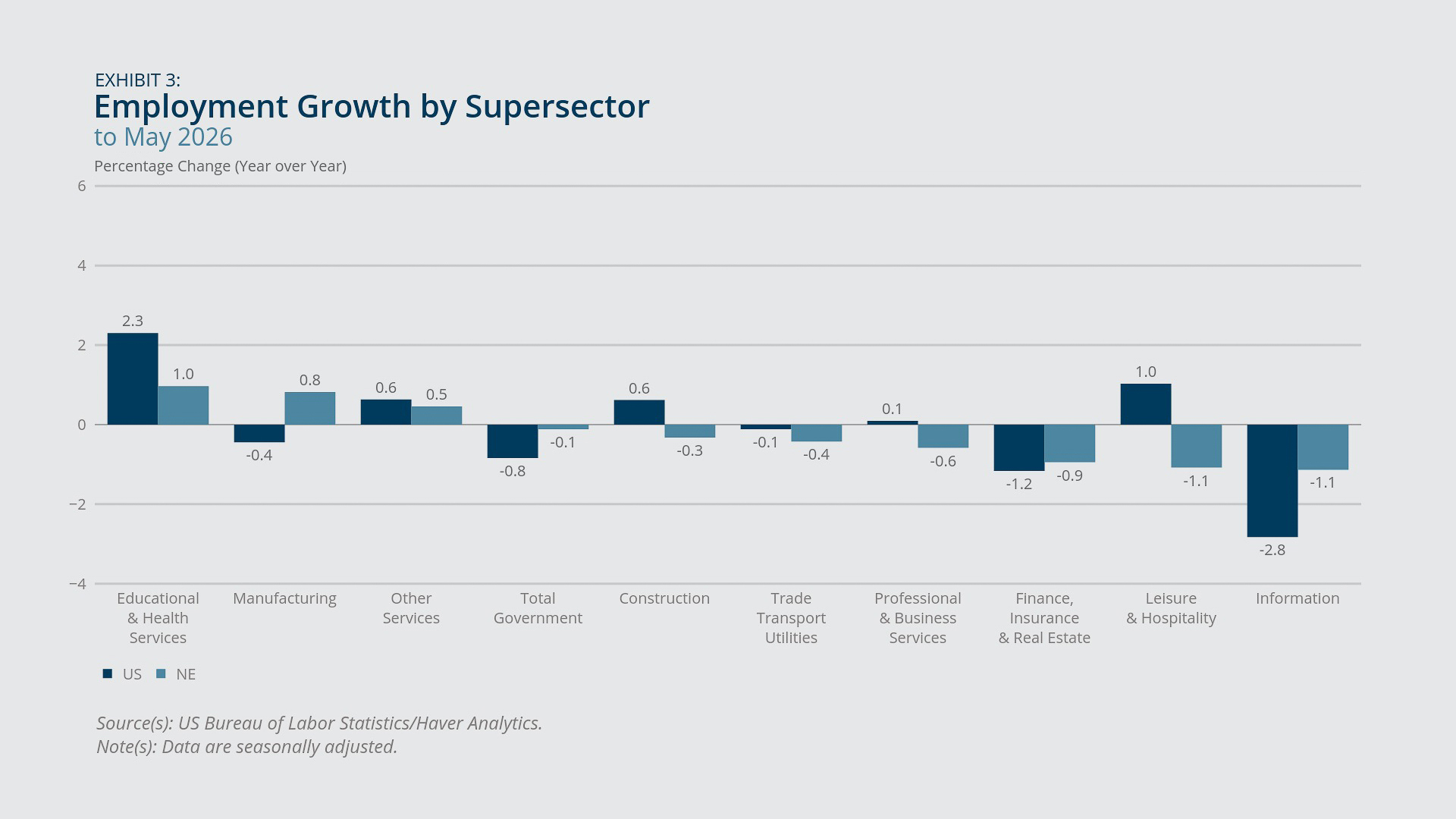
- The only sectors in which employment increased over the past year were education and health services, manufacturing, and other services; all of the other sectors in the region exhibited declining employment.
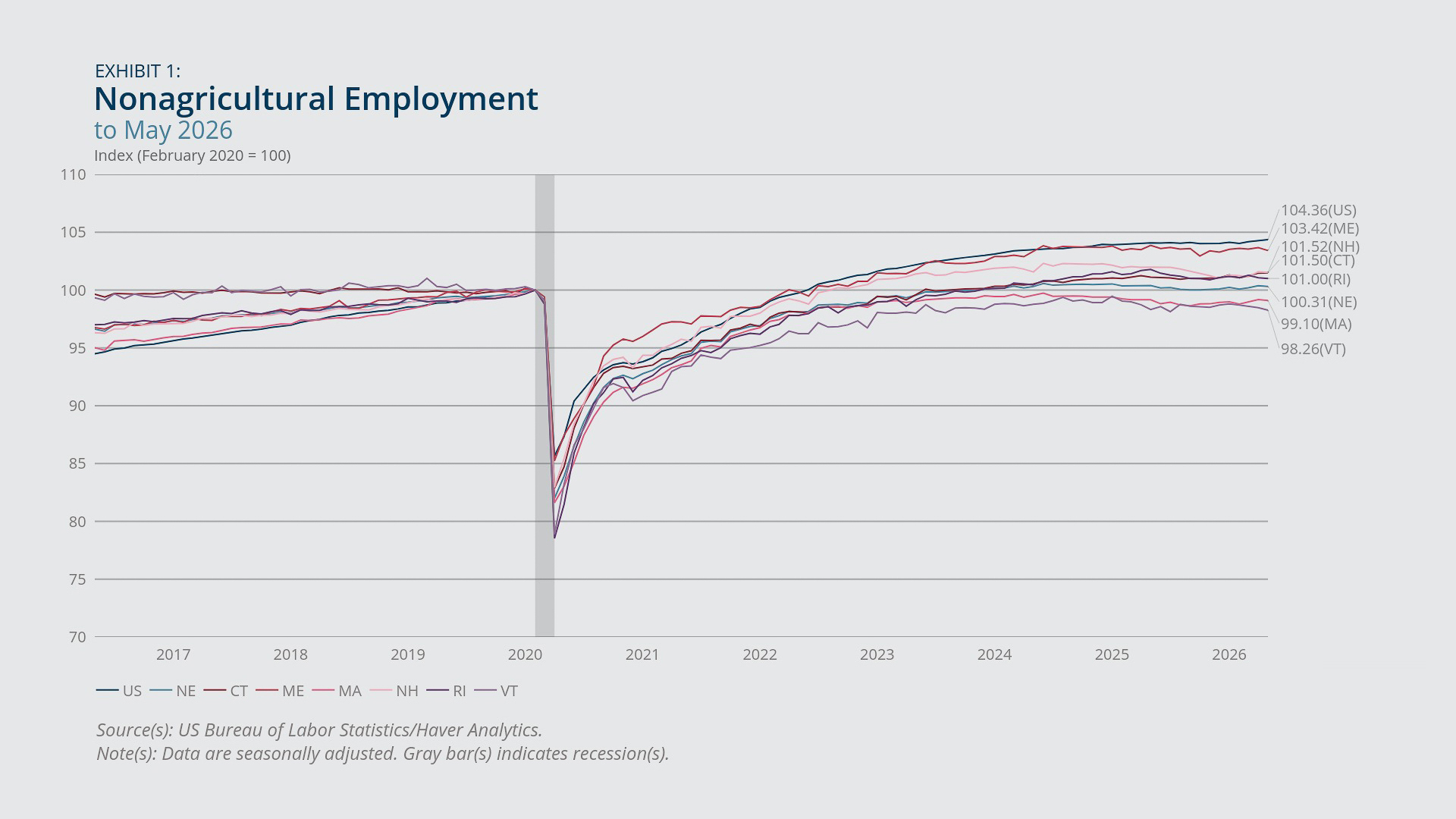
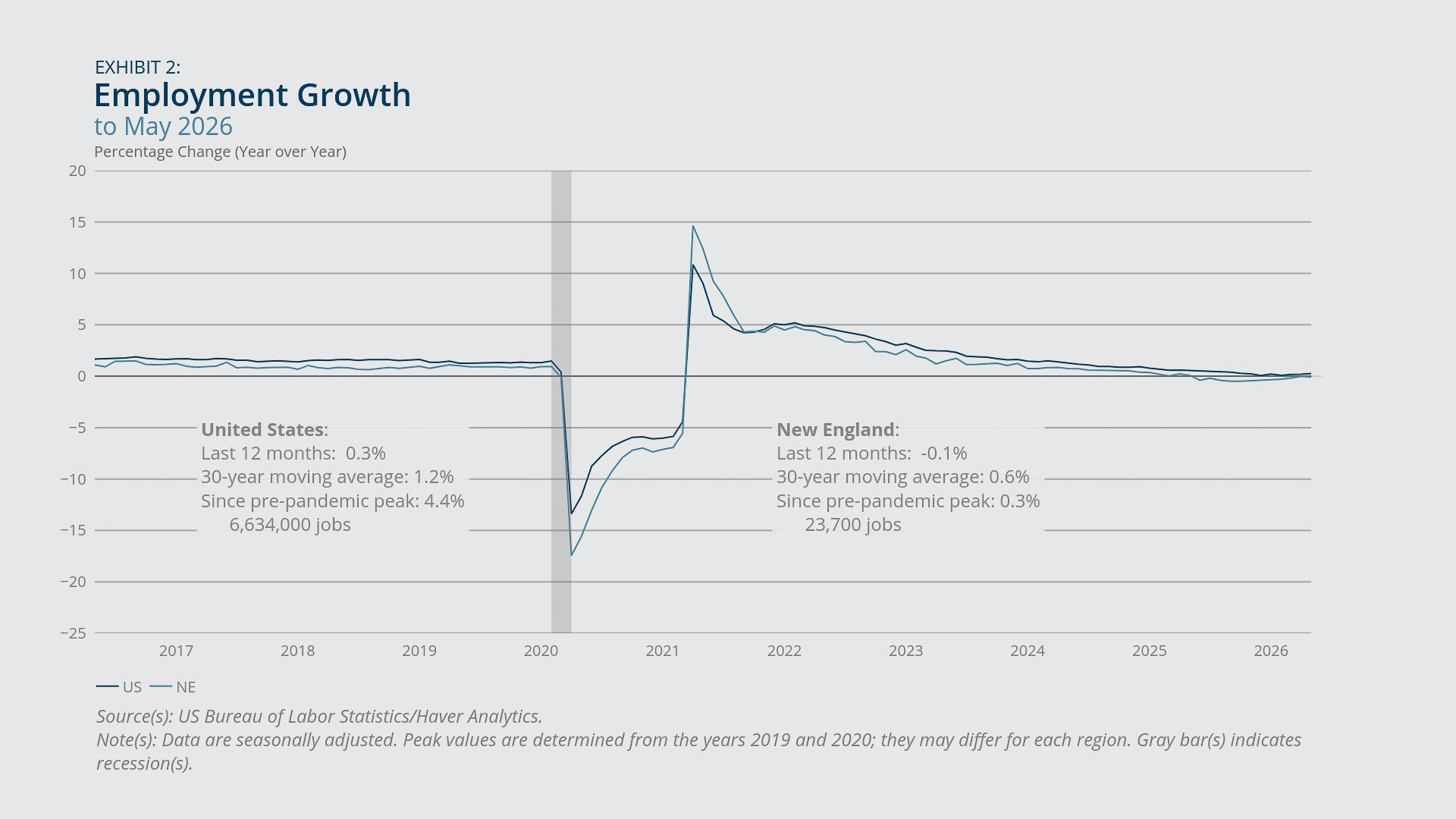
Despite the loss of 5,400 jobs in New England in May 2026 (not shown), total payroll employment for the month remained above pre-pandemic levels (Exhibit 1). Employment growth from February 2020 to May 2026 remained substantially slower in the region (0.3 percent) than in the nation as a whole (4.4 percent). New England experienced negative employment growth over the past year compared with positive but modest year-over-year growth in the United States (–0.1 percent versus 0.3 percent) (Exhibit 2). Employment in four New England states was higher than pre-pandemic levels, led by the growth rates in Maine and New Hampshire (3.4 percent and 1.5 percent higher levels of employment than in February 2020 in those states, respectively). However, those leading growth rates were still lower than the analogous national rate. Meanwhile, employment in Massachusetts and Vermont was lower than pre-pandemic levels (0.9 percent and 1.7 percent lower levels of employment than in February 2020 in those states, respectively).1
Employment growth in New England varied across sectors as well. Regarding year-over-year job growth, educational and health services exhibited the largest increase in the region (1.0 percent) in May 2026, followed by manufacturing (0.8 percent) and other services (0.5 percent). By contrast, all other sectors exhibited year-over-year decreases in employment, with finance, insurance, and real estate; leisure and hospitality; and information displaying the most negative employment growth (year-over-year declines of 0.9 percent, 1.1 percent, and 1.1 percent, respectively) (Exhibit 3).2

Federal Reserve Bank of Boston

Federal Reserve Bank of Boston
Federal Reserve Bank of Boston
Unemployment and Labor Force Participation
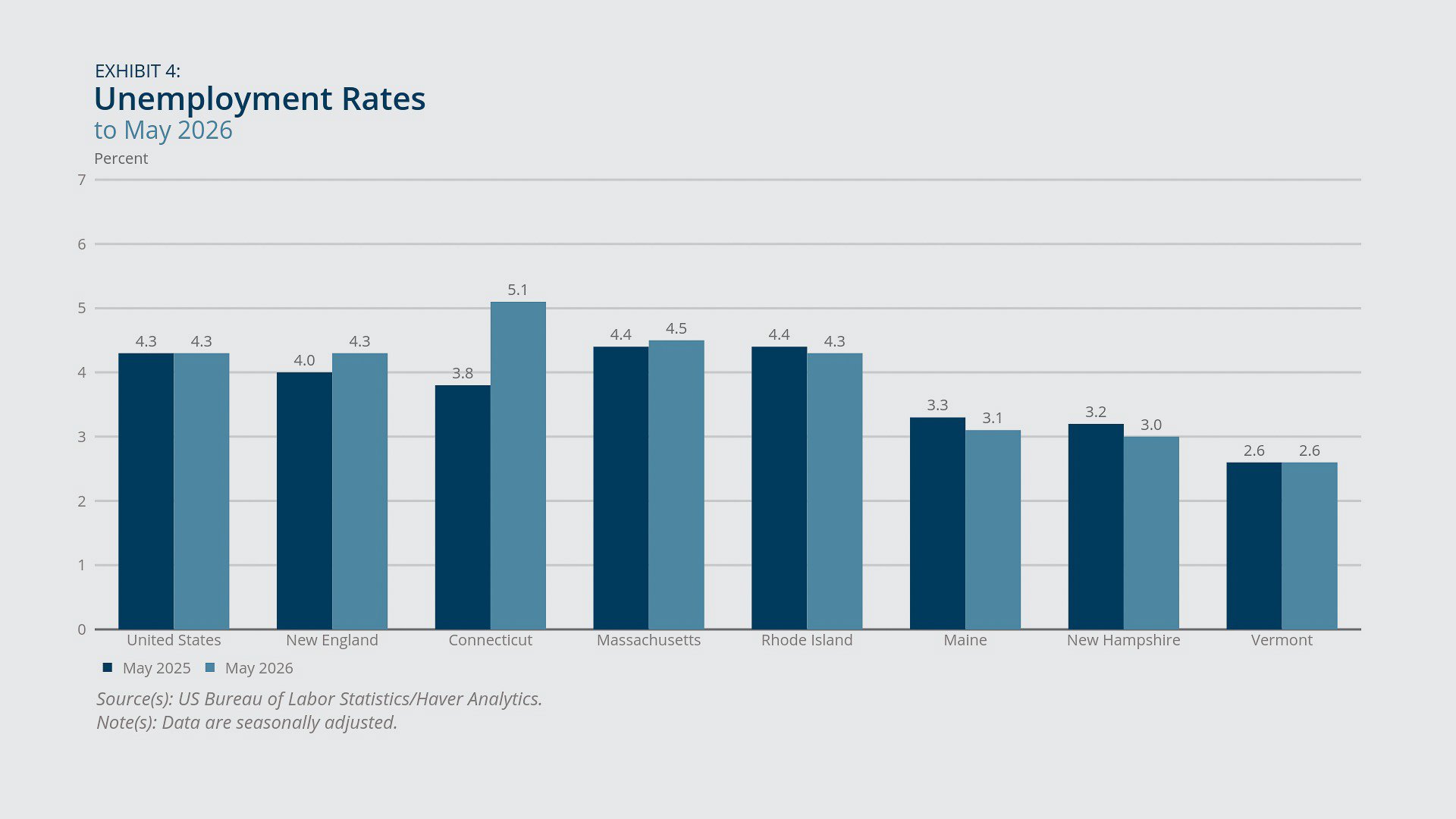
- The unemployment rate in New England was equal to the US rate in May 2026 and experienced a year-over-year increase, whereas the US rate did not change over that same year.
- Unemployment rates in the region ranged from 2.6 percent in Vermont to 5.1 percent in Connecticut.
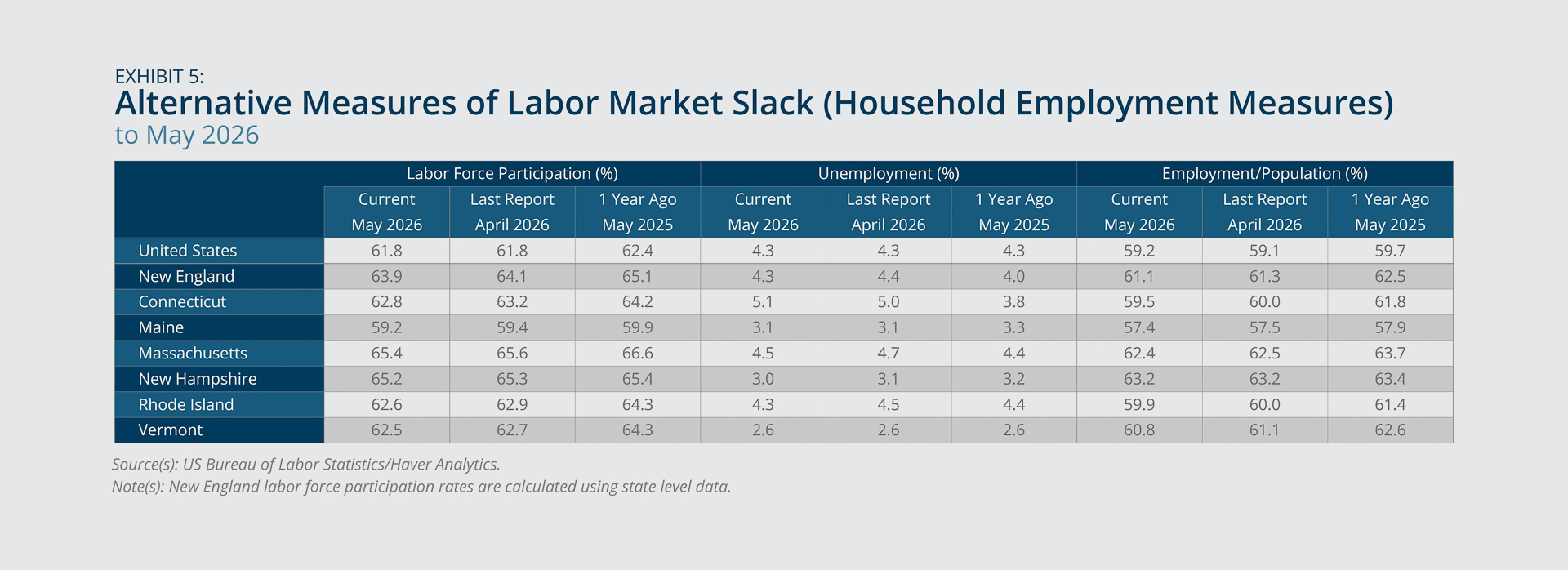
Unemployment in New England was 4.3 percent in May 2026 according to household surveys, reflecting a year-over-year increase of 0.3 percentage point. Regional unemployment was equal to the corresponding national rate, which experienced no year-over-year change (Exhibit 4). Among the New England states, unemployment rates ranged from a low of 2.6 percent in Vermont to a high of 5.1 percent in Connecticut, with the latter also exhibiting the largest year-over-year increase in the rate (1.3 percentage points). Other than Massachusetts, where the unemployment rate grew minimally over the previous year (0.1 percentage point), every other state in the region saw the unemployment rate remain the same or fall during that time.
Assessing labor force participation rates (Exhibit 5) can help determine if they are a potential contributing factor to the recorded changes in unemployment rates. In New England, the participation rate decreased year-over-year by 1.2 percentage points in May 2026 to 63.9 percent, aligning with the corresponding but smaller 0.6 percentage point fall in the national rate to 61.8 percent. Participation rates fell during this period for every state in the region, suggesting a limited role for this factor in explaining recent trends in unemployment rates.
Federal Reserve Bank of Boston
Federal Reserve Bank of Boston
Inflation
- Inflation in New England was higher than inflation in the United States in June 2026.
- Year-over-year price growth in the region exhibited a deceleration in June 2026 compared with such growth in the preceding month, with transportation and recreation among the contributing expenditure categories.
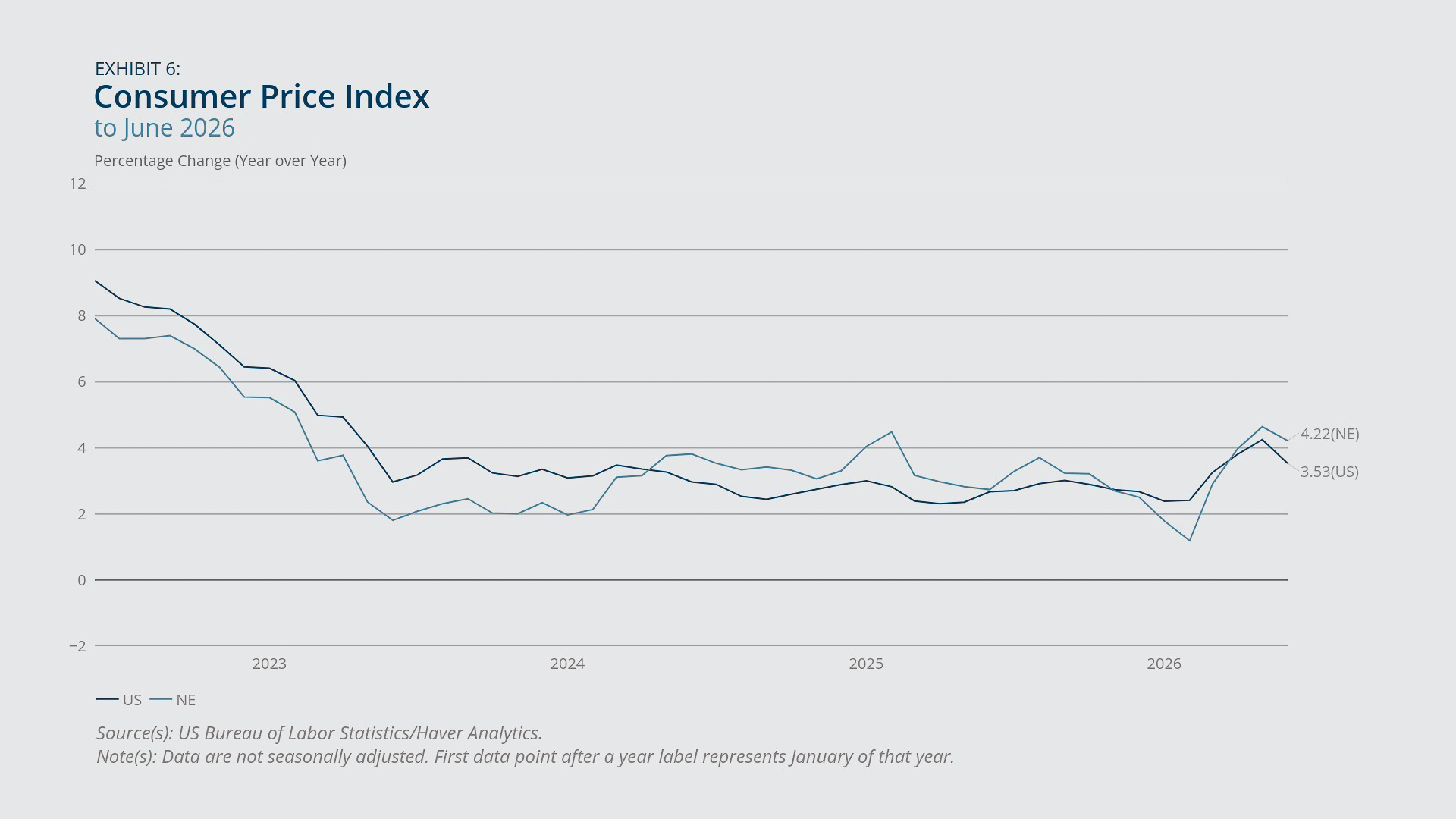
In June 2026, the Consumer Price Index for All Urban Consumers (CPI-U) exhibited year-over-year price growth of 4.2 percent for New England compared with a rate of 3.5 percent for the United States (Exhibit 6). Both the region and the nation experienced a deceleration in the rate of annual inflation relative to such price growth in the preceding month. In the region, inflation was down by 0.4 percentage point from May 2026 to June 2026, while in the nation, annual price growth fell by 0.7 percentage point over that period.
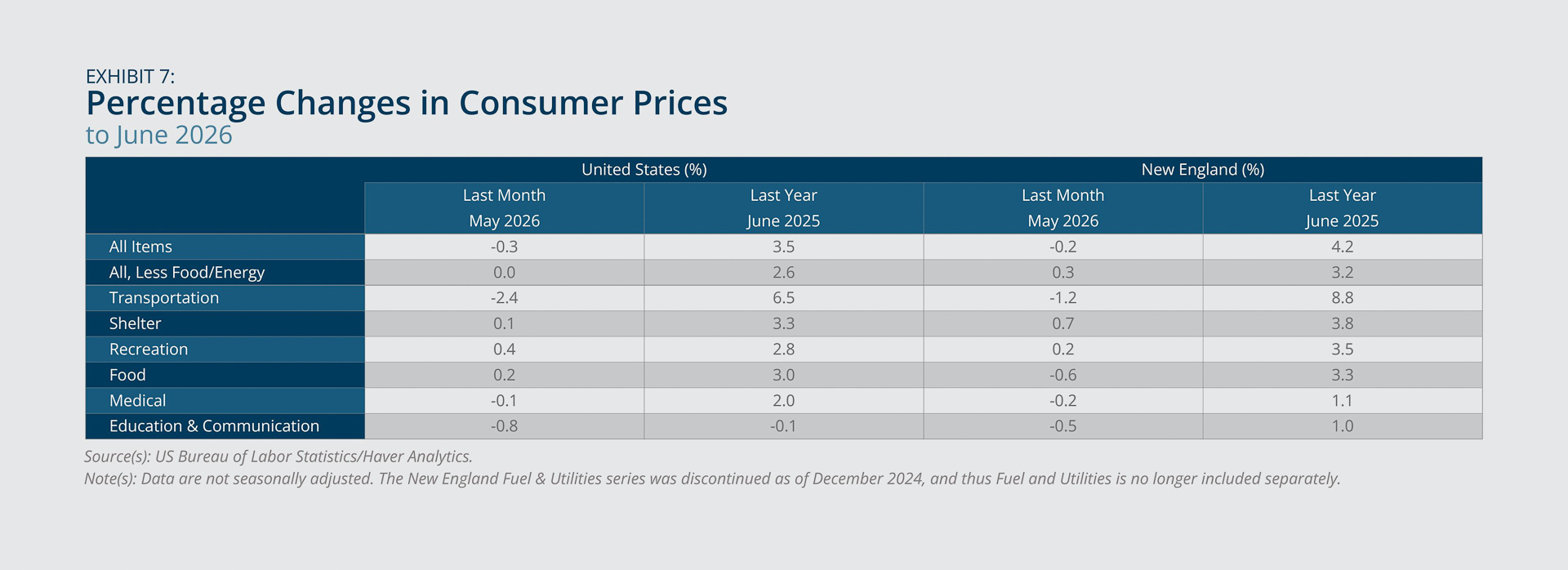
The transportation, shelter, and recreation expenditure categories displayed the fastest annual price growth in the region, with year-over-year increases in transportation prices (8.8 percent) more than doubling the growth pace of shelter prices (3.8 percent) and recreation prices (3.5 percent) (Exhibit 7). Meanwhile, the education and communication and medical expenditure categories underwent the slowest annual price growth in New England, although price increases were nevertheless positive. Core inflation (which excludes food and energy prices) in New England (3.2 percent) outpaced core inflation in the nation (2.6 percent) and was lower than the overall inflation rate in the region. A deceleration in annual price growth for multiple expenditure categories, led by transportation (–1.4 percentage points) and recreation (–1.0 percentage point), contributed to the decrease in year-over-year inflation observed in New England in June 2026 compared with May 2026.
Federal Reserve Bank of Boston
Federal Reserve Bank of Boston
House Prices
- Annual house-price growth in New England (2.9 percent) exceeded corresponding growth in the United States (1.7 percent).
- Two New England states, Vermont and Connecticut, ranked among the top five in the nation regarding fastest year-over-year house-price growth.
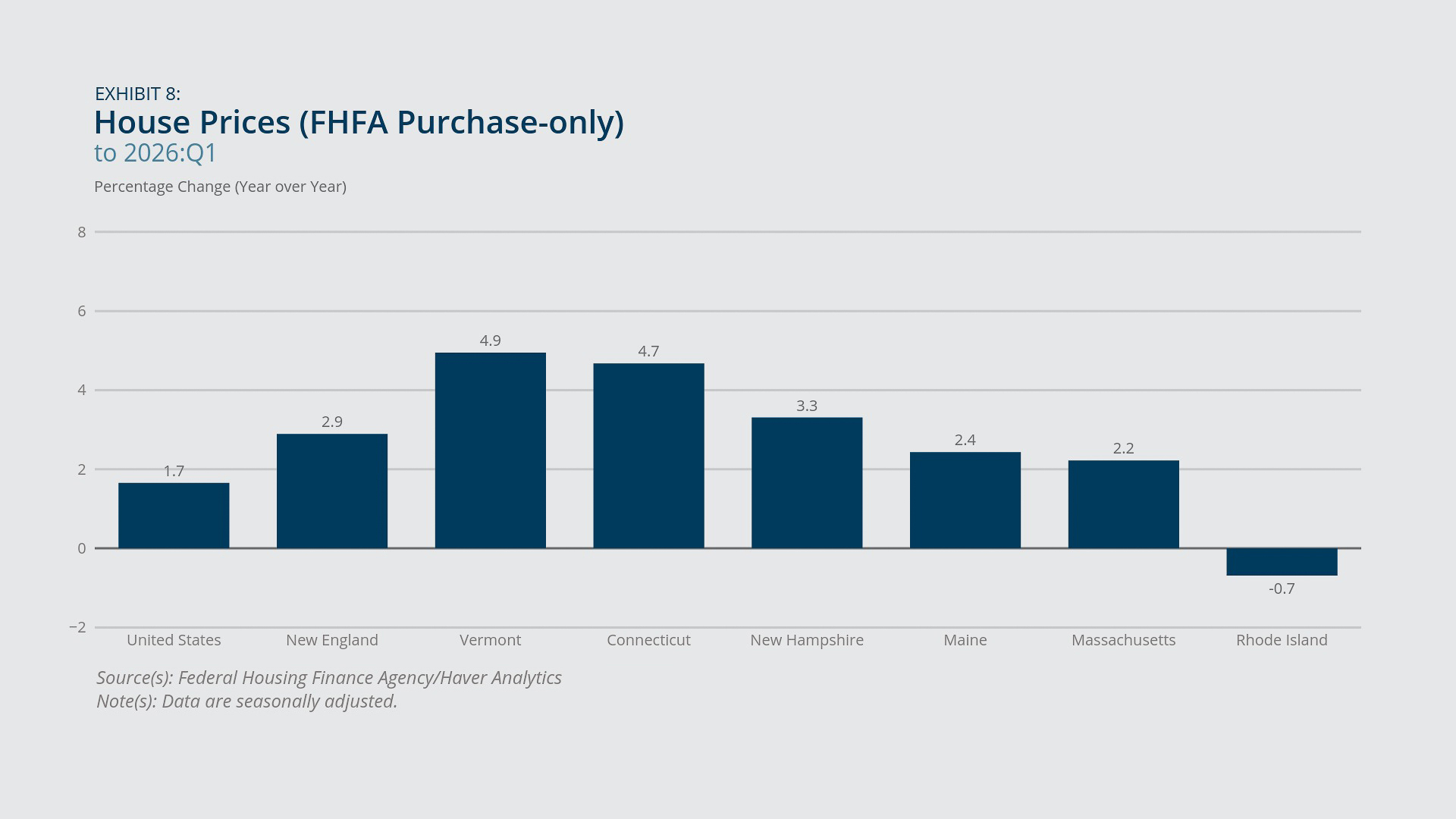
In the first quarter of 2026, the year-over-year growth in house prices (as measured by the Federal Housing Finance Agency House Price Index) in New England (2.9 percent) exceeded the concurrent national rate (1.7 percent) (Exhibit 8). Of the nine census divisions in the United States, New England experienced the fourth-fastest rate of year-over-year house-price growth.3 Additionally, two of the region’s states ranked among the nation’s top five regarding fastest year-over-year house-price growth: Vermont (4.9 percent, ranked third) and Connecticut (4.7 percent, ranked fourth). Rhode Island experienced negative house-price growth (–0.7 percent) and was the only state in the region that saw falling house prices and a growth rate below the national rate.
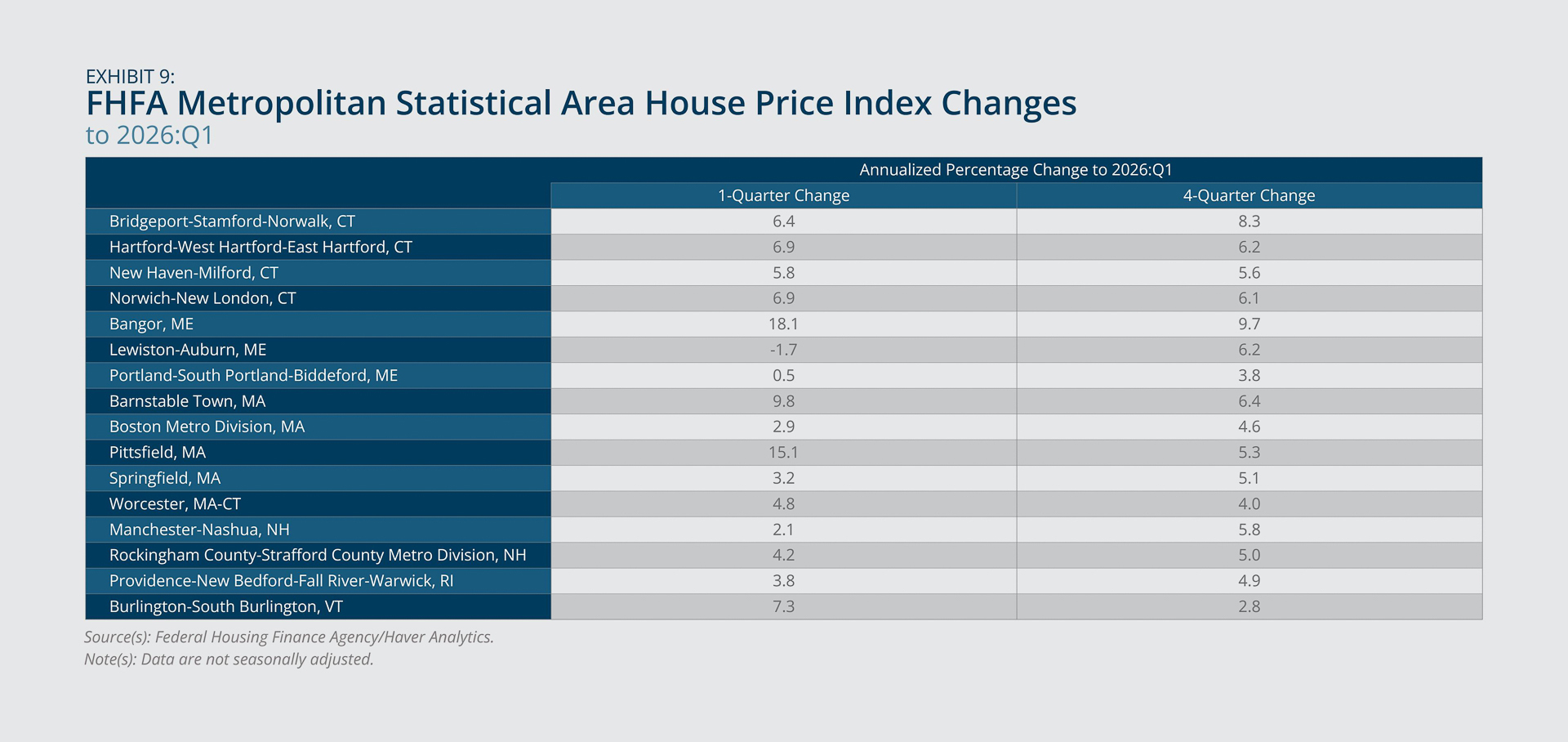
Among New England metropolitan areas, annual house-price growth ranged from 2.8 percent in the Burlington-South Burlington metropolitan area of Vermont to 9.7 percent in the Bangor metropolitan area of Maine (Exhibit 9). Of the region’s states, Maine and Connecticut displayed the largest and second-largest ranges of year-over-year house-price growth among their metropolitan areas, respectively.
Federal Reserve Bank of Boston
Federal Reserve Bank of Boston
Consumer Confidence
- Consumers in both New England and the United States were slightly less confident in June 2026 than they were a year earlier.
- In the region as well as the nation, sentiment about the present declined but expectations about the future rose.
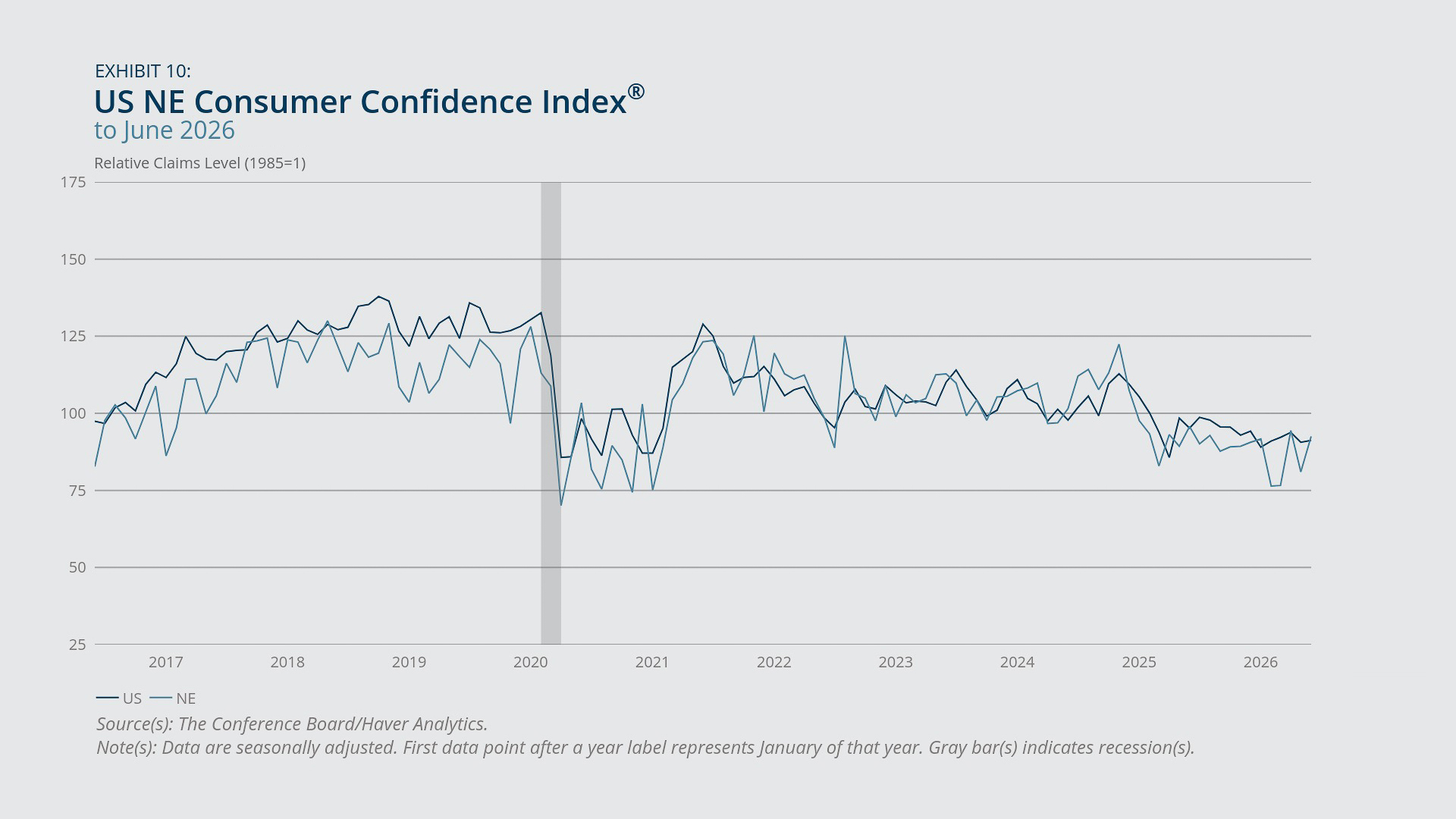
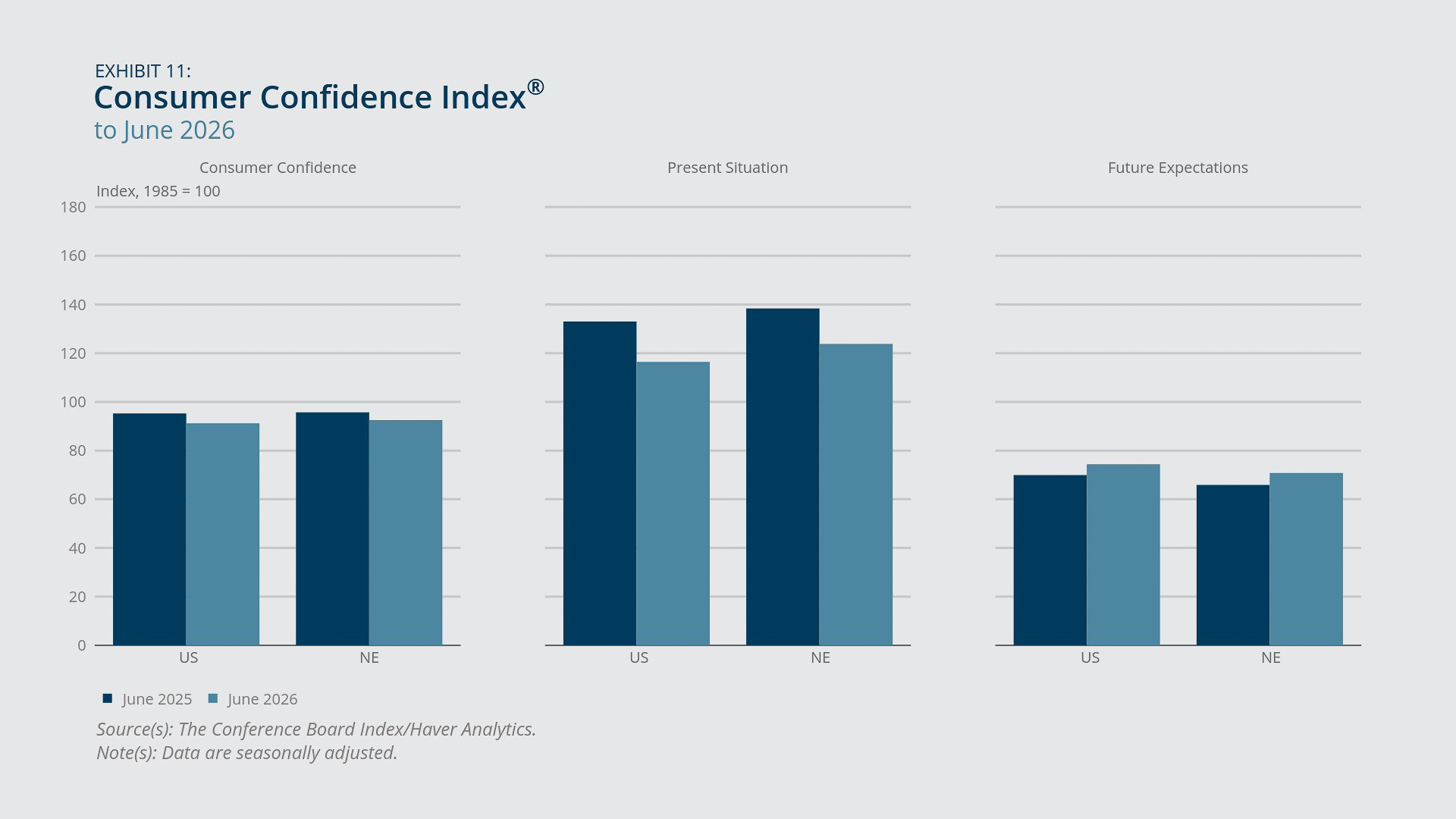
Consumers in both New England and the United States exhibited slightly less confidence in June 2026 compared with one year earlier, according to the Conference Board’s Consumer Confidence Index (Exhibit 10). The year-over-year decline in consumer sentiment was smaller in the region than in the nation. For both the region and the nation, the decline in consumer confidence reflected diminished sentiment about the present, as expectations about the future rose modestly (Exhibit 11). Consumers made fewer references to oil and gas prices in June than they did in May, although such mentions remain elevated, reflecting some moderation of their concerns about the inflationary effects of the Middle East war.4
Federal Reserve Bank of Boston
Federal Reserve Bank of Boston
Endnotes
- By comparison, since February 2020, employment-to-population ratios have fallen in all New England states, with the largest drops in Connecticut and Vermont (declines of 4.1 percentage points and 3.6 percentage points on February 2020 ratios of 63.7 percent and 64.4 percent, respectively). Similarly, no state in the region experienced positive year-over-year growth in its employment-to-population ratio from May 2025 to May 2026.
- By further disaggregating regional data, we find that year-over-year employment growth in New England in May 2026 was larger for health care and social assistance (1.1 percent) than educational services (0.6 percent). We also find that total government employment exhibited slightly negative year-over-year growth (–0.1 percent), the smallest decline among the examined sectors. However, this job growth was quite mixed among federal government (–5.3 percent), state government (1.3 percent), and local government (0.1 percent).
- See “FHFA House Price Index (HPI) Quarterly Report – 2026Q1 & March 2026,” Federal Housing Finance Agency Index Report, May 26, 2026.
- See “US Consumer Confidence Inched Up in June,” Conference Board press release, June 30, 2026.

 About the Authors
Osborne Jackson,
Federal Reserve Bank of Boston
Osborne Jackson is a principal economist with the New England Public Policy Center in the Federal Reserve Bank of Boston Research Department.
Email: Osborne.Jackson@bos.frb.org
Alejandra Guadarrama-Mojica,
Federal Reserve Bank of Boston
Alejandra Guadarrama-Mojica is a senior research associate in the Federal Reserve Bank of Boston Research Department.
Acknowledgments
Kelly Jackson, a senior data analyst in the Federal Reserve Bank of Boston Research Department, prepared the exhibits for this memo.
Resources
Keywords
- Regional economy ,
- Economic Conditions ,
- New England