New England Economic Conditions Through March 3, 2026 


Key Takeaways
- Compared with a year prior, employment in New England declined by 0.1 percent and the unemployment rate increased by 0.5 percentage point in December 2025. Nonetheless, the regional unemployment rate remained below the national rate.
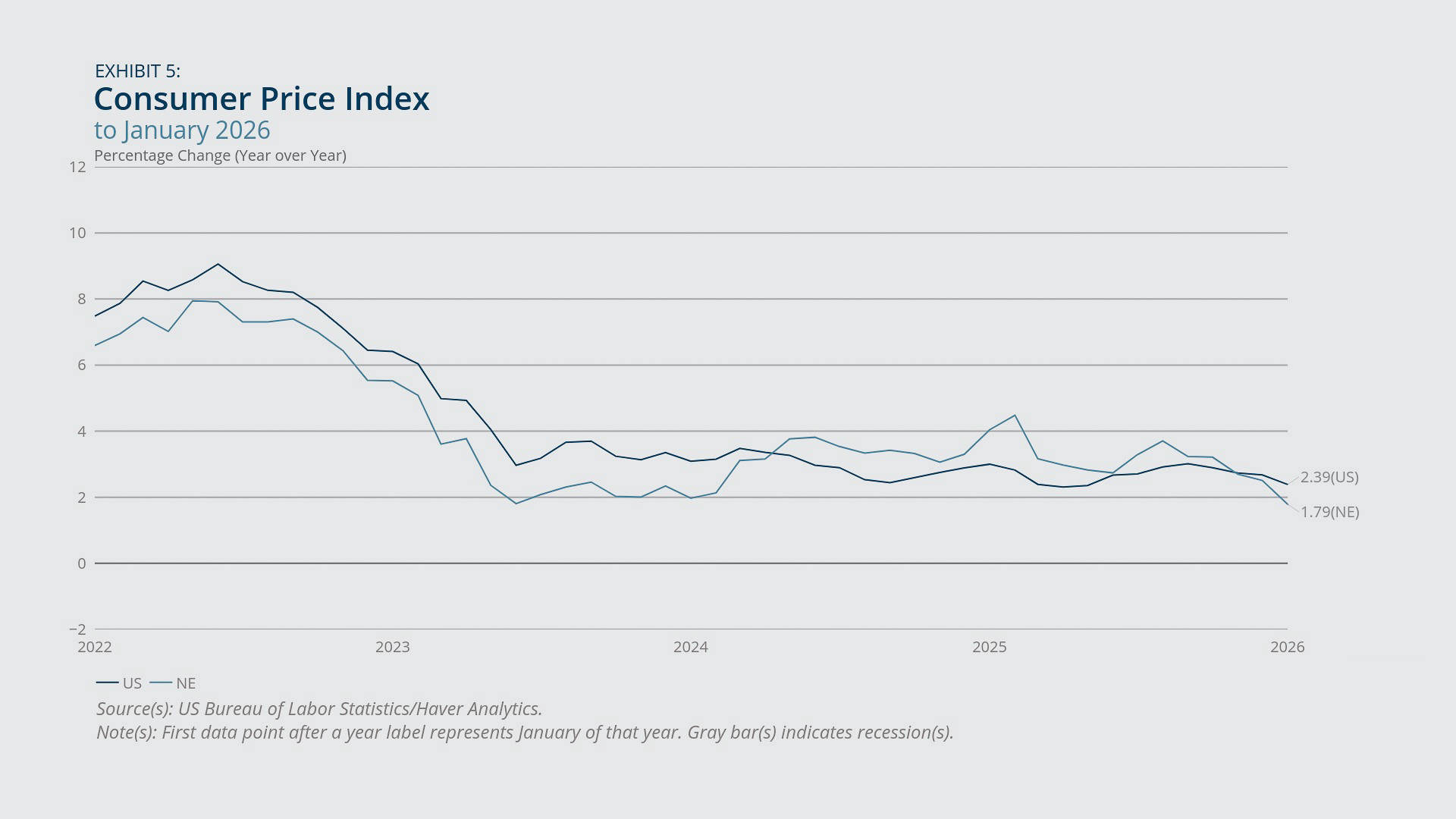
- Inflation in New England fell to 1.8 percent in January 2026, dropping below 2 percent for the first time in two years.
- Year-over-year house-price growth for 2025:Q4 was stronger in the New England states than in the nation, but Boston’s office markets remained weak, with vacancies rising and rents remaining flat.
- Consumer confidence in New England and across the country dropped from a year prior due to concerns about current business conditions, the job market, and inflation.
Sign up for new research and data on the New England economy.
Payroll Employment
- Employment in New England declined slightly in December 2025 compared with a year prior.
- Employment in educational and health services grew much more slowly in the region than nationally over that period.
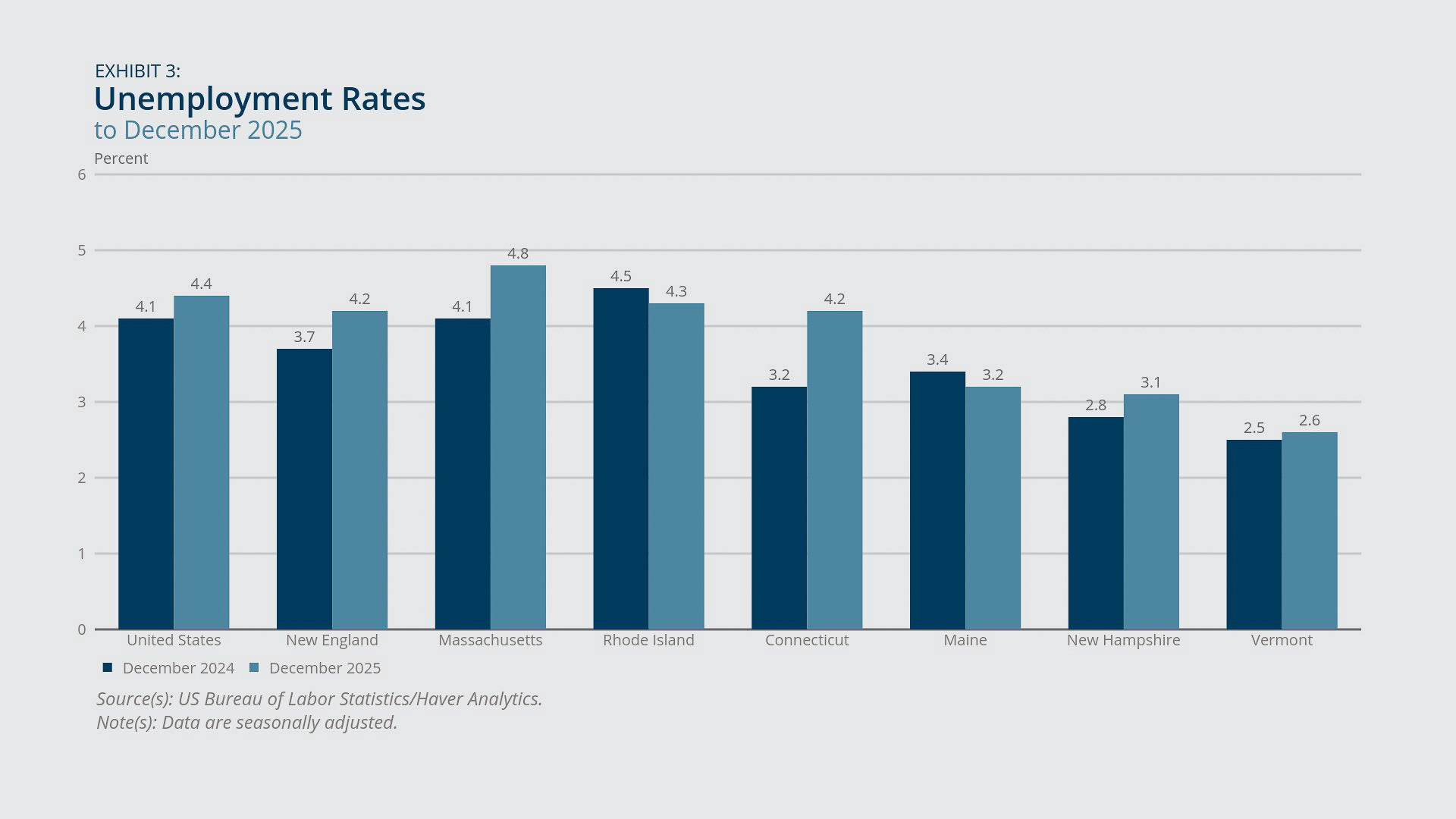
- New England’s unemployment rate remained below the national rate in December 2025 despite a 0.5 percentage point increase compared with December 2024.
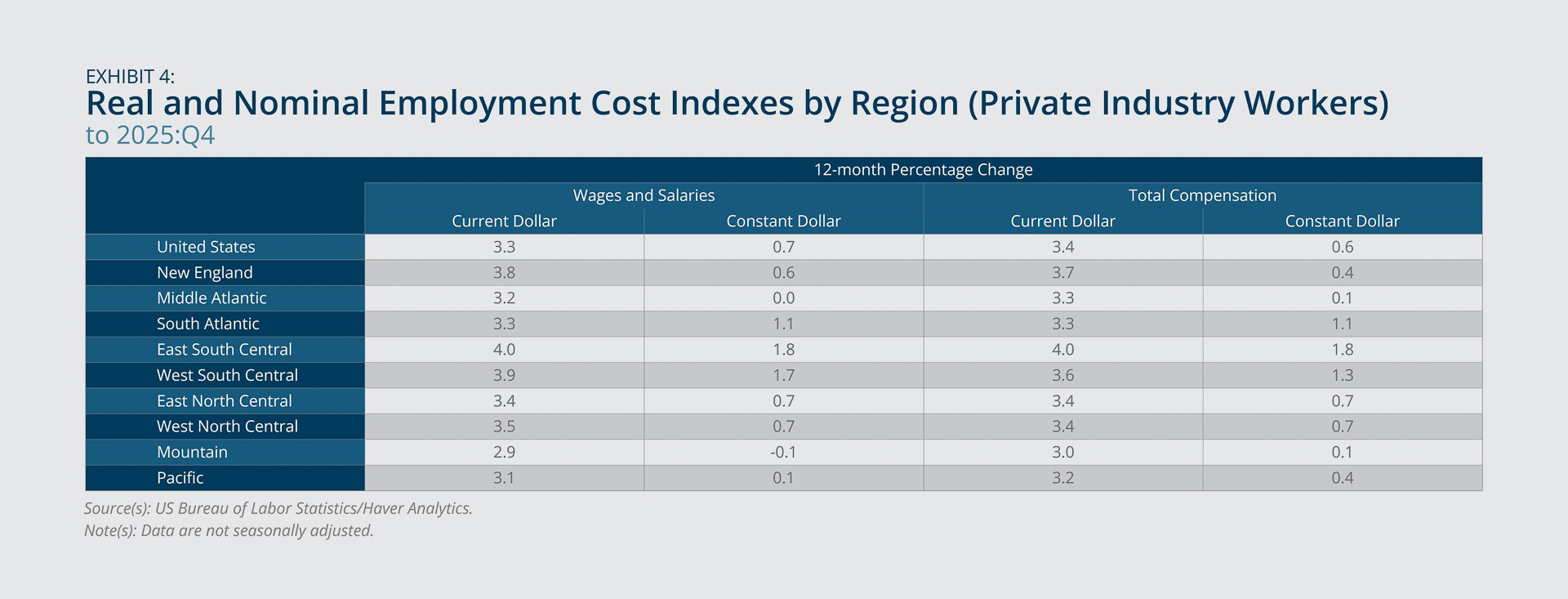
- New England workers experienced a smaller year-over-year rise in real wages, salaries, and total compensation compared with US workers in 2015:Q4.
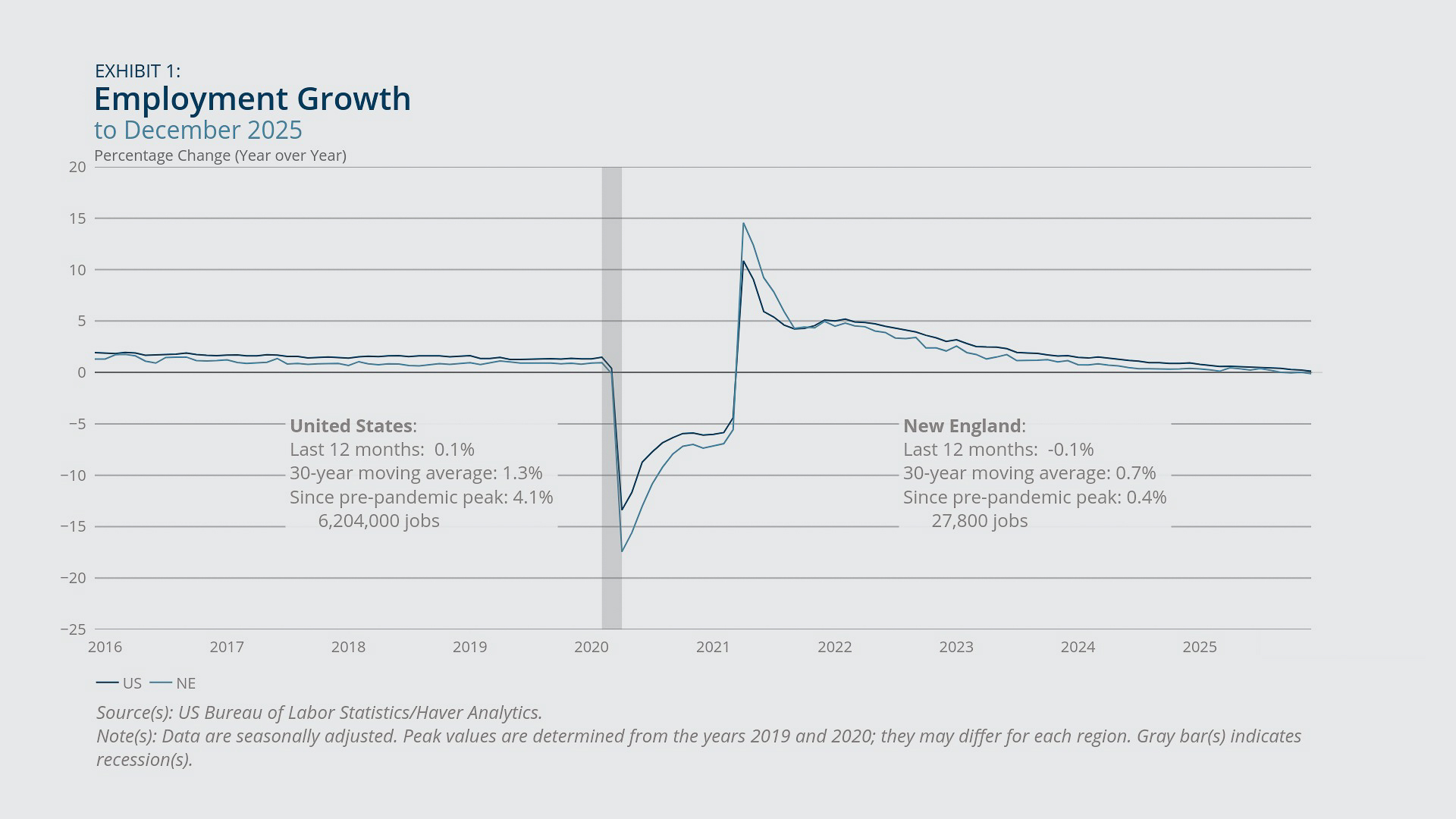
Employment barely changed in New England and across the country from December 2024 to December 2025 (Exhibit 1). The region experienced a 0.1 percent decline, while the United States registered only 0.1 percent growth in that 12-month period.1
Vermont stood out in the region with a 1 percent increase. Despite this growth, the state’s employment level was still 1.4 percent, or 4,600 jobs, below the pre-pandemic peak in March 2019. There was no change in employment for Massachusetts year-over-year, while the remaining New England states saw a decrease ranging from 0.1 percent in Connecticut to 0.8 percent in New Hampshire.
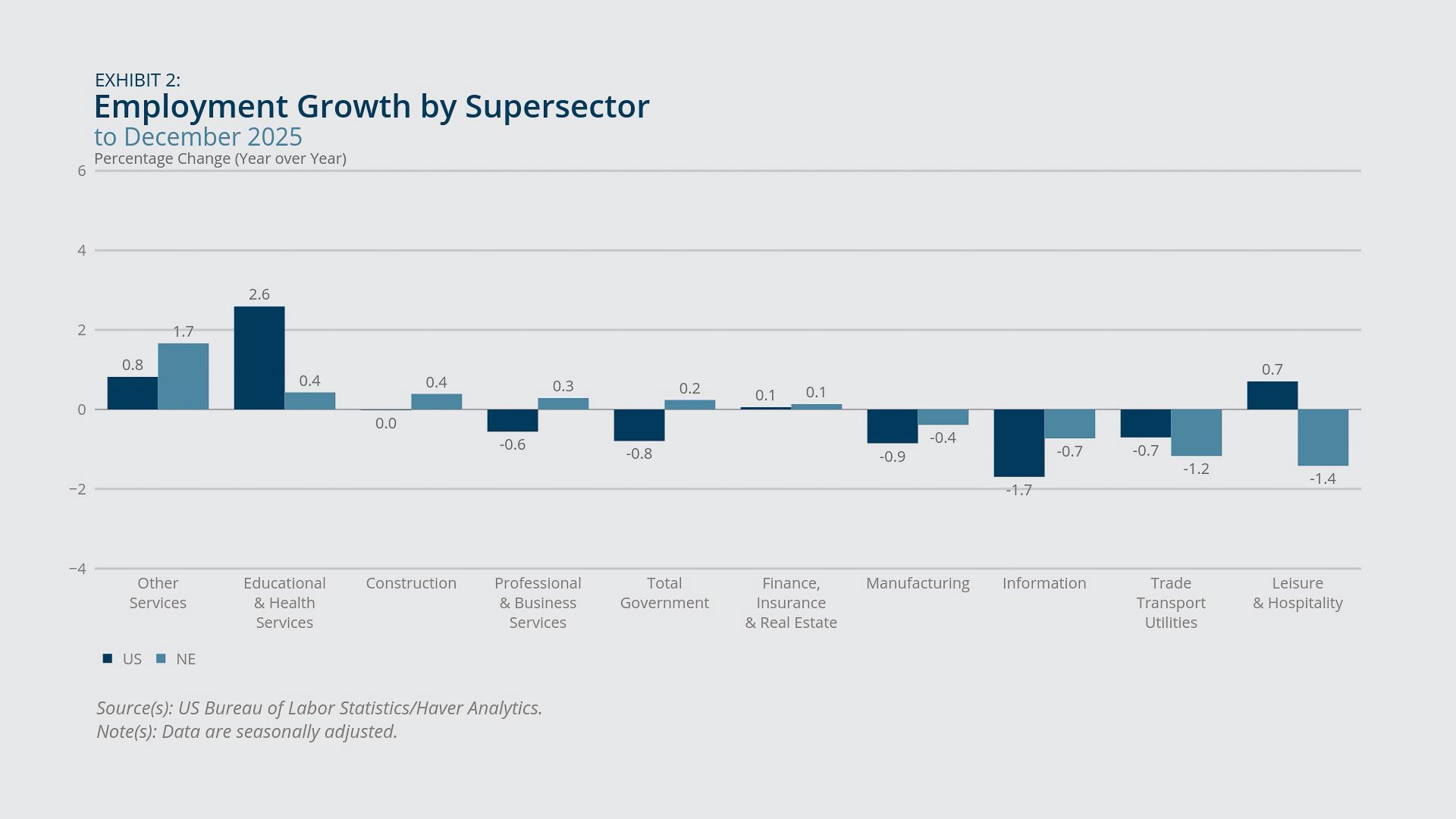
The region and the country diverged significantly in the growth of educational- and health-services jobs (Exhibit 2). That supersector was the largest contributor to US employment growth in 2025, with an annual increase of 2.6 percent. It grew much slower in New England, with an increase in employment of only 0.4 percent during the same period. More specifically, employment in the health-care and social-assistance sector grew 1 percent in the region compared with 3 percent nationally. Educational services performed even worse in New England, with employment in that sector declining by 1.6 percent regionally while remaining flat nationally.
The region also lagged the nation substantially in the growth of leisure and hospitality employment. Nationally, employment in that supersector grew 0.7 percent from December 2024 to December 2025, while New England lost 1.4 percent of its leisure and hospitality employment. This loss was the largest among all the region’s supersectors during that period. New England’s unemployment rate grew 0.5 percentage point year-over-year but remained below the national rate in December 2025 (Exhibit 3). The regional rate reached 4.2 percent that month compared with 4.4 percent for the United States. Vermont, New Hampshire, and Maine were among the states with the 10 lowest unemployment rates across the country. They ranked No. 3, 7, and 9, respectively.2 Conversely, Massachusetts had the highest unemployment rate in the region and one of the 10 highest in the country at 4.8 percent.
After inflation adjustment, New England's private-sector wages and salaries, as well as total compensation, grew moderately from 2024:Q4 to 2025:Q4 (Exhibit 4). The annual growth rates were 0.6 percent and 0.4 percent, respectively—both lower than the US rates of 0.7 percent and 0.6 percent.

Federal Reserve Bank of Boston

Federal Reserve Bank of Boston
Federal Reserve Bank of Boston
Federal Reserve Bank of Boston
Inflation
- New England’s inflation rate continued to decline in January, falling below 2 percent for the first time in two years.
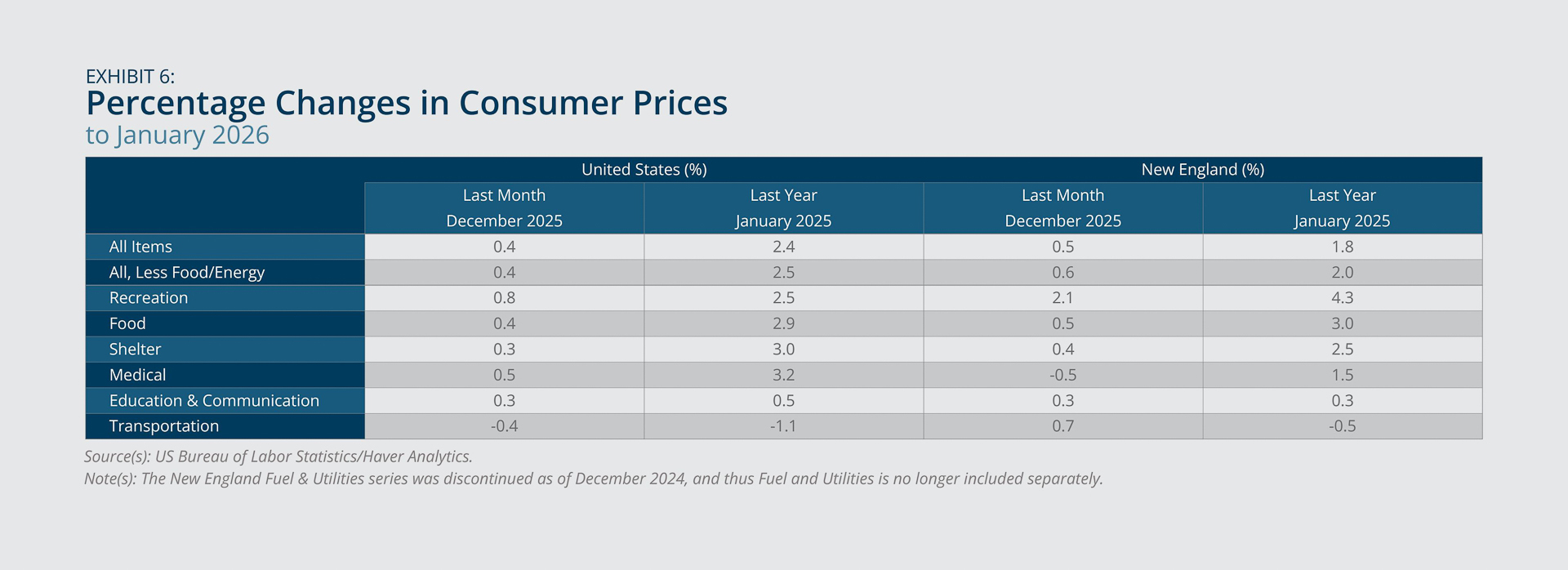
- Shelter prices in New England increased 2.5 percent year-over-year, while transportation prices declined 0.5 percent.
According to the year-over-year change in the Consumer Price Index, overall inflation in New England continued the downward trend that started in the fall of 2025 (Exhibit 5). At 1.8 percent in January, it fell below 2 percent for the first time since January 2024. It was lower than the national rate of 2.4 percent for that month.
As the largest contributor to the region’s overall inflation, shelter prices saw an annual increase of 2.5 percent in January (Exhibit 6). It was half a percentage point lower than the corresponding increase for the nation. By contrast, transportation prices in New England decreased 0.5 percent from a year prior. In particular, gasoline prices dropped 4 percent.
Federal Reserve Bank of Boston
Federal Reserve Bank of Boston
Housing and Office Markets
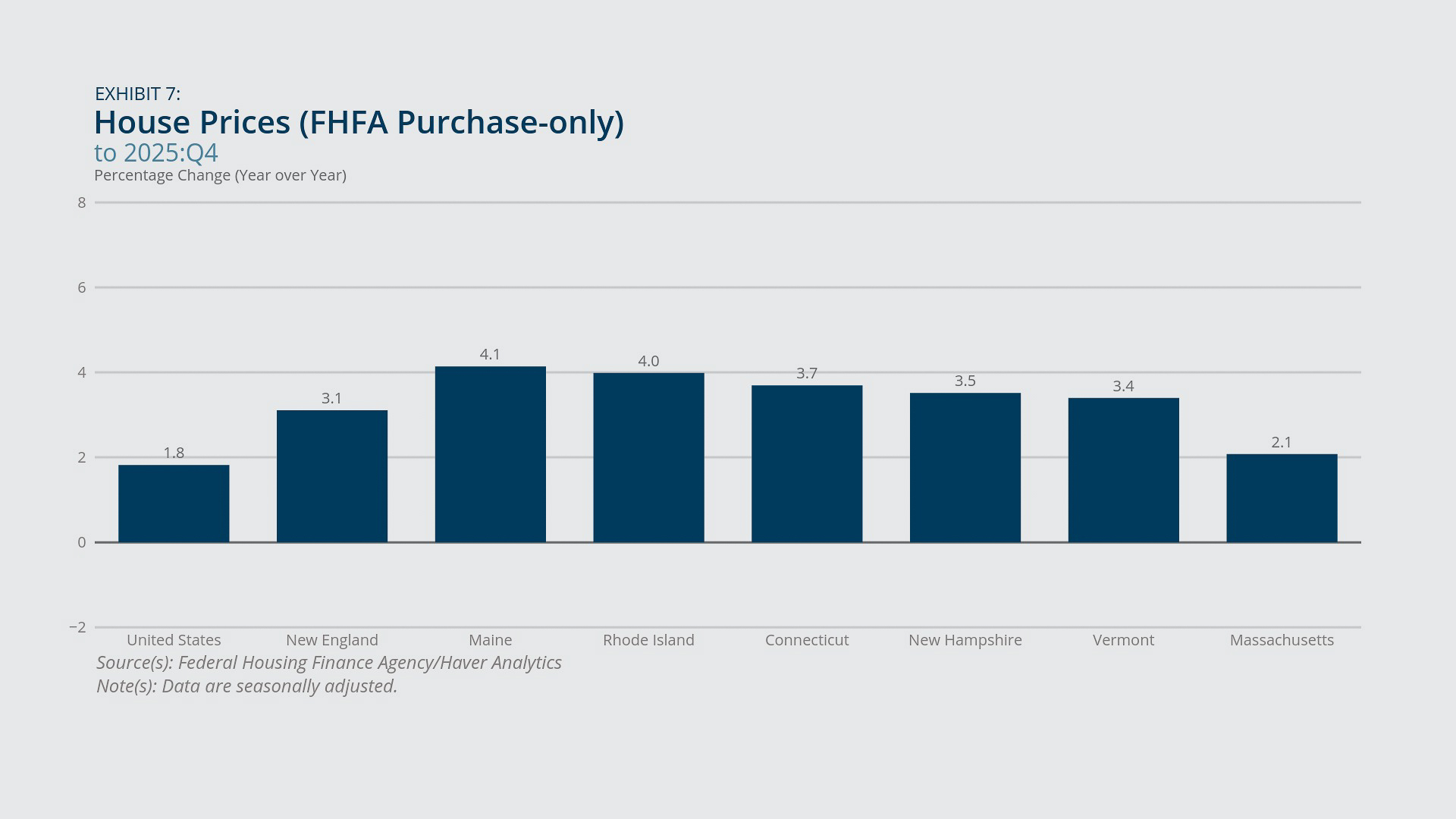
- Compared with the country as a whole, every New England state saw stronger year-over-year house-price growth for 2025:Q4.
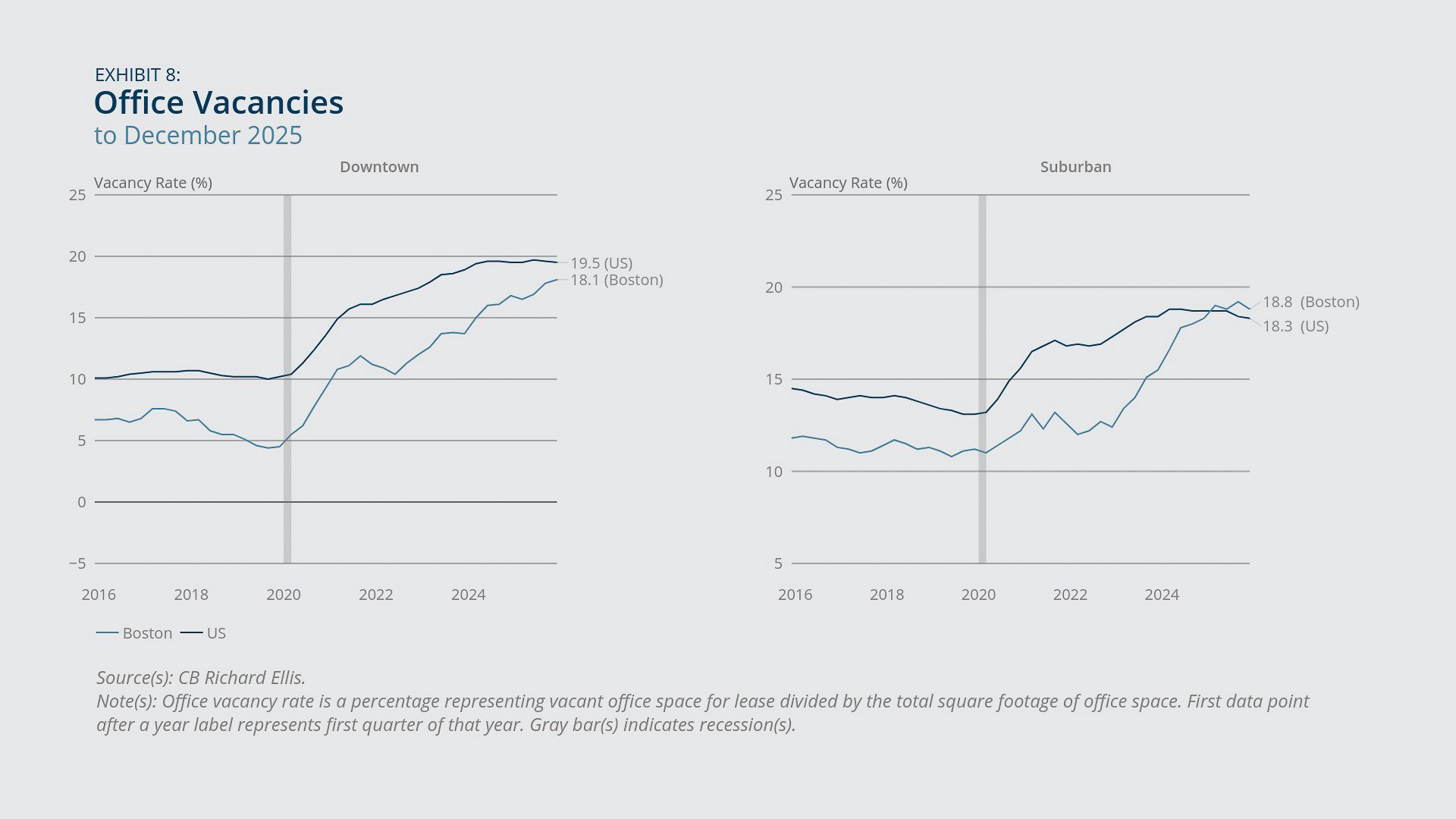
- Rising vacancies and flat rents characterized Boston’s office markets in 2025:Q4.
In the fourth quarter of 2025, house prices in New England and across the nation grew year-over-year (Exhibit 7). The annual growth rate for the region was 3.1 percent, which was higher than the national rate of 1.8 percent. Every New England state experienced positive house-price growth, ranging from 2.1 percent in Massachusetts to 4.1 percent in Maine. By contrast, nine states outside New England saw a drop in house prices.3
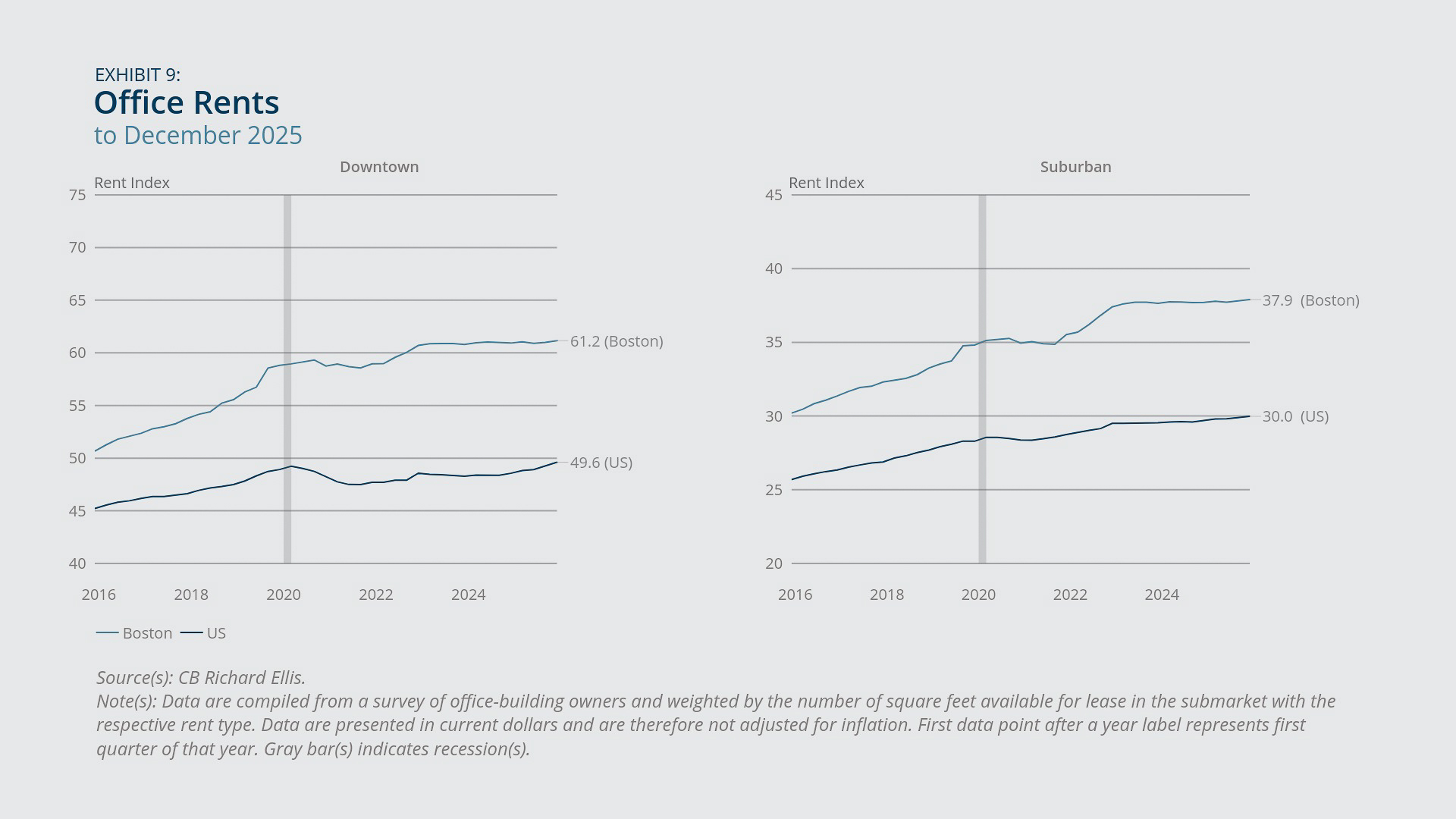
Boston’s office markets remained weak. The city’s downtown office vacancy rate climbed to 18.1 percent in 2025:Q4 (Exhibit 8). While the rate was still lower than the national rate, the gap has narrowed significantly since mid-2022. Boston’s suburban office vacancy rate was even higher, at 18.8 percent in 2025:Q4. It has remained above the US rate since 2025:Q1. As a result, Boston’s office rents were essentially flat in the 2023–2025 period (Exhibit 9). By contrast, US office rents have gradually increased since 2024:Q3.
Federal Reserve Bank of Boston
Federal Reserve Bank of Boston
Federal Reserve Bank of Boston
Consumer Confidence
- Consumer confidence in New England declined compared with a year prior.
- Consumers were more pessimistic about the present situation, citing concerns about the job market, current business conditions, and inflation.
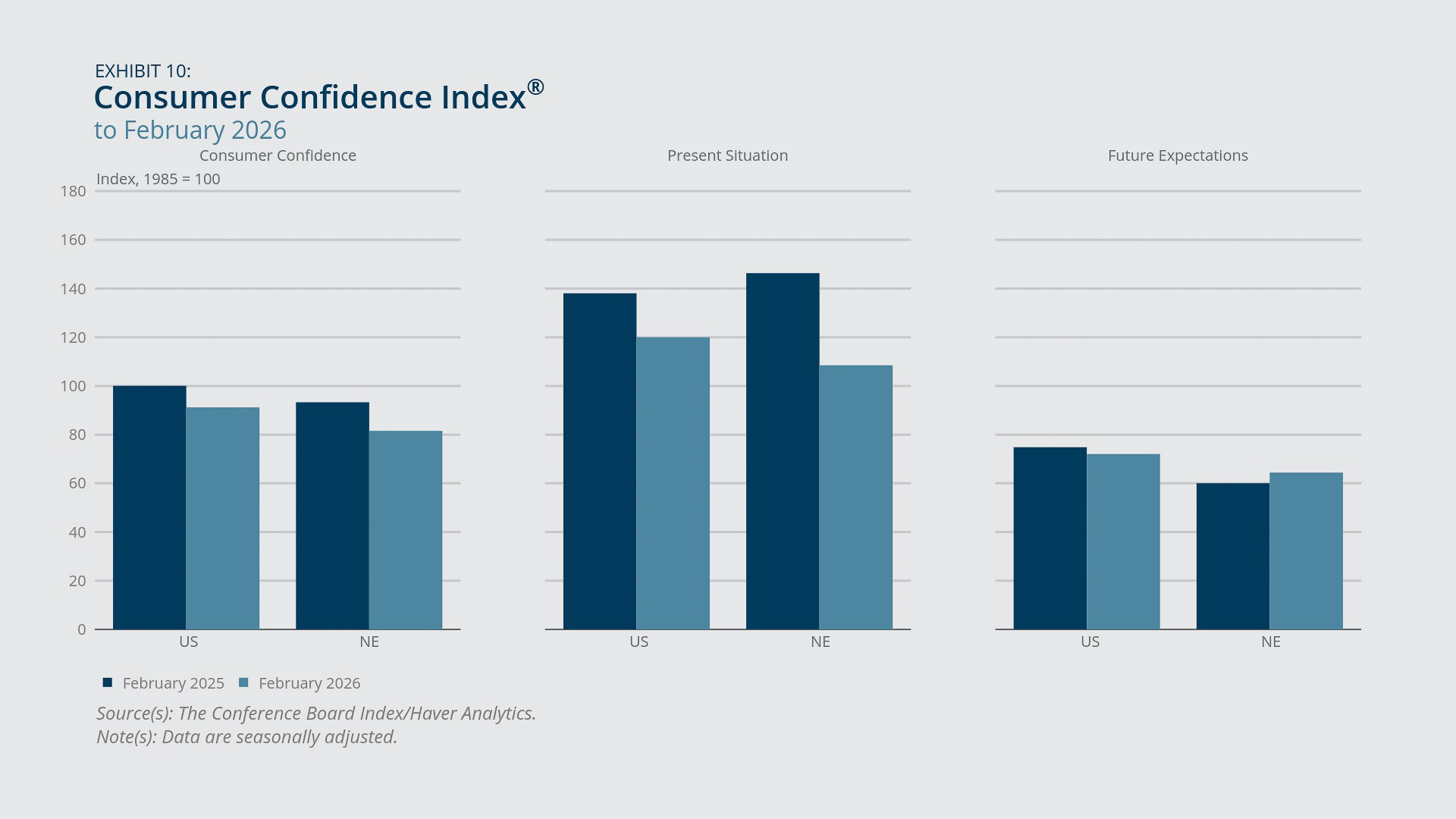
Consumer confidence decreased both in New England and across the country year-over-year through February (Exhibit 10). The decreases were driven by consumers’ lower assessment of the present situation. Nationwide, 20.6 percent of consumers reported that jobs were “hard to get,” and 19 percent viewed current business conditions as “bad.”4 In addition, many consumers noted, in their write-in responses, that prices and inflation were among their top concerns. In comparison, consumers’ future expectations changed only slightly on a yearly basis.
Federal Reserve Bank of Boston
Endnotes
- The national employment numbers reflect revised national data, which were released recently. However, revised regional and state employment data are not scheduled for release until early April. In addition to conducting regular annual benchmark revisions, the US Bureau of Labor Statistics has adopted a new statistical model to estimate “the birth and death” of business establishments. The changes have resulted in large downward revisions in the US employment data for 2024 and 2025. Therefore, we should be cautious in interpreting New England employment data before the revised data are released.
- For the ranking of unemployment rates for all 50 states and the District of Columbia, see US Bureau of Labor Statistics, Local Area Unemployment Statistics, Unemployment Rates for States (accessed March 1, 2026).
- Federal Housing Finance Agency, “U.S. House Prices Rise 1.8 Percent Year over Year; Up 0.8 Percent Quarter over Quarter,” news release, February 24, 2026.
- The Conference Board, “US Consumer Confidence Inched up in February,” February 24, 2026, https://www.conference-board.org/topics/consumer-confidence/index.cfm (accessed February 26, 2026).

 About the Authors
Bo Zhao,
Federal Reserve Bank of Boston
Bo Zhao is a principal economist with the New England Public Policy Center in the Federal Reserve Bank of Boston Research Department.
Email: Bo.Zhao@bos.frb.org
Acknowledgments
Kelly Jackson, a senior data analyst in the Federal Reserve Bank of Boston Research Department, prepared the exhibits for this memo.
Resources
Keywords
- Regional economy ,
- Economic Conditions ,
- New England