Boston Fed president visits RI to hear about opportunities in real estate, higher education 
Collins met with business owners, housing developers, and higher-ed leaders

Peter Davis/Federal Reserve Bank of Boston


Members of Rhode Island’s real estate industry told Boston Fed President Susan M. Collins recently that the state’s housing crisis is having a critical impact on its ability to attract and retain talent – and that’s having ripple effects across the economy.
Developer and tech founder Lanre Ajakaiye said Rhode Island has a shortage of affordable housing units.
“That means youth educated at our excellent institutions, like Brown University, the Rhode Island School of Design, the University of Rhode Island, and Johnson & Wales. But then they leave the state,” he said. “We lose future entrepreneurs, homeowners, and civic leaders. And families that grew up here often can’t afford to stay in Providence anymore. They have to move.”
Collins spoke with Ajakaiye and other housing-focused community members during a discussion in Providence on May 6. Earlier in the day, she met with members of the CEO Council of Rhode Island in Warren to hear about business conditions in the state. Collins also met with commercial real estate developers in the afternoon.
Later, she spoke with leaders of Rhode Island’s private colleges and universities in Cranston to hear about schools’ economic conditions and how they are preparing students to navigate tech advances like artificial intelligence in the workplace.
Affordability, high building costs at center of Rhode Island’s real estate challenges
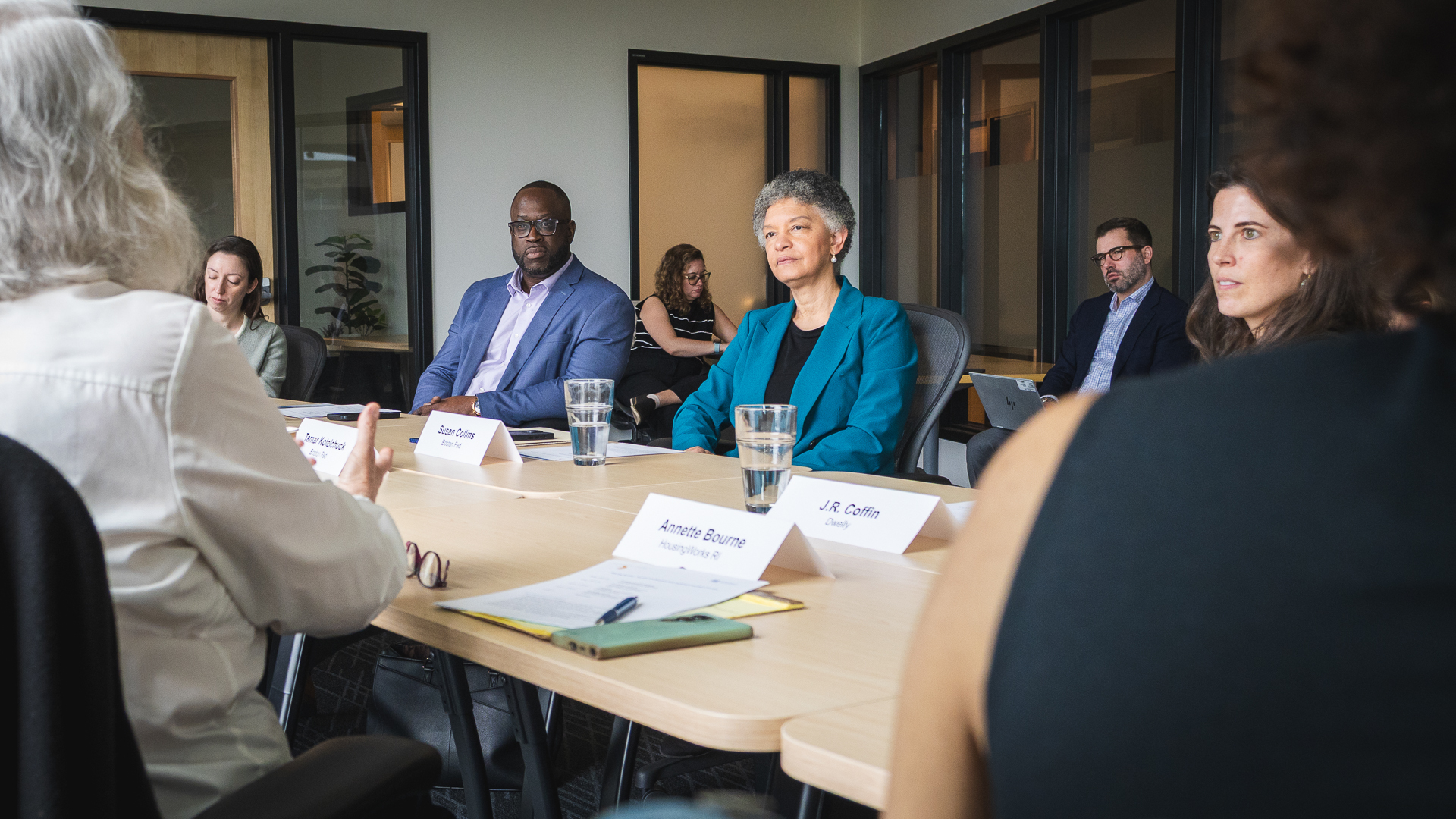
Collins heard during the housing discussion that affordability is at the core of the crisis. At the same time, Rhode Island’s housing stock is among the oldest in the nation, so the “real work” is in renovations, said architect J.R. Coffin. But, she added, they can be very expensive.
Annette Bourne, the research and policy director of HousingWorks RI at Roger Williams University, said it’s key to remember that the only age group growing in the state is people aged 65 and above. Bourne also serves on the advisory board of the Boston Fed’s New England Public Policy Center.


 View Gallery


3 images

She said she often hears developers talking about how Rhode Island needs more starter homes. But, she said, if older people had different options that better suited their needs as they age, they might be more willing to downsize and sell their family homes.
Peter Chapman, who leads nonprofit One Neighborhood Builders, said that attracting and retaining a talented workforce means creating communities where people are excited to live. And he said that means reinvesting in neighborhoods and addressing significant poverty. Doing so will require a broad and coherent economic development strategy, he said.
Commercial real estate leaders also told Collins during a later conversation in Providence that limited inventory and high building costs often deter out-of-state companies from moving to the city. They added that building costs in Providence are similar to those in Boston, while the money generated by rent is about 30% less.
Higher-ed leaders: Workplace experience before graduation is critical for students
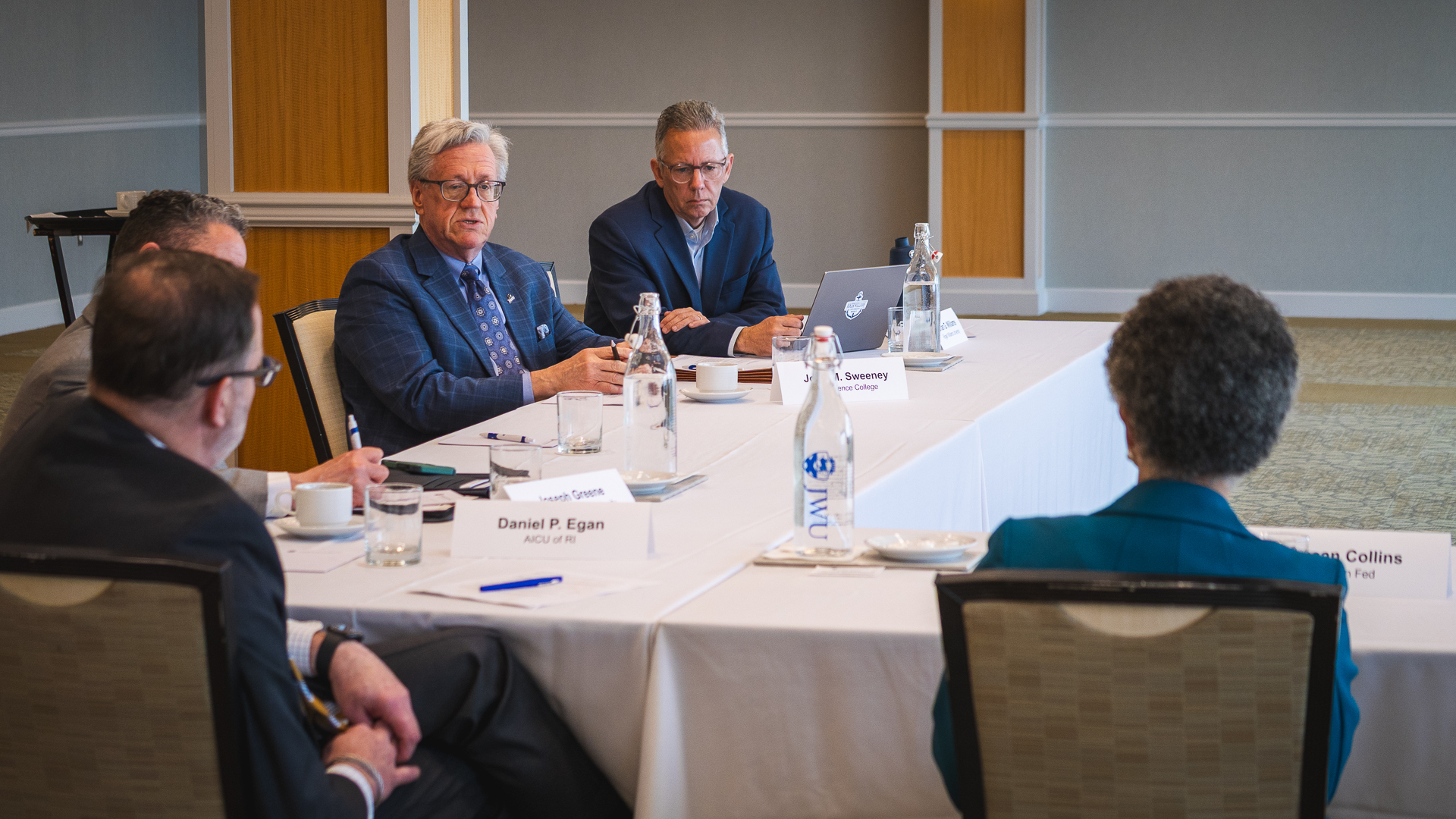
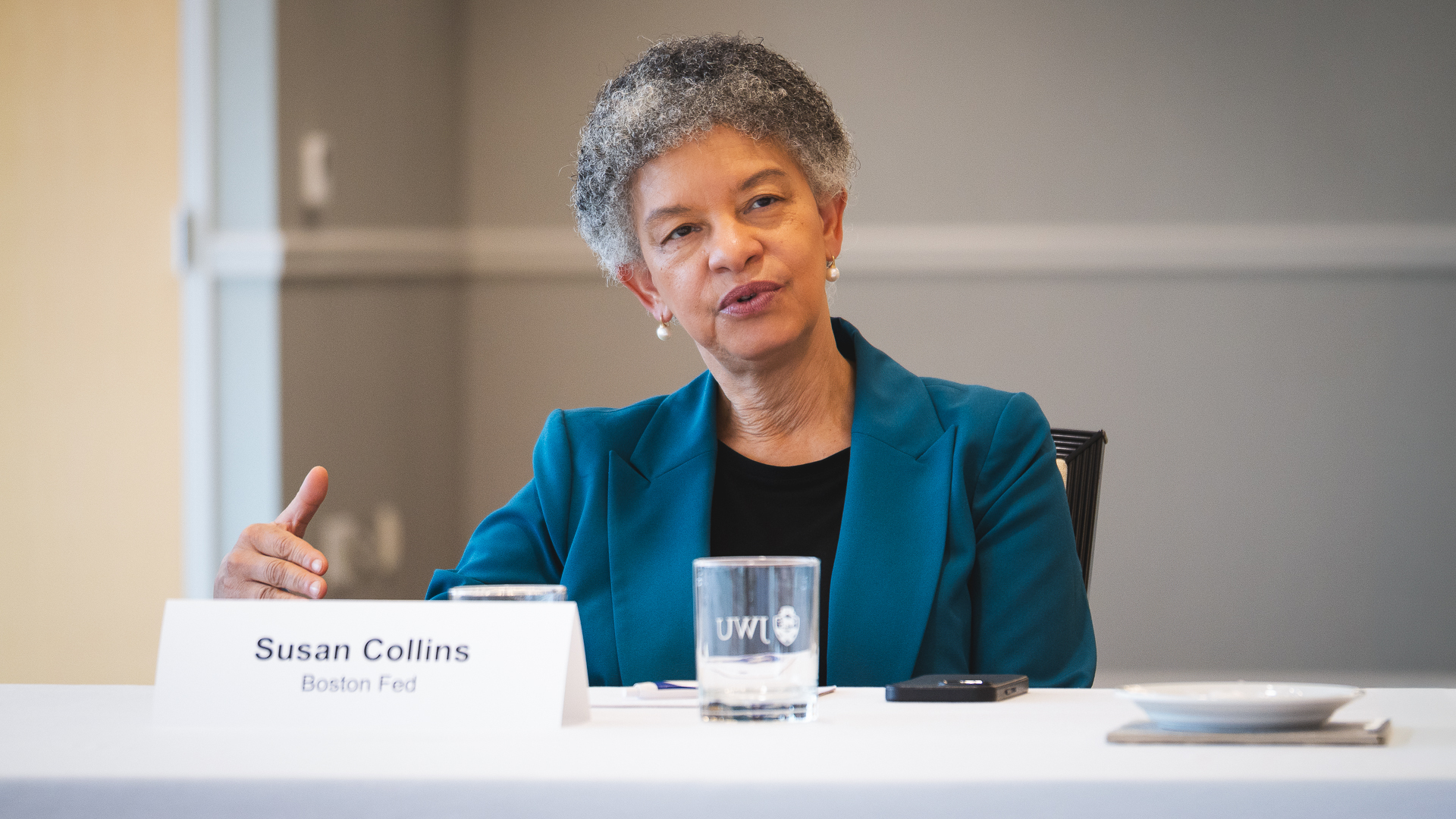
During the conversation about higher education at the Cranston campus of Johnson & Wales University, college and university presidents told Collins that their schools are experiencing the impacts of rising healthcare costs and inflation, among other financial pressures.
Bryant University President Ross Gittell said economic uncertainty is also affecting families’ decisions about sending their children to college.
“Decision Day was May 1, and I was really sympathetic to the (parents) having to make probably the first or second biggest economic decision for their families … whether they can afford it,” he said. “It’s a huge investment, and it affects the future of their children.”
3 images

They also spoke about how schools are incorporating emerging technologies like AI into their curriculum to prepare students for a rapidly changing work environment, where many employers are no longer investing in training new staff members as much as they used to.
Salve Regina University President Kelli Armstrong said many educational institutions are navigating how to provide students with AI proficiency while still emphasizing the development of their critical thinking skills.
“You want students to engage and develop those (cognitive) skills. They’re 18 years old when they’re coming in, and these are critical years,” she said.
John Sweeney, the senior vice president of business and finance and chief financial officer of Providence College, said that 94% of the students at his school have had workplace experience through a co-op, internship, or clinical placement, and that’s key for preparing them to find a job after graduation.
“It validates their ability to work in that setting,” he said. “That’s a really important way to get over some of the doubts (of prospective employers) … (and) we’ve been able to maintain hiring.”
Learn more about Collins' travels across New England on bostonfed.org.
Media Inquiries?
Contact our media relations team. We connect journalists with Boston Fed economists, researchers, and leadership and a variety of other resources.

 About the Authors
Amanda Blanco is a member of the communications team at the Federal Reserve Bank of Boston.
Email: Amanda.Blanco@bos.frb.org
Site Topics
Keywords
- Rhode Island ,
- housing affordability ,
- housing supply ,
- Commercial real estate ,
- college