'Innovation is a team sport': Company founded in two-car garage keeps entrepreneurial spirit alive 
Hypertherm CEO says collaboration, community roots help shape their manufacturing future


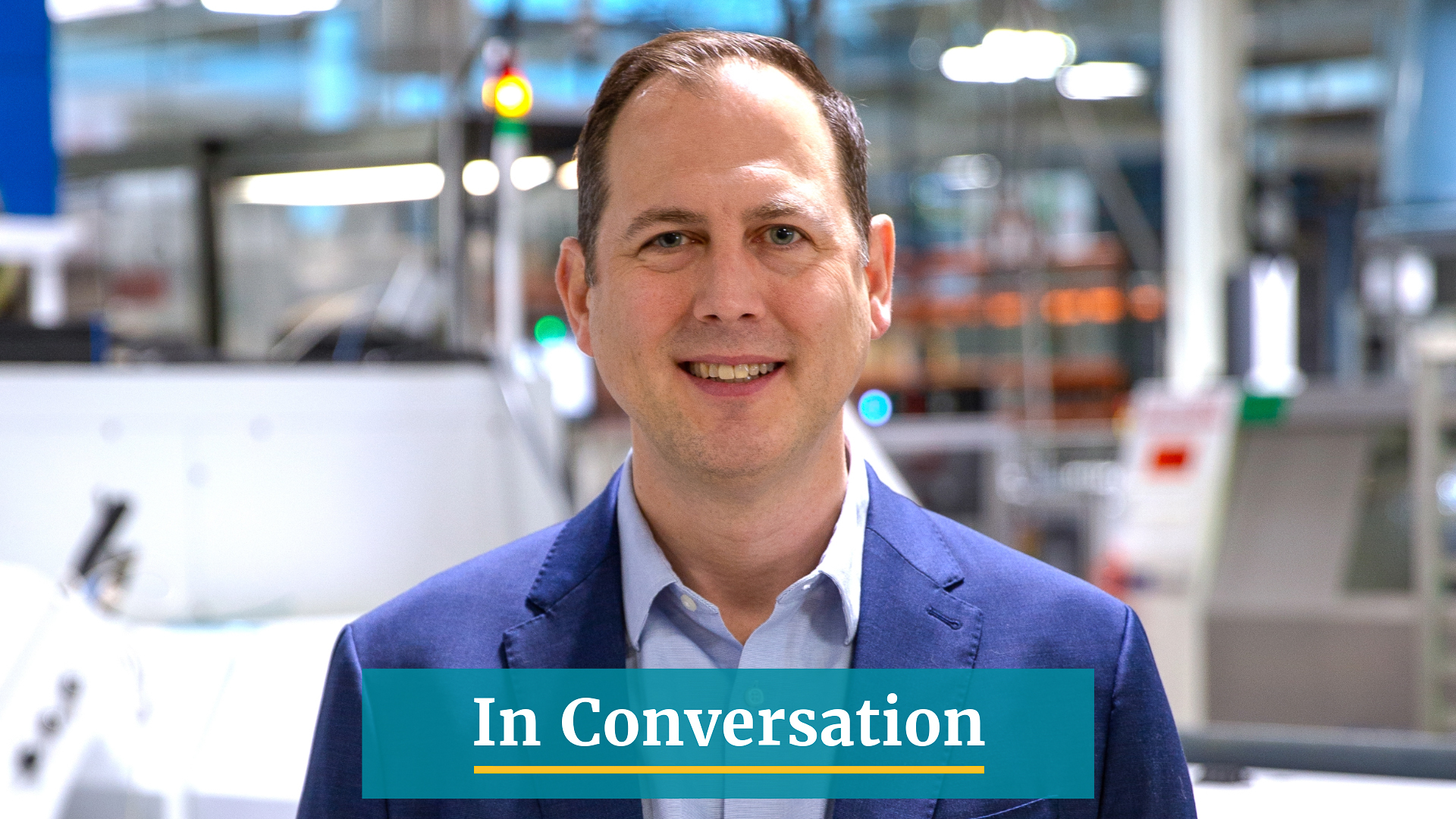
Aaron Brandt is president and CEO of Hypertherm Associates, an employee-owned manufacturer of industrial cutting products and software based in Hanover, New Hampshire. He serves on the Federal Reserve Bank of Boston’s New England Advisory Council, which provides policymakers with on‑the‑ground insights from leaders of small and mid‑sized regional businesses. We spoke with Brandt on the future of U.S. manufacturing and the role of innovation and teamwork.
Hypertherm Associates was founded nearly 60 years ago in a two-car garage by a recent Dartmouth grad. What does the company do, and how has it kept its entrepreneurial spirit alive?
The company’s founder was a young engineer experimenting with ways to improve cutting with plasma. Today, we’ve expanded into industry‑leading cutting and shaping technologies across plasma, laser, and waterjets. And we serve a variety of sectors, including defense, infrastructure, shipbuilding, aerospace, data centers, and energy.
We’ve also grown as a global employer. We call our employees “associates,” and the company now has more than 1,800 associates around the world, including 1,000 who work at our manufacturing operations in Hanover. We also have production facilities in Seattle, Minneapolis, and northern Italy.
As we’ve grown, we’ve worked to stay true to our roots. We’ve always been focused on some basic things with our customers. We want to help them improve productivity, reduce operating costs, and get highly reliable results. It’s the same mindset that fueled our beginnings in a garage. We want to solve practical problems.
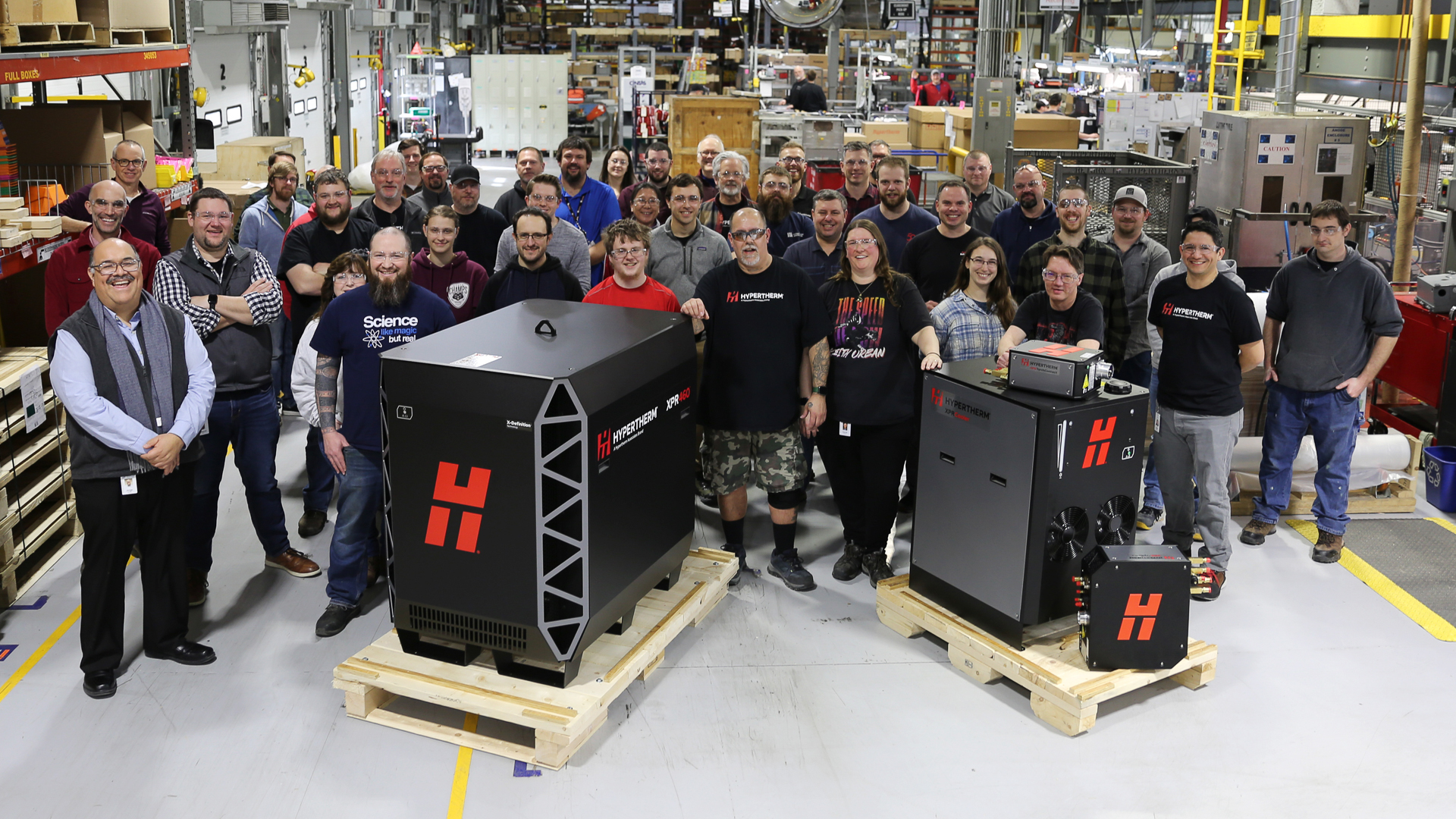
You’ve worked at the organization for nearly 30 years. What’s kept you at the company this long?
I never set out to stay at one company for my entire career. But I was drawn early on to the organization’s commitment to innovation and the chance to work hands on in manufacturing. I just loved being part of building real things that have a tangible impact on the economy.
But what’s really kept me here is the culture. One of our founding principles is that people closest to the work know best how to improve it. So, individuals shouldn’t be treated as just another asset on a balance sheet, they are much more than that. That philosophy aligns deeply with my own values
Another major reason I stayed is the company’s growth. When I started, the company was much smaller, and as we grew, new opportunities continually opened up. We still have a growth mindset because we want to create those same opportunities for the next generation.
What are you focused on right now in terms of innovation?
One of my core beliefs is that innovation is a team sport. The best ideas come from bringing together people with different perspectives – they could be engineers, marketers, or operators. And then we align them around solving a real customer problem.
That philosophy shapes how we build products and how we make decisions internally, and I think AI has the potential to support that collaborative process in new ways. A major focus for us is on how AI can augment – not replace – human decision making. I see the real promise of AI in how it can empower our associates and help them perform at a higher level.
What’s different about this era in manufacturing?
Manufacturing has changed dramatically since I started. Back then, it carried what we called the “four D’s” reputation: It was dark, dirty, dangerous, and dumb. But if you walk into a modern manufacturing facility today, you’ll see robotics, automation, and high tech processes everywhere. It’s exciting work, and despite the common perception, manufacturing never left the United States. We’re still the world’s second largest manufacturing country, and these jobs remain vital to local economies.
But there are definitely challenges in this sector, and one of the biggest is a shortage of skilled labor that’s only going to get worse as experienced workers retire. That’s why it’s so important to make technology intuitive, accessible, and supportive of people’s work.
Hypertherm is very involved in the community. Why is that important to you?
Communities give businesses their license to operate. They’re where our associates live, raise families, and where we draw our talent. We need to support them not just because it’s the right thing to do, but also because it’s good for long term business health.
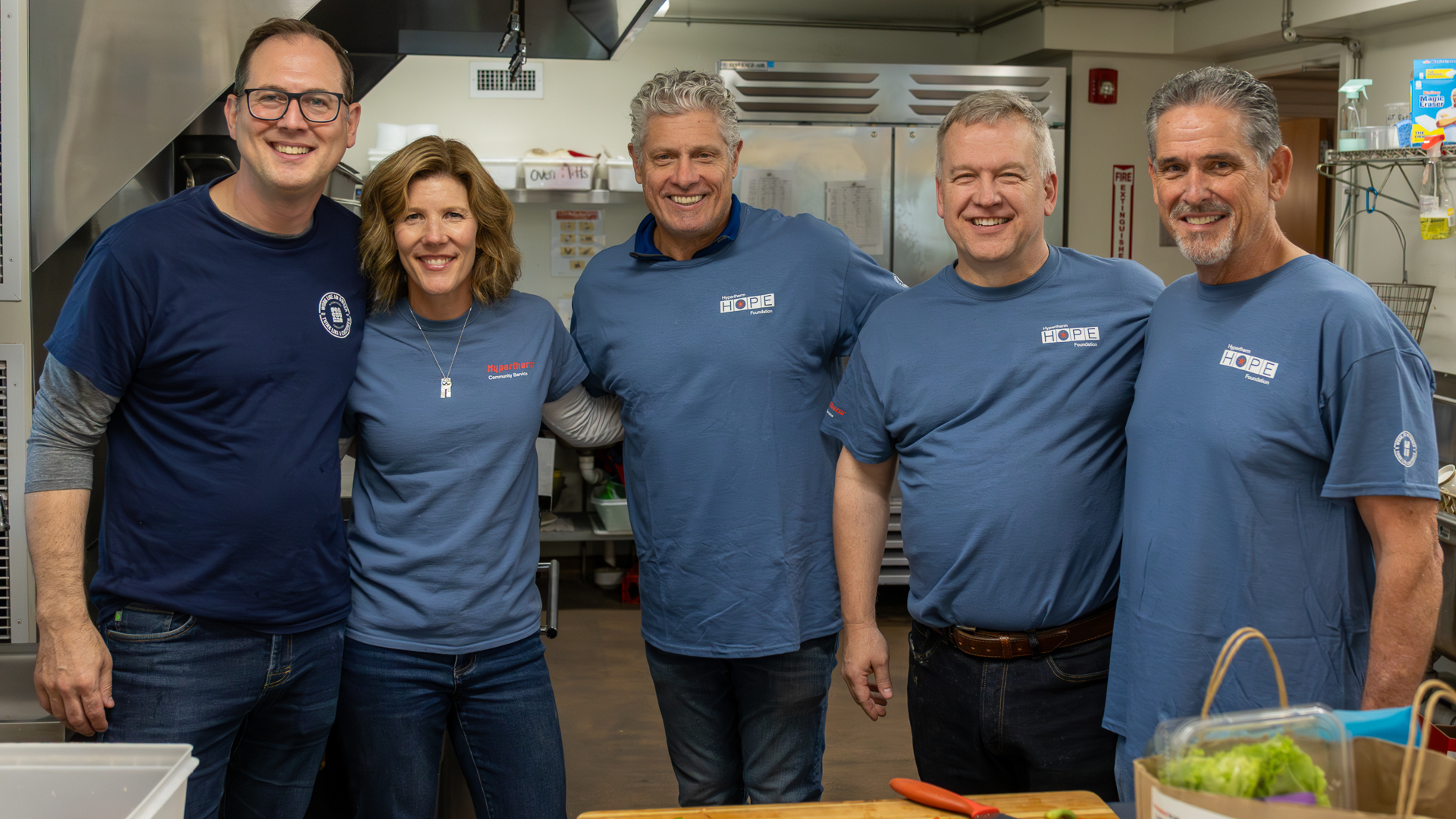
Every associate gets 40 hours of paid volunteer time each year to use however they choose, and that added up to more than 36,000 hours last year. The HOPE Foundation – that’s our affiliated nonprofit organization – also awards community grants that are reviewed and selected by associates.
This work really strengthens our communities, and it builds pride. It also energizes our associates and helps us attract talent. People want to work for a company that invests in the place they call home.
Why did you decide to join the Boston Fed’s New England Advisory Council?
I first met (Boston Fed President) Susan Collins when she toured our headquarters during one of her regional visits. And then I got invited to a follow-up Fed Listens event in Keene (New Hampshire). So, that's when I started to learn a bit more about the Fed, beyond just what I heard on the news.
Joining the council allows me to better see how policy decisions connect to the challenges and opportunities businesses face. It’s also a chance to learn from other leaders across the region.
I see my role as representing small and mid sized manufacturers. We’re an essential part of the U.S. economy, but I think we’re often overlooked. I also want to help raise the profile of Northern New England. It’s a region with tremendous talent and real economic importance.
Media Inquiries?
Contact our media relations team. We connect journalists with Boston Fed economists, researchers, and leadership and a variety of other resources.

 About the Authors
Allison Ross is a member of the communications team at the Federal Reserve Bank of Boston.
Email: Allison.Ross@bos.frb.org
Site Topics
Keywords
- advisory councils ,
- New England ,
- New England region ,
- New Hampshire ,
- New Technology ,
- Manufacturing ,
- US manufacturing