Boston Fed report offers detailed picture of family wealth in Massachusetts 
Survey of 5,018 respondents gives data by several subsets, including homeownership, race, education

Bo Shen/Getty Images


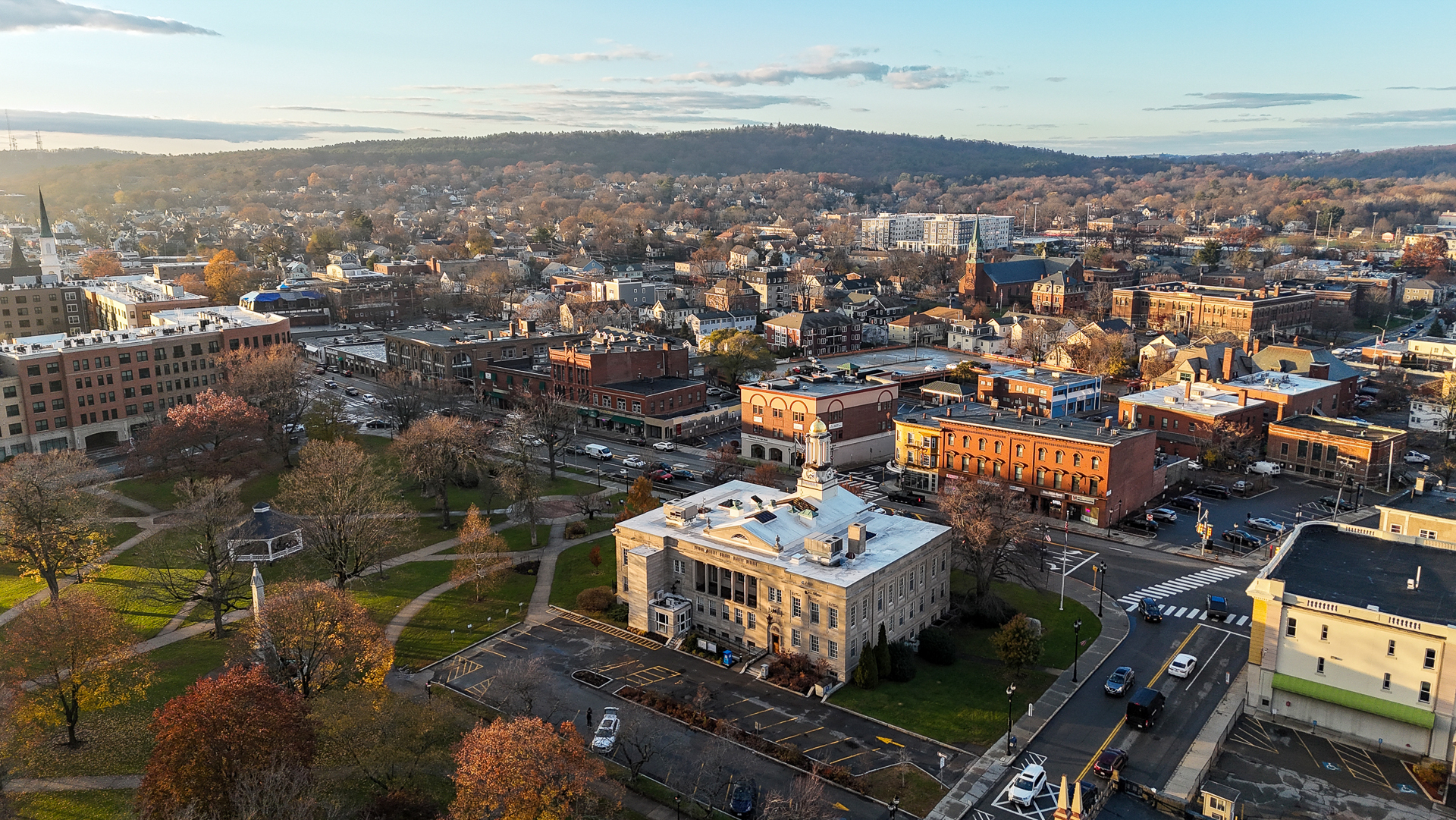
A detailed survey of family wealth in Massachusetts has found an estimated median family net wealth of $374,000 and higher median wealth among those with more education, homeowners, those 65 or older, rural residents, and in white and Asian families.
The survey was called the 2025 Massachusetts Economic Conditions and Household Opportunity Survey, or Mass ECHOS.
The “Family wealth in Massachusetts” report, published by the Federal Reserve Bank of Boston, presents the findings from the MassECHOS survey of 5,018 respondents between March and December 2025.
The report examines family wealth statewide, including among various geographies and population subsets. The report also measures which families have sufficient wealth to handle routine but potentially difficult expenses like car repairs or moving. And it finds that more than a third of families said they couldn’t pay an unexpected $400 expense with the resources they had on hand.
How are households faring?
The survey was led by Beth Mattingly, an assistant vice president at the Boston Fed whose research focuses on family financial well-being. Mattingly said the report fills in longtime data gaps about wealth in Massachusetts.
“A lot of data exist about income, but we don’t know as much about wealth, even though it’s so critical to family economic stability,” she said. “This report doesn't try to explain why household wealth is distributed the way it is in Massachusetts, but it gives us a much more comprehensive look at it.”
Mattingly added the Fed has a mandate from Congress to pursue price stability and maximum employment in the U.S. economy. She said understanding how households are faring is important to that because broad economic indicators can mask what’s happening at the household level.
“A study like this reveals a lot,” she said. “It’s something we think can be a resource to everyone that wants to understand economic conditions, including the challenges and opportunities. Beyond the Federal Reserve, we think the survey results can be helpful to the private sector, elected officials, and nonprofit or philanthropic groups working to increase family economic opportunity."
Detailed understanding supports opportunities for progress
Mass ECHOS was conducted in collaboration with The Boston Foundation and its strategic partners, the Barr Foundation, Eastern Bank Foundation, and the Greater Boston Chamber of Commerce.
"This survey provides an unprecedented exploration of household wealth in Massachusetts, highlighting both our collective strength and the stark differences in wealth between and within various groups,” said Lee Pelton, president and CEO of The Boston Foundation.
“It is robust, independent research that will inform and spark the kind of collaborative solutions we need to improve the lives of all Massachusetts families," he said.
James E. Rooney, president & CEO of the Greater Boston Chamber of Commerce, said the new report provides a comprehensive, statewide overview of family wealth that will help people understand wealth-building and economic mobility across the region.
"The future of our Commonwealth depends on every family throughout the state being able to access careers, grow a business, and build generational wealth," Rooney said. "With this new report, we are able to better understand the needs and opportunities of communities and how we can offer transformative initiatives and programs to uplift families in Massachusetts."
Report is a “descriptive analysis,” aimed for empirical rigor
The Federal Reserve System has a long history of survey-based data collection and research, including the Survey of Consumer Finances and the Survey of Household Economics and Decisionmaking.
Mass ECHOS comes a decade after a 2015 Boston Fed report that surveyed Boston households and pointed to the benefits of a more comprehensive study of household finances – not just in Boston, but across Massachusetts.
The focus of the new report reflects the unique size and depth of the survey’s sample, according to Boston Fed Executive Vice President and Community Affairs Officer Prabal Chakrabarti.
"We wanted to concentrate on developing and analyzing an unusually rich data set," he said.
Chakrabarti said it’s important to remember the survey’s estimates are just that – estimates: The survey is based on self-reports.
He added the report is what’s known as a “descriptive analysis.”
“It gives you a picture of the state of family wealth in Massachusetts during a specific point in time,” Chakrabarti said. “At the Federal Reserve, we’re not trying to predict what happens next or explain why that picture looks how it looks. But I think the detail we can give is enlightening.”
Key findings describe wealth attainment and divergence
A family’s net wealth was calculated by collecting survey data on their assets (money in the bank, stock and bonds, etc.) and then subtracting their debts (student loans, accrued credit card debt, etc.).
The report distinguishes between wealth that’s “liquid,” meaning in assets that are easily accessed, like savings accounts, or “quasi-liquid” and harder to access because it’s tied up in things like workplaces retirement accounts. It also looked at equity held in cars, homes, businesses, etc.
The report’s key metric was “median family net wealth,” which is the midpoint wealth level where half the families are at or below that level. The report’s authors considered the median more accurate than the average, or “mean,” because the median is not influenced by extreme outliers. So, the median net wealth for all families of $374,000 is taken at the 50th percentile of all families surveyed.
But the report also looked at family wealth along the broad range of survey results. For instance, at the 25th percentile family wealth was $10,000 (75% of people had more wealth, 25% are at or below that value). At the 75th percentile, family wealth was $1.09 million.
High estimated median family net wealth was associated with:
- Families with higher education levels. Those with a respondent or spouse/partner with a graduate degree had family net wealth of about $947,400.
- Homeowners: $790,500
- Those with a respondent or spouse/partner 65 or older: $702,500
- Families living in rural areas: $465,000
- White families: $549,200
- Asian, Native Hawaiian, and Pacific Islander families: $305,000
Those with lowest estimated median family net wealth included:
- Families with less than a high school education: $1,100
- Families with no respondent who had more than high school degree or a GED: $11,000
- Renters: $1,500
- Those with a respondent or spouse/partner under 45: $97,000
- Families living in cities: $110,000
- Black families: $7,800
- Hispanic families: $1,200
Mass ECHOS survey assesses family wealth by geography, ability to cover expenses
The subsets examined in the report include smaller populations and geographies in Massachusetts. One of those areas was Greater Boston, which includes the city and surrounding communities with close economic ties to it. Another geographic area encompassed all the “Gateway Cities," which are 26 cities (some in Greater Boston) that are eligible for the state’s economic development incentive program due to factors such as lower rates of education and income.
To give a sense of how wealth is used, the report’s authors calculated whether respondents had the net wealth to pay certain expenses, including the costs of car repairs and moving to a new apartment. The authors highlighted these particular expenses, because both may be crucial to getting to a job or taking a new job.
So, for example, the report suggested that about 18.3% of respondents across Massachusetts didn’t have sufficient wealth to pay the national average car repair expense of $838. In Greater Boston, the share was similar, at about 19.1%, and in Gateway Cities, about 28.3% of families couldn’t cover this cost.
In a related inquiry, the survey asked the so-called $400 question: whether families had sufficient wealth to pay an unexpected $400 expense with cash or its equivalent. In Massachusetts in 2025, an estimated 35.4% of families could not.
The survey also explored the importance of inheritances, which are commonly thought of as a key source of generational wealth. But the Mass ECHOS survey data indicates they are relatively rare. An estimated 1-in-7 families (13.4%) have received one or more monetary gifts or inheritances, and about 1-in-6 (15.9%) expect to receive an inheritance in the future.
“It was important to document certain sources of wealth,” Mattingly said. “Overall, we just needed to better understand family wealth across the economic spectrum. We think this report helps us do that.”
Media Inquiries?
Contact our media relations team. We connect journalists with Boston Fed economists, researchers, and leadership and a variety of other resources.

 About the Authors
Jay Lindsay is a member of the communications team at the Federal Reserve Bank of Boston.
Email: jay.lindsay@bos.frb.org
Site Topics
Keywords
- wealth concentration ,
- financial wealth ,
- Wealth gap ,
- racial wealth gaps ,
- household wealth ,
- wealth ,
- racial ethnic and income disparities ,
- survey