


Where Are the Underbanked Areas? — Data Tool
Use the interactive data tool to better understand unbanked and underbanked populations and the financial services they rely on.
Learn more


The Boston Fed conducted a survey in partnership with Commonwealth, a nonprofit company, to understand why consumers turn to costly alternative financial services and what matters most in their payment experiences.
The survey findings can help organizations explore research and examples that show how instant payments can reduce fees, improve stability, and support better consumer outcomes.
Overall, the survey indicates that instant payments services can help replace expensive alternative financial services if they are affordable and clear about when funds get to their destination.

This survey, conducted in June 2023, was a convenience sample and aims to understand what users of alternative financial services products value regarding their experience. The data represents what the respondents to the survey indicated. It is not meant to be representative of the population at large.
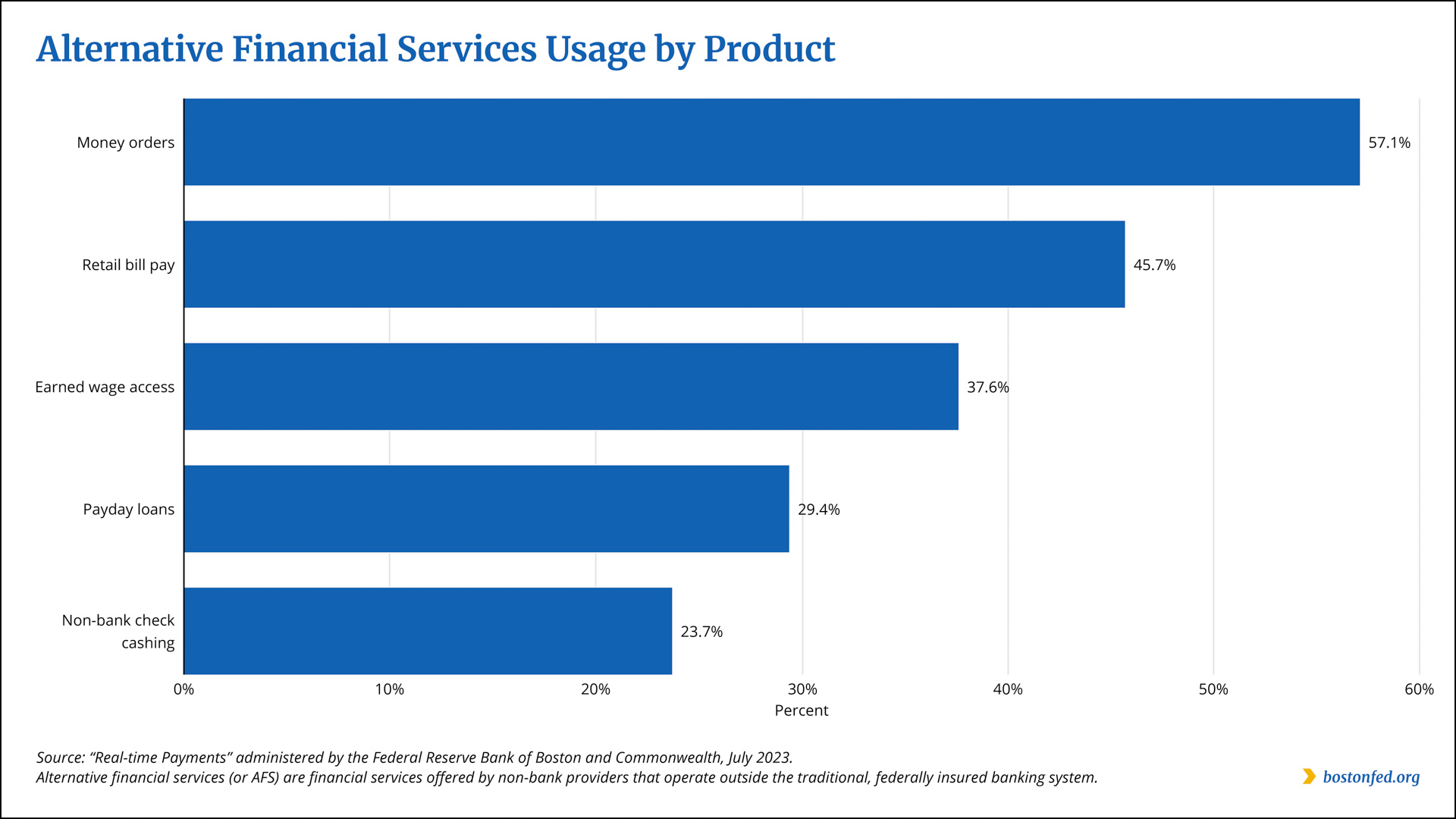
Money orders were the alternative financial service most used by survey participants. That was followed by retail non-bank bill pay and earned wage access, which gives employees access to money they’ve earned before their traditional payday.

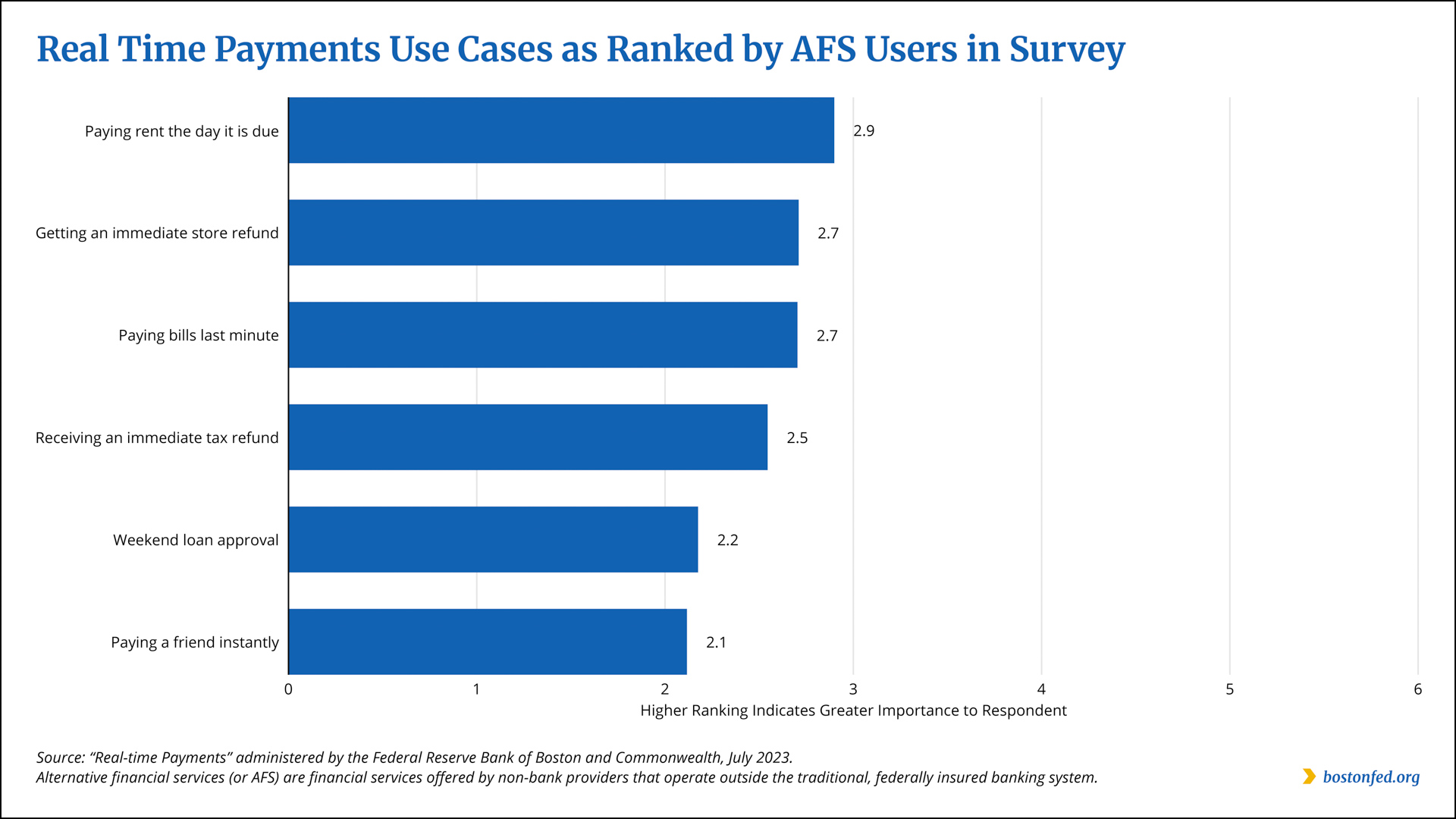
Survey participants ranked “paying rent the day it is due” as the most important use case for instant payments, followed closely by “getting an immediate store refund” and “paying bills last minute.”
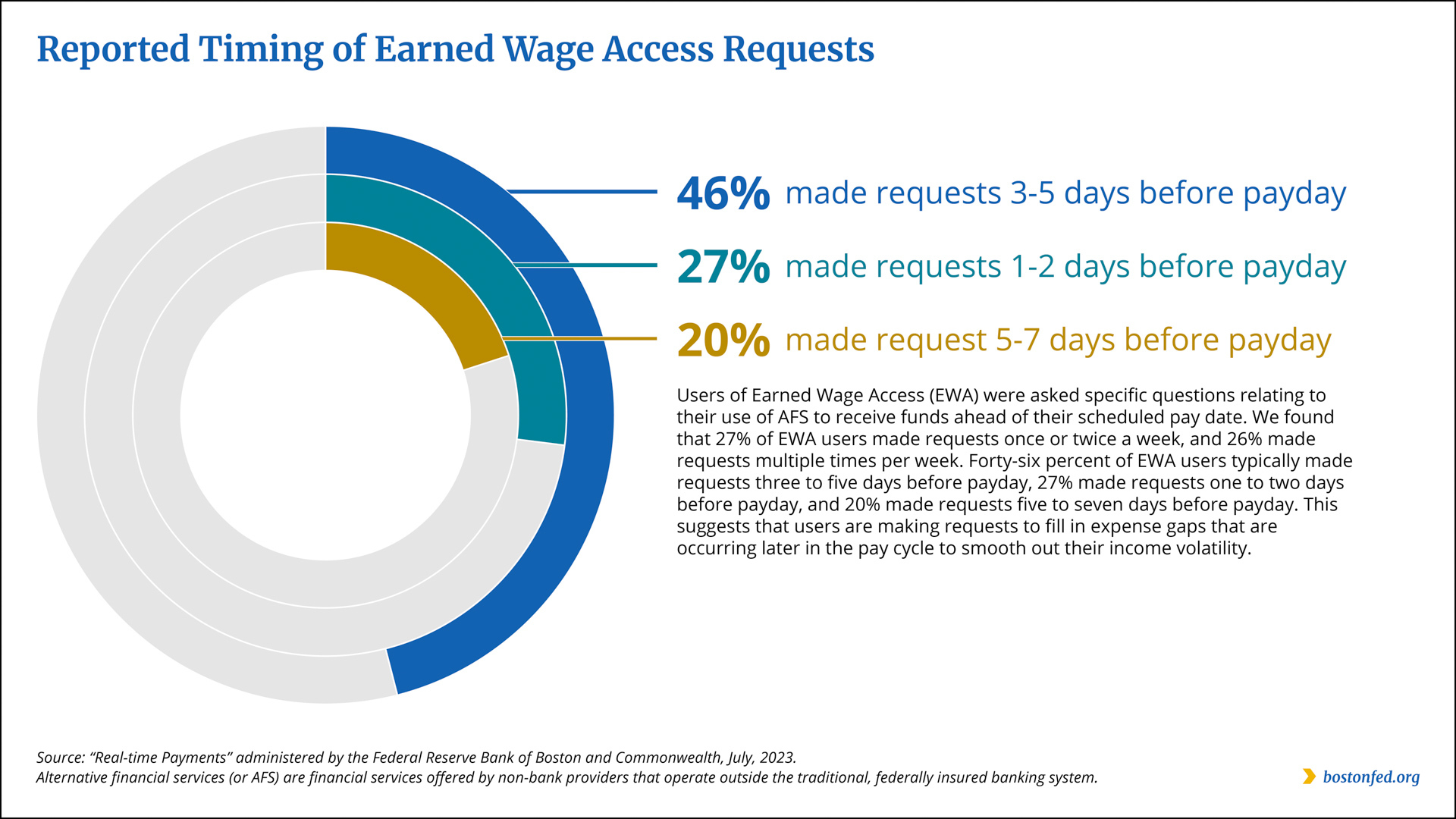
Forty-six percent of EWA users typically made requests three to five days before payday, 27% made requests one to two days before payday, and 20% made requests five to seven days before payday. This suggests EWA users are making requests to cover expenses that are occurring later in the pay cycle, potentially to smooth out income volatility.
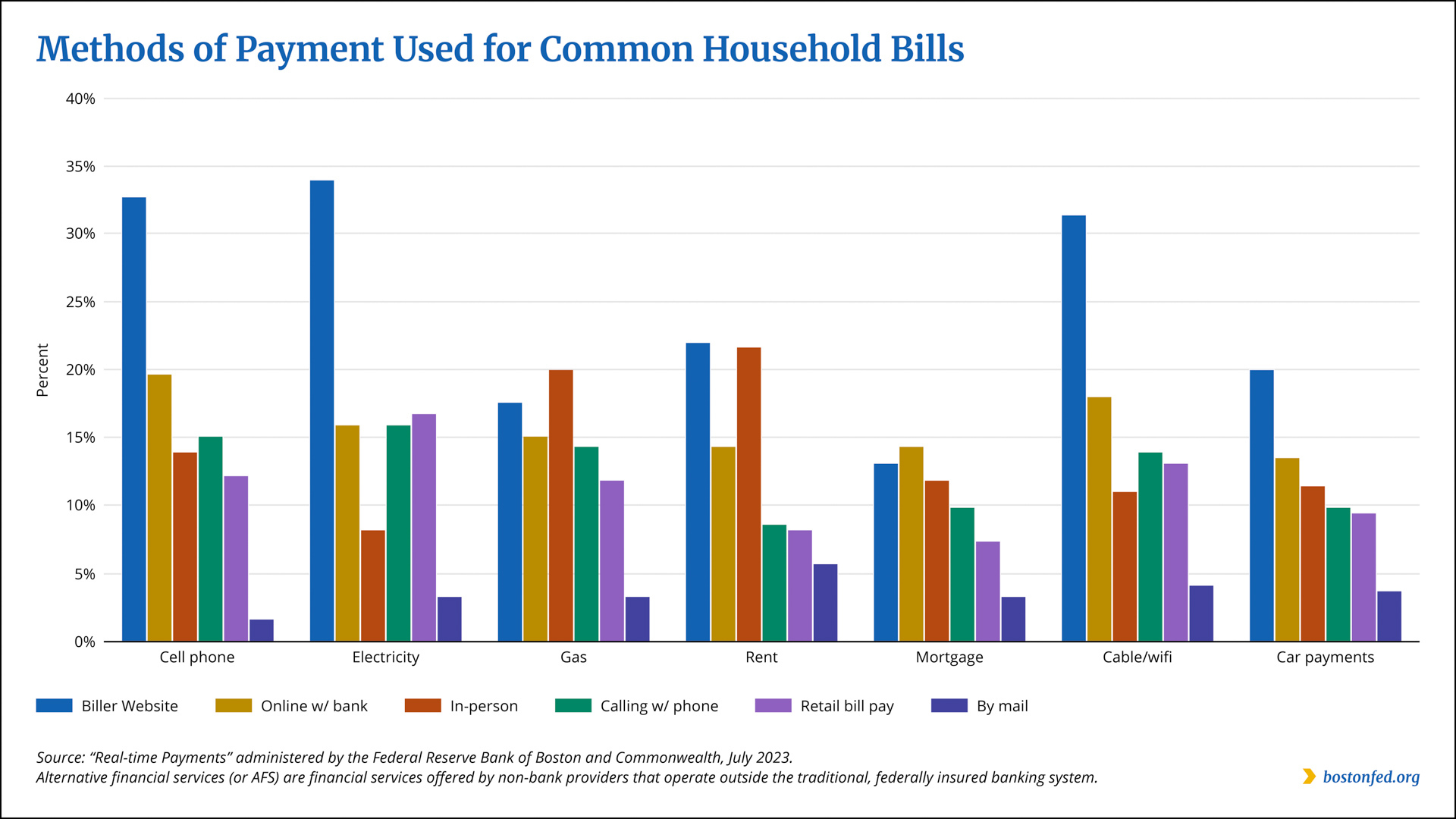
Survey participants selected billers’ websites as the way they most frequently pay almost all bill types, except for household gas bills and mortgage payments. Paying through the mail was chosen by the least amount of AFS users across all bill types. Retail bill pay was the second-most popular choice for electricity payments.
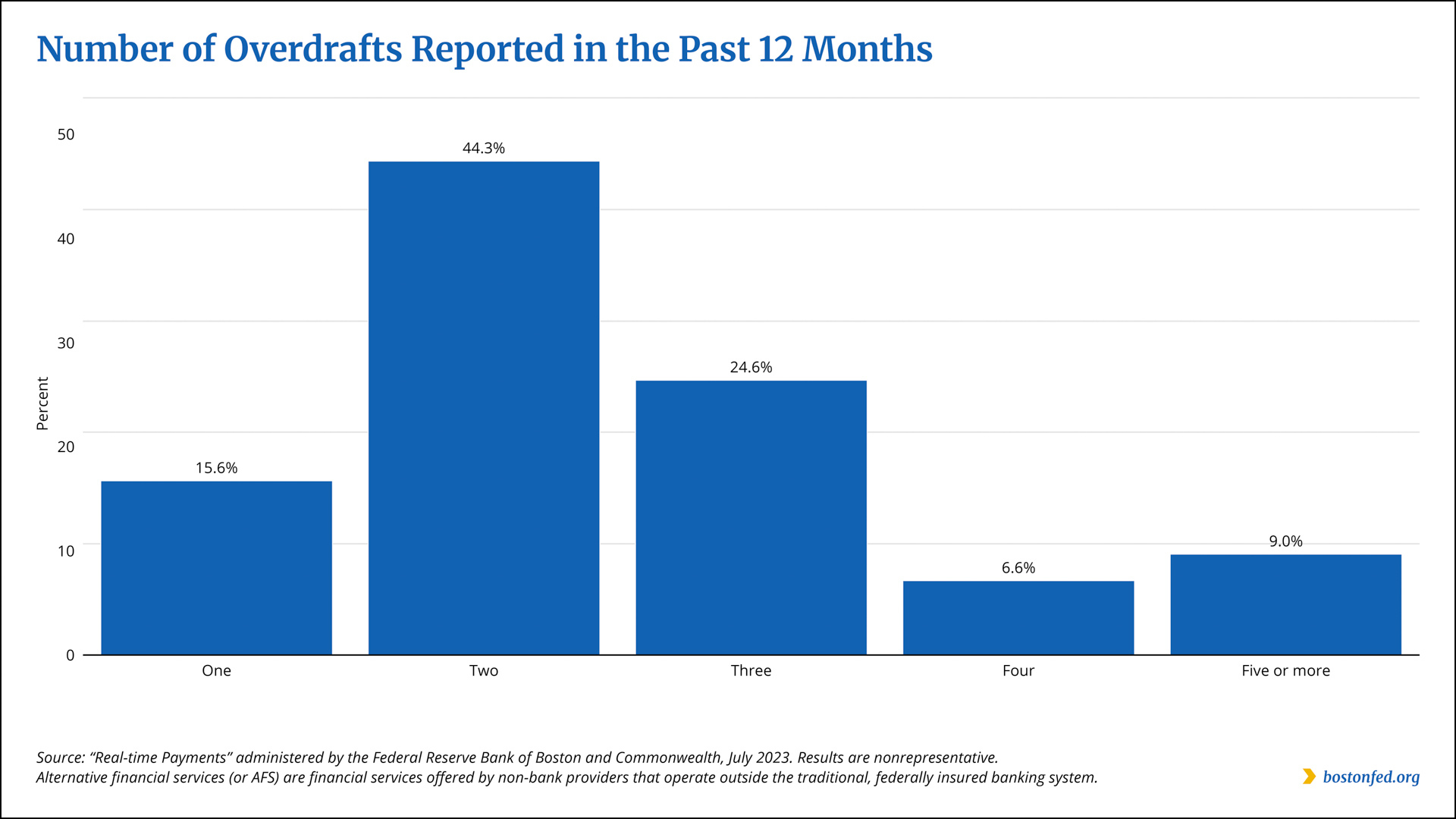
Fifty-five percent of AFS users reported being charged an overdraft fee in the last 12 months. When asked about the cause of their most recent overdraft, 46% said that their balance was lower than they realized, and 40% said that a check was processed earlier than they anticipated.

This summary of findings from a focus group done by the Federal Reserve Bank of Cleveland seeks to better understand how unbanked and underbanked households manage their money and why.
This study reveals a comprehensive picture of the payment preferences and behaviors of U.S. consumers. It also includes detailed transaction data.
Discover actionable insights, practical examples, and community connections that help organizations across sectors build a more modern and accessible financial system.