Instant payments, instant impact?: Why speed matters 


Overview
Instant payments often aren’t “instant” at all due to lags between when money is sent and received. These lags can be costly for people who need the money immediately to pay bills on time.
Some end up paying late or overdraft fees. Others are forced to turn to expensive alternative financial services, like payday loans.
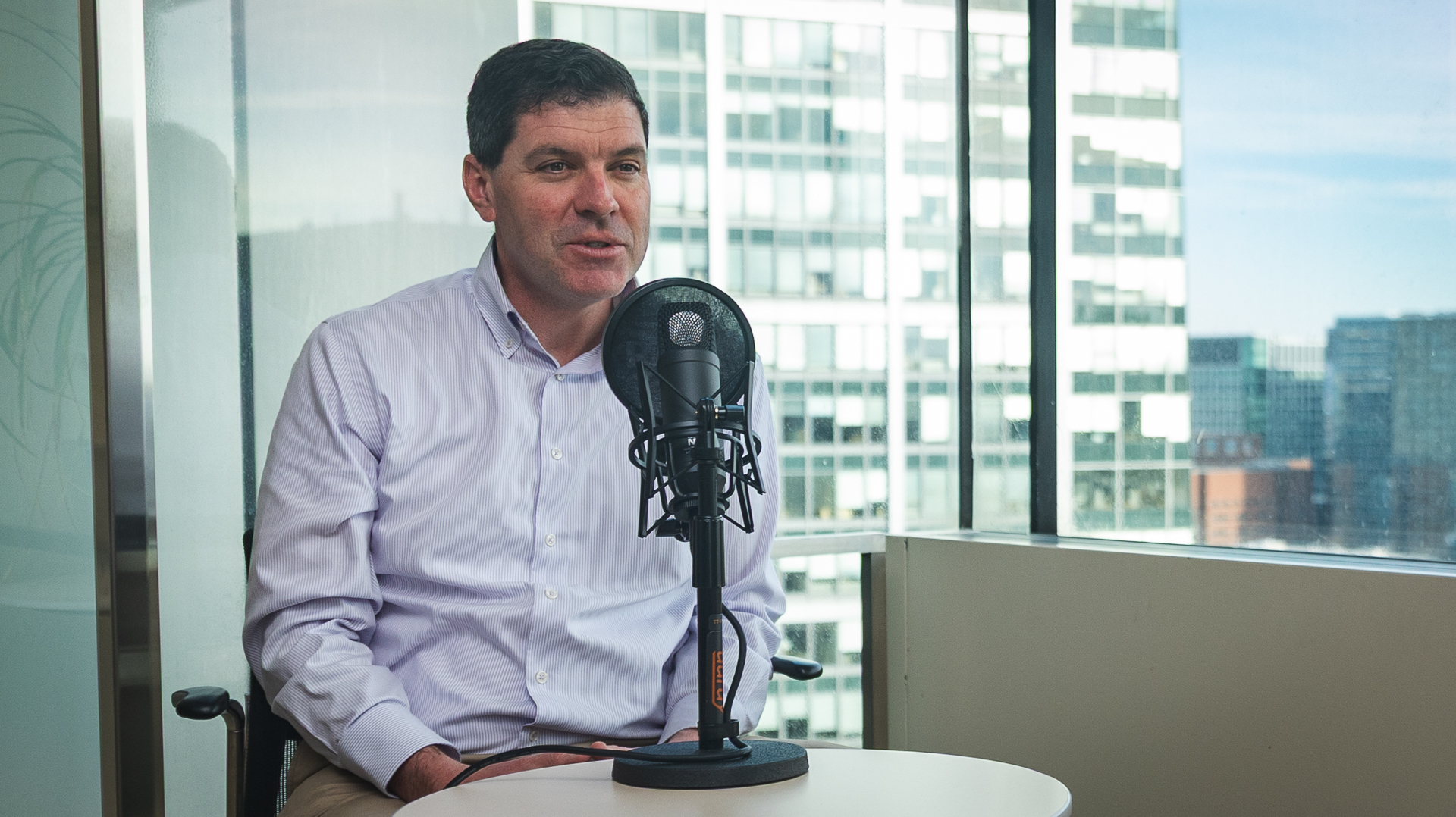
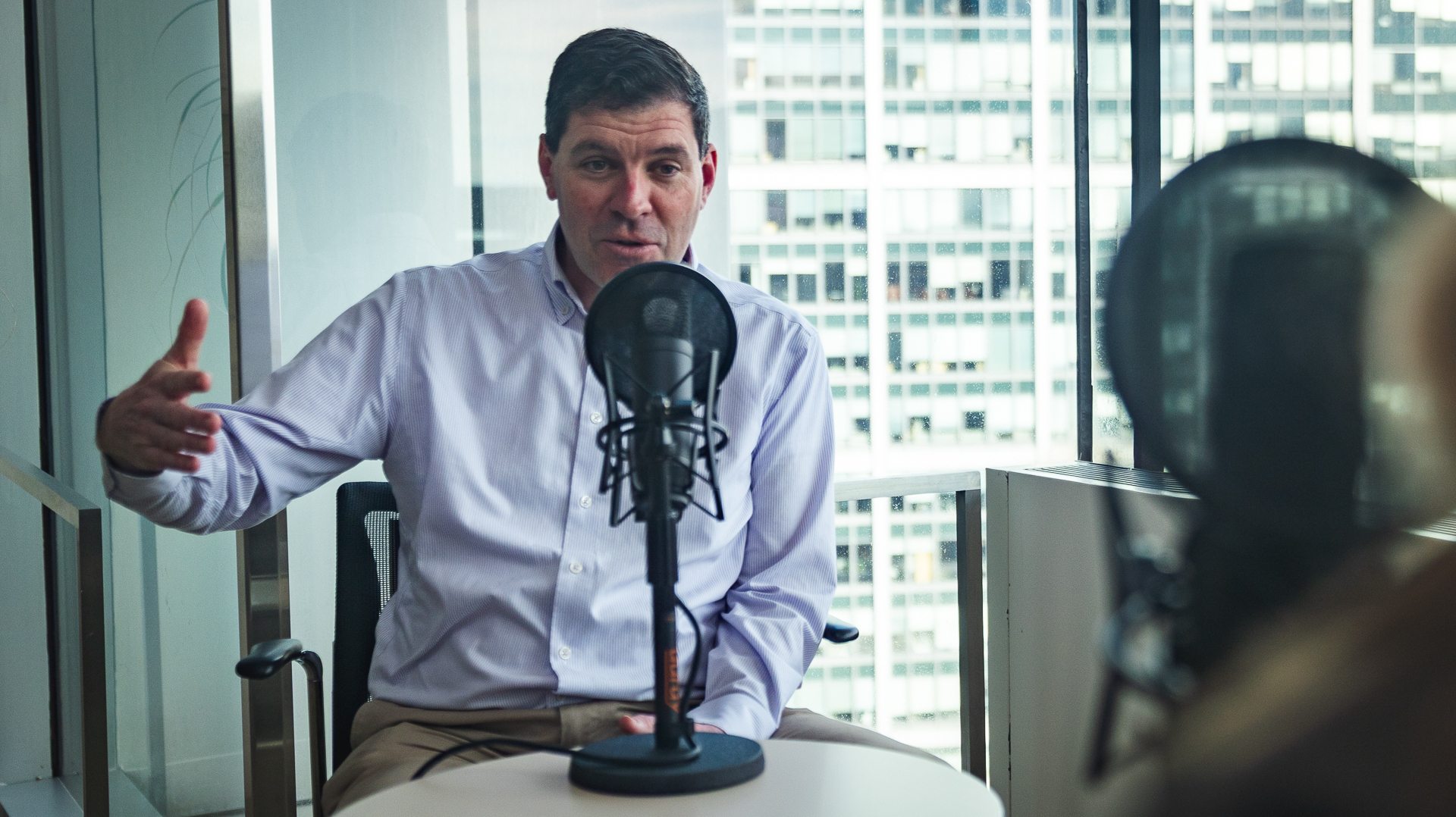
Brian Clarke is a payments analyst and deputy director in the Regional & Community Outreach department at the Boston Fed. He spoke with us about the emergence of truly “real-time” instant payments, when money is sent and received in seconds. He says this speedy payment processing can really help small businesses and lower-income households avoid fees and costly services.
The FedNow Service is the Federal Reserve’s real-time instant payments infrastructure. Learn more about it at https://explore.fednow.org/about. For more interviews and analysis of the economy in New England and nationwide, visit BostonFed.org/SixHundredAtlantic.aspx. Subscribe to our email list to stay updated on new episodes.


 View Gallery
3 images

Transcript
Allison Ross:
Let's state something pretty obvious: The U.S. payment system matters to just about everyone. It’s how we get paid, pay our bills, and buy things we need every day.
What’s less obvious is that one of the Federal Reserve’s most important jobs is helping make sure all of that works smoothly. The Fed doesn’t offer apps or accounts to consumers, but it does provide the behind-the-scenes infrastructure that banks and financial institutions rely on – the plumbing of the payment system. That includes everything from keeping cash available to processing checks, to supporting newer, faster ways to move money.
Today we're going to focus on instant payments. And here’s the thing: For a long time, “instant payments” didn’t always mean instant. Payments could look final on the surface, but the money was still moving. That gap has real consequences – especially for lower income households and small businesses.
Now that's starting to change. Real-time payments are becoming truly real-time. So why does that matter, and who stands to benefit the most?
I'm your host, Allison Ross, and this is Six Hundred Atlantic, a podcast produced by the Federal Reserve Bank of Boston. I'm joined by Brian Clarke, who’s leading work at the Boston Fed looking at how the impact of real-time payments affects lower-income people and small businesses – and the impact may be bigger than you think. Welcome back to the podcast, Brian.
Brian Clarke:
Glad to be here.
Allison Ross:
Let's talk about the kinds of instant payments that have prevailed in the U.S. in recent years. People pay bills online or get direct deposit, or transfer funds between friends and family using various services, and it feels instant, but that's not always the case. What's going on here?
Brian Clarke:
So, there are many different options for people that want to send and receive money, and I think it can be frustrating for people that send money, think it's going to arrive at its destination instantly, and if you go and look at your transactions online, you see words like pending, and processing, but the funds have not arrived where they need to be. An instant payment network will solve this issue and settle the transaction in mere seconds.
Allison Ross:
We have these lags between when funds appear to be moving and when they actually move into recipients' accounts. So why do these lags matter, and in particular, why do they matter to lower-income populations?
Brian Clarke:
If it's all right with you, I'm going to refer to this phenomenon as a settlement lag, and settlement lags, in my opinion, create confusion for customers. It can be frustrating for them to see the words pending and processing when they're sending money, and it comes out of their account, but it hasn't arrived where it needs to be. And you don't get credit for paying a bill at a biller until the funds actually arrive at their destination, or the process called settlement.
When people get close to zero in their bank account balance, you see things like late fees for bill payments. You see things like overdraft fees, and those fees can be quite high, and they can add up. You also see fees for money transfer services, so if someone needs to pay a bill, they will go to a money transfer service, and there's a few dominant players in that.
Allison Ross:
We know lower-income people tend to be disproportionately represented in what are called unbanked and underbanked populations. 14% or about 19 million households are underbanked, and about 4% or 5.6 million are unbanked. Can you define unbanked and underbanked?
Brian Clarke:
The term unbanked refers to households that have no bank account. They have no relationship with a traditional, federally regulated financial institution. The term underbanked is a little bit different. So, these are folks, these are households that have a bank account with a financial institution but also turn to non-bank services or alternative financial services to complete certain transactions. So, these are things like sending money, remittances, short-term credit products, so payday loans, pawn shop loans, and things like that. Alternative financial services are typically very expensive, but at the same time, they fulfill a need that someone is having to either receive or send money instantly, or in the case of something like a money order, you've got a product which you know is going to have funds good on it, so it's going to settle.
Allison Ross:
Can you talk about how a lack of a relationship with a financial institution can impact someone's financial health?
Brian Clarke:
Generally, banks or credit unions offer services to customers that can be cheaper than the alternative non-bank market, and this is important. It allows people to do things like receive direct deposits from their employer, send money to friends and family, send money to pay bills. Most relationships come with a debit card, and so it allows people to spend money freely, and also gives them options to save and invest, if you have a full bank account. So, that's important, as it allows people to kind go along their financial journey and hopefully set themselves up for success in the future.
Another reason is that we're the Fed, and we set interest rates, and that impacts banks and their customers. We believe that if people have a banking relationship, that there's a more direct transmission of monetary policy to people, when they're the customer of a bank. For instance, if you have a loan and it has a variable interest rate, the Fed's interest rate decisions are likely to impact you immediately, and the same holds true for savings accounts that pay interest, so it works on both sides.
Allison Ross:
How can instant payments play a role with the economic health of the unbanked and underbanked, specifically, and with lower income populations, in general?
Brian Clarke:
So, to me, the key is fee avoidance. I think that's where instant payments has its biggest promise. So, if you look at the fees we mentioned so far, you're looking at things like overdraft fees, late fees, fees for sending and receiving money when you use non-bank options. If you're able to get the things that you need from your bank and your payment services within a bank, I think there's a solid case that the population that's underbanked, which is larger than the unbanked population, is likely to turn to banks to complete these transactions for them. Because you have, even by the term underbanked, these folks already have bank accounts. You don't need to open up a bunch of new bank accounts. The bank just needs to offer this population what they're not getting from their bank, and they're turning to very expensive alternative financial services for.
I think it's a pretty exciting place to be, and I think that if banks think about the needs of their customers and the needs of the public, in this case, that they could offer products and services that meet those needs at a more affordable cost than the alternative financial services. And in a survey, we did, it turns out that 90% of the respondents to our survey indicated that they would in fact use a bank account more if their bank offered instant payments.
Allison Ross:
And actually, speaking of that survey, I wanted to talk about that. So, we did that here at the Boston Fed with the nonprofit group Commonwealth about the people who use alternative financial services. Can you talk about a couple of the findings that you found most interesting?
Brian Clarke:
We surveyed people about their use of alternative financial services, and we had the opportunity to have some structured discussions with folks to talk a little bit more about why they're making the choices they're making in the alternative services market. We found that weekly use of non-bank bill pay is common, despite the costs, that rent and last-minute bill pay were cited as the most valuable uses for instant payments. We also found that overdraft fees remain a significant burden, with 55% of our respondents reporting an overdraft charge in the past year. And we also found that 90% of our respondents would use their bank account more if it offered instant payments.
So, we think that this is a compelling case for people that are thinking about instant payments to develop those payment products to meet some of the needs of these particular customers, because if you're underbanked, you are already paying fees to conduct your transactions. And I think financial institutions offering instant payments have a really compelling case to this particular group of people, that if you brought them inside, fully inside the banking system, that you could deliver to them a direct benefit in the form of lower cost for transacting.
Allison Ross:
So, it's clear there's demand and a real use for true instant payments, and the Fed operates an instant payment service called FedNow. Can you talk about the state of the real-time payment sector? How does progress in the U.S. compare to other countries?
Brian Clarke:
So, I think the current state is that real-time payments are growing. You see it in the volume reports, and you see it in the offers you see when you're transacting online. I know personally, when I'm looking to move money from one place to another, on many more occasions than even just a year ago, I'm seeing an option to transfer that money instantly. Depending on the relationship with the financial institution that I have, it'll either be offered for free or at a cost. But I think that the proliferation of those offers is a good and healthy sign that instant payments are growing, and that there's customer demand for them.
The United States, you look at the volume reports for instant payment networks, and the volumes are up, and that's a good sign. I think, if you look at some of the other countries that offer instant payments, they have some structural advantages that we don't have because of the way that our country regulates the banking system. I'm thinking specifically of Brazil and India. And so, while those countries may be able to do things that we can't here in the United States, it doesn't mean that we're not implementing instant payments at a pretty rapid speed.
Allison Ross:
I'm hoping you can detail some services that instant payments can enable, and why they might be useful for businesses.
Brian Clarke:
So, the thing that comes to mind first that instant payments can enable that's kind of built into the network here at the Fed is something called “request for payment.” And request for payment is a feature that allows a user that wants to receive money to embed that into a payment message and send it to the person that they want to receive that money from. This has a lot of promise for businesses that have trouble receiving money when they send an email or send a text message, like, "Hey, you owe me some money." Having the ability to link your transaction account to that directly should clear up a lot of the friction that's embedded in that process already.
The other thing that is really promising in that is that you'll see a lot of merchants, or you'll see a lot of small business owners want to be able to transact without transaction fees. And so a request for payment eliminates the need to go out to the market, where there would be transaction fees, that the funds will settle for the exact amount that they're requested for, and that would save small business owners in some cases two, two-and-a-half, three percent on a transaction, and that'll add up very quickly.
Allison Ross:
And how might I as an individual and a consumer benefit from these?
Brian Clarke:
So, I think if money's able to move around instantly, it opens up a world of possibilities for people to be able to transact as they choose and as they like, and to avoid costly fees, as we talked about before. I'm thinking specifically of things like the promise of earned wage access, where you can get access to wages you've already earned but that you don't want to wait until payday for. You'd hate to think that there are people out there that have these kind of artificial cash crunches that are based solely on having to wait until, say, the 15th and the 30th of the month, or until Friday, when they've already worked a couple days that week or a couple days the week before. They've earned the money from their employer, but they just don't have access to it yet. So, you'd hate to see them fall into short-term debt or overdraft their account, or some of the other bad outcomes that could happen.
I'll caveat that by saying, earned wage access is kind of a catch-all, so earned wage access, when offered by an employer, tends to be more friendly to the user than some of the other third-party products that are out there. So, while I wouldn't encourage everyone to go out and look up earned wage access and just start using it, I would say that if your employer does offer it, it can be a useful benefit to people that need to get access to money quickly without having to turn to expensive payday loan products or other services.
Allison Ross:
So, why does the Fed care about instant payments and their potential impact?;
Brian Clarke:
So, the Fed cares about the needs of the public, and in this case, the public is telling us that they have instant payment needs that are requiring them to turn to alternative, expensive alternative financial services. The Fed also cares about instant payments because we support innovation in the financial services industry. So, ideally, we'd like to see financial institutions develop instant payment products that meet the needs of their customers, while helping them avoid expensive non-bank payment services fees.
Allison Ross:
And is this good for the overall economy?
Brian Clarke:
I would say that anytime you can help put money back in people's pockets that they were spending on financial services fees, that that's good for individuals that engage in the economy.
Allison Ross:
So, where are we headed from this? Are there any notes of caution that you'd sound as instant payment options grow?
Brian Clarke:
The only note of caution that I'd sound is that there are a lot of instances of fraud in the financial services sector in general right now. And I think that the Federal Reserve is very aware of this and very mindful that fraud is prevalent and increasing. I know that we have colleagues here at the Boston Fed that are focused exclusively on fraud and what they can do to help the financial system combat fraud and ideally turn it back. But when you talk to financial institutions in the First District, they tend to be nervous about the possibility of instant payments leading to more fraud. And that's just a reality.
Allison Ross:
You've mentioned universal access to real-time instant payments is inevitable, so what do you think this means for your average consumer and for the economy as a whole?
Brian Clarke:
For the economy, I think that it is really exciting, because it means that money isn't idle anymore, meaning that it's not in that holding period between two institutions. So, if you believe in the power of productivity and unleashing productivity with money, if you can get money to someone instantly and they can do something productive with it, you should be growing the economy pretty quickly. So, there's little wins and gains here, but I think overall, if you can move all the money in the world instantly, that should unlock some sort of productivity gains.
Allison Ross:
Brian, thanks for joining us on the podcast.
Brian Clarke:
Thanks for having me.
Allison Ross:
Check out bostonfed.org/sixhundredatlantic for more podcast interviews and seasons. An easy way to stay up-to-date on new episodes is to subscribe to our email list. You'll be notified whenever a new one drops. And please don't forget to rate, review, share, and subscribe to Six Hundred Atlantic on your favorite podcast app. I'm Allison Ross, and this is Six Hundred Atlantic. Thanks for listening.

 Acknowledgments
This episode was hosted by Allison Ross and produced by Peter Davis, Allison Ross, and Jay Lindsay. Executive producers were Lucy Warsh and Heidi Furse. Recording was done by Steve Osemwenkhae and Peter Davis. Engineering was done by Peter Davis. Project managers were Nicolas Brancaleone and Peter Davis. Web consultant was Michael Sorokach. The episode was edited by Jay Lindsay, Nick Brancaleone, and Allison Ross. Graphics and website design were done by Michael Konstansky. Photos were taken by Steve Osemwenkhae.
Site Topics
Keywords
- Instant Payments ,
- unbanked ,
- underbanked