2026 Technology-Enabled Disruption Conference: Shaping the Future of Finance and Payments 
Organized by the Federal Reserve Banks of Boston, Atlanta, and Richmond


Technological change keeps the market economy in motion. It reshapes how goods and services are produced and distributed, as well as how firms and industries are structured.
The Technology-Enabled Disruption Conference series seeks to provide a better understanding of emerging and ongoing technological innovations, and explore their economic implications for the broader economy. This includes exploring how technology-enabled disruption impacts businesses, workers, and consumers – along with broader impacts on the overall economy and economic opportunity.
This year’s event is the seventh in the conference series and will focus on how technology innovations are disrupting the financial industry, how technology continues to shape the future of finance and payments, and what these advancements could mean for financial inclusion.
See the agenda and detailed speaker biographies below. Note that this event has been moved to a virtual format due to inclement weather.
Agenda
Keynote Address and Fireside Chat
Governor
Board of Governors of the Federal Reserve System
Moderator:
Executive Vice President & Director of Research
Federal Reserve Bank of Boston
Panel 1 - Fintech Disruption: How are groundbreaking innovations disrupting the financial industry?
From AI and blockchain to real-time payment platforms and decentralized finance solutions, disruptive innovations are reshaping how financial services are delivered, accessed, and experienced. This session offers a unique opportunity to witness first-hand how cutting-edge technologies are challenging traditional models. The discussion will highlight real-world applications, the challenges of implementation, and measurable impacts on the market.
Key questions to be addressed in this session include: How do Fintech innovations enhance customer experiences, improve operational efficiency, and foster greater financial inclusion? What emerging technologies are poised to further disrupt financial services over the next decade? And are firms equipped to incorporate transformative technologies?
Moderator:
Executive Vice President & Director of Research
Federal Reserve Bank of Atlanta
Panelists:
Head of Retail Banking & Chief Executive Officer
Openbank in the U.S., Santander US
Chief Strategy Officer & Head of Global Policy and Operations
Circle
Co-founder & Chief Executive Officer
Lendbuzz
Break
Panel 2 - Emerging Payments: What are the prospective impacts of emerging payment technologies?
Evolving payment technologies are driving faster transactions and new products into the financial services landscape. This session will discuss how emerging payment platforms – such as instant payments, “Buy Now, Pay Later” options, and stablecoins – impact financial institutions and consumers. It will bring together industry experts in emerging payments to discuss the current and future direction of payment innovation.
Questions to be considered in this session include: What new markets are being created, and which industry sectors are impacted? What new risks are being introduced, and how are firms mitigating them? And how do emerging payments influence global markets?
Moderator:
Executive Vice President & Chief FedNow Executive, FedNow Service
Federal Reserve Bank of Boston
Panelists:
Former Chief Executive Officer, Orum.io & Product, Stripe
Co-founder & Chief Executive Officer
Modern Treasury
Fintech Vice President, Product Management
Intuit
Break
Panel 3 - The Research Perspective: How does technology affect financial inclusion?
Consumers who lack the means to access online financial services – such as payments, credit, savings, and insurance – cannot fully participate in an increasingly digitized economy. Can technology enhance financial inclusion?
New developments, such as Fintech and “Buy Now, Pay Later” platforms, provide more options for consumers and businesses. But are they accessible to all? What are the implications of new financial technology for privacy and security?
This session will bring together experts researching the impacts of technology on financial inclusion. It will foster a dynamic discussion on how to harness innovation while safeguarding trust, resilience, and fairness in the evolving financial and payments ecosystems.
Moderator:
Principal Economist & Policy Advisor
Federal Reserve Bank of Boston
Panelists:
William A. and Betty H. Hasler Chair in New Enterprise Development & Professor of Finance, Haas School of Business
University of California, Berkeley
Charles E. and Susan T. Harris Professor, Sloan School of Management & Director, Laboratory for Financial Engineering
Massachusetts Institute of Technology
J.B. Fuqua Professor, Fuqua School of Business
Duke University
Break
Panel 4 - A Conversation with Federal Reserve Bank Presidents
Join us for a discussion with the presidents of the Federal Reserve Banks of Boston and Richmond, and introductory remarks by Anna Kovner, Executive Vice President & Director of Research at the Federal Reserve Bank of Richmond. This session will be livestreamed.
Moderator:
Chief Economic Correspondent
Axios
Panelists:
President & Chief Executive Officer
Federal Reserve Bank of Boston
President & Chief Executive Officer
Federal Reserve Bank of Richmond
Closing Remarks
First Vice President & Chief Operating Officer
Federal Reserve Bank of Boston
Speakers

Governor Christopher J. Waller, Board of Governors of the Federal Reserve System
Christopher J. Waller took office as a member of the Board of Governors of the Federal Reserve System on December 18, 2020, to fill an unexpired term ending January 31, 2030.
Prior to his appointment at the Board, Dr. Waller served as executive vice president and director of research at the Federal Reserve Bank of St. Louis since 2009.
In addition to his experience in the Federal Reserve System, Dr. Waller served as a professor and the Gilbert F. Schaefer Chair of Economics at the University of Notre Dame. He was also a research fellow with Notre Dame's Kellogg Institute for International Studies. From 1998 - 2003, Dr. Waller was a professor and the Carol Martin Gatton Chair of Macroeconomics and Monetary Economics at the University of Kentucky. During that time, he was also a research fellow at the Center for European Integration Studies at the University of Bonn. From 1992 - 1994, he served as the director of graduate studies at Indiana University's Department of Economics, where he also served as associate professor and an assistant professor.
Dr. Waller received a B.S. in economics from Bemidji State University and an M.A. and Ph.D. from Washington State University.
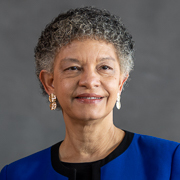
Susan M. Collins, President & Chief Executive Officer, Federal Reserve Bank of Boston
Susan M. Collins is president and CEO of the Federal Reserve Bank of Boston, which is part of the U.S. central bank. She is a participant on the Federal Open Market Committee, which sets U.S. monetary policy.
Collins oversees all of the bank’s activities – including economic research and analysis; banking supervision and financial stability efforts; community economic development activities; and a wide range of payments, technology, and finance initiatives.
Collins is a widely published international macroeconomist with a lifelong interest in policy and its impact on living standards. She has served as a provost, dean, professor, research scholar, and board member at a variety of universities and organizations, including the University of Michigan, the Brookings Institution, Georgetown and Harvard Universities.
Collins earned her doctorate in economics at the Massachusetts Institute of Technology, and her undergraduate degree at Harvard.

Tom Barkin, President & Chief Executive Officer, Federal Reserve Bank of Richmond
Tom Barkin is the president and CEO of the Federal Reserve Bank of Richmond. He has held this position since 2018.
Tom serves on the Fed’s chief monetary policy body, the Federal Open Market Committee, and is also responsible for the Richmond Fed’s bank supervision and the Federal Reserve’s technology organization. He is “on the ground” continually in the Fed’s Fifth District, which covers South Carolina, North Carolina, Virginia, D.C., West Virginia and Maryland. His engagement in the region has brought real attention to areas facing economic challenges.
Prior to joining the Richmond Fed, Tom was a senior partner and CFO at McKinsey & Company, a worldwide management consulting firm, where he also oversaw McKinsey’s offices in the southern United States.
Tom earned his bachelor’s, MBA and law degrees from Harvard University.

Swati Bhatia, Head of Retail Banking & Chief Executive Officer of Openbank in the U.S., Santander US
Swati Bhatia is Head of Retail Banking and CEO of Openbank in the United States. She is responsible for leading the U.S. Consumer & Business Banking business and all related digital transformation initiatives, with a focus on building new capabilities, simplifying existing processes, and enhancing the customer experience to become a leading national, digital bank with branches.
Prior to joining Santander US in March 2024, Swati led the Marcus business at Goldman Sachs from 2021 - 2023 and previously served as the Chief Payments Risk Officer at Stripe from 2018 - 2020, where she was instrumental in building out the company’s risk and compliance infrastructure. She also held a variety of leadership roles at PayPal and Capital One, spanning digital banking platforms and products, marketing and customer experience, governance and risk management, and operations.
Swati has more than 20 years of leadership experience in financial services with broad P&L management and functional expertise. Recognized as an industry thought leader, she serves on the Board of Accion Opportunity Fund, a 501(c)(3) nonprofit that provides small business owners in the U.S. with access to capital, networks, and coaching.
Swati earned an M.S. in Finance from Birla Institute of Technology and Science, Pilani.
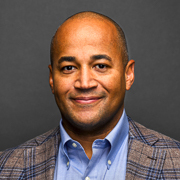
Dante Disparte, Chief Strategy Officer & Head of Global Policy and Operations, Circle
Dante leads global growth and regulatory strategy, public policy, market expansion, international operations and communications at Circle. He is a key strategic leader who is forging government relations and taking the company into new markets. He brings decades of experience working in complex global financial and risk issues and most recently served as a founder of the Diem Association.

Neil Irwin, Chief Economic Correspondent, Axios
Neil Irwin is chief economic correspondent at Axios and lead author of Axios Macro, a daily e-mail newsletter. He was previously senior economic correspondent at The New York Times. He is the author of The Alchemists: Three Central Bankers and a World on Fire, about the global financial crisis and its aftermath, a New York Times bestseller that was shortlisted for the Financial Times Business Book of the Year Award. He often analyzes economic trends on television and radio, including past appearances on the PBS Newshour, CBS This Morning, BBC America, MSNBC, CNBC, CNN, and public radio’s Marketplace. Irwin is a member of the Aspen Economic Strategy Group and holds an MBA from Columbia University, where he was a Knight-Bagehot fellow in economic and business journalism.

Amitay Kalmar, Co-founder & Chief Executive Officer, Lendbuzz
Amitay is the co-founder and CEO of Lendbuzz, a financial technology company based in Boston. Previously, he was a VP at Deutsche Bank’s Technology Investment Banking practice, leading M&A, IPOs and debt financing for tech companies. Prior to that he served as a Captain in the IDF, leading R&D teams developing digital communications systems.
Amitay received his B.Sc., Computer Science & Mathematics from Tel Aviv University, M.Sc., Computer Science from Reichman University, and M.B.A. from MIT Sloan School of Management.

Stephany Kirkpatrick, Former Chief Executive Officer, Orum.io; Product, Stripe
Stephany Kirkpatrick is the former CEO of Orum.io and works on Product at Stripe. She is also a digital executive, Certified Financial Planner™, and entrepreneur with more than two decades of experience across startups and Fortune 100 companies. Stephany founded Orum in 2019 to make instant money movement a reality. Under her leadership, Orum created breakthrough infrastructure used by banks, fintechs, and enterprises for money movement and account verification. Orum joined Stripe in 2025 to help scale the financial infrastructure of the internet. Earlier in her career, Stephany played a pivotal role at LearnVest (acquired by Northwestern Mutual), where she is the principal inventor and patent holder behind the financial-planning software that helped millions of Americans improve their financial lives.Today, Stephany sits on multiple fintech boards and advises CEOs across the financial services ecosystem.

Anna Kovner, Executive Vice President & Director of Research, Federal Reserve Bank of Richmond
Anna Kovner is the Executive Vice President and the Director of Research at the Federal Reserve Bank of Richmond. She advises the Bank's president on matters related to monetary policy and leads the Research department, which includes economic research, regional analysis, community outreach and development, publications, and economic education. Her research spans corporate finance, banking and macrofinance, with articles published in the Journal of Finance, Journal of Financial Economics, and the Review of Financial Studies, among others. Previously, she held multiple economic research leadership roles within the New York Fed’s Research and Statistics group, most recently leading work assessing systemic risk and financial stability as director of Financial Stability Policy Research. She received an A.B. in Economics from Princeton, an M.B.A. from Harvard Business School, and her Ph.D. in Business Economics from Harvard University.

Andrew W. Lo, Charles E. and Susan T. Harris Professor & Director, Laboratory for Financial Engineering, Massachusetts Institute of Technology Sloan School of Management
Andrew W. Lo is the Charles E. and Susan T. Harris Professor at the MIT Sloan School of Management, the director of MIT’s Laboratory for Financial Engineering, and a principal investigator at MIT’s Computer Science and Artificial Intelligence Lab. He received a bachelor’s in economics from Yale University and a master’s and Ph.D. in economics from Harvard University. His most recent research focuses on evolutionary models of investor behavior and financial market dynamics, new funding and payment models for “hard tech” sectors such as biotech and fusion energy, and developing cyber-risk exposure metrics using cryptographic methods such as secure multi-party computation and fully homomorphic encryption. He has published extensively and his most recent book is The Adaptive Markets Hypothesis: An Evolutionary Approach to Understanding Financial System Dynamics. He has received numerous awards including being named one of Time Magazine’s “100 most influential people in the world."

Matt Marcus, Co-founder & Chief Executive Officer, Modern Treasury
Matt Marcus is co-founder and CEO of Modern Treasury, a financial technology company. He co-founded Modern Treasury to alleviate the pain points that he experienced while building products for money movement at Kiavi (formerly LendingHome). Previously, Matt worked at First Round Capital and Ultimate Kronos Group. He graduated from Dartmouth College with a bachelor’s in computer science.

Adair Morse, William A. and Betty H. Hasler Chair in New Enterprise Development & Professor of Finance, Haas School of Business, University of California, Berkeley
Adair Morse is the William A. and Betty H. Hasler Chair in New Enterprise Development, Professor at the Haas School of Business at the University of California at Berkeley, Fellow at the Berkeley Center for Law and Business, and founding Faculty Director of the Sustainable and Impact Finance Initiative at Berkeley-Haas. Recent policy service includes serving as Deputy Assistant Secretary for Capital Access of the U.S. Department of the Treasury (2021-2022), co-founding the pandemic relief public-private partnership California Rebuilding Fund (2020), and serving on the Expert Panel for oversight of the Global Fund for the Ministry of Finance of Norway (2015-2020). She is an award-winning teacher of New Venture Finance, Impact Investing, and Sustainable Investing. She runs the Haas Impact Fund and Climate Solutions Fund investment management-as-curriculum at Berkeley. Adair’s research spans multiple areas of finance: household finance, FinTech, discrimination, climate finance, small business and venture finance, corruption, and pension management. Recent work includes papers on algorithmic discrimination, impact investment, and small business fiscal programs. She holds a Ph.D. in finance from the University of Michigan, masters degrees in statistics and agricultural economics from Purdue University, and a bachelor’s degree from Colgate University.

Karen Pennell, First Vice President & Chief Operating Officer, Federal Reserve Bank of Boston
Karen Pennell is first vice president and chief operating officer at the Federal Reserve Bank of Boston. She leads the Bank’s contributions and performance in operational, technological, financial, risk management, workforce, and support areas. She assumed the role in April 2024, as the Bank’s second-ranking officer and vice chair of the Bank's Executive Committee.
Nationally, Pennell collaborates with Federal Reserve System peers on major initiatives. She directs many national financial management activities for the System, leading its Financial Support Office. She also serves as a member of the Fed’s Conference of First Vice Presidents.
Pennell has been with the Federal Reserve since 1989, and has held numerous leadership positions during her career, particularly in financial services customer support, IT support and strategy, and technology transitions—with the Federal Reserve Bank of Kansas City as well as with national Federal Reserve functions. In her most recent role as executive vice president and chief client services officer for the Fed’s National IT function, she headed client services and focused on technology requirements for lines of business, major project and program delivery, infrastructure, and operations in support of the U.S. Treasury, as well as end user services for System employees.
Pennell holds a bachelor’s degree from Missouri State University and an MBA from Rockhurst College and has participated in certification programs in banking operations and technology at Vanderbilt University.

Manju Puri, J.B. Fuqua Professor, Fuqua School of Business, Duke University
Manju Puri is the J.B. Fuqua Professor at the Fuqua School of Business, Duke University. Prior to Joining Fuqua, she was an Associate Professor of Finance at Stanford Business School, which she joined after earning her Ph.D. in finance at New York University and MBA from the Indian Institute of Management, Ahmedabad. Puri has expertise in the field of empirical corporate finance and, in particular, financial intermediation. Her work spans the areas of commercial banks, investment banks, venture capital, entrepreneurship, behavioral finance, and fintech. Her work on banking examines both traditional forms of banking, relationship banking as well as new developments such as the rise of payment firms, Buy Now Pay Later, the use of digital footprints in credit by fintechs, and implications for financial inclusion. Her research has appeared in publications such as American Economic Review, Journal of Finance, Journal of Financial Economics, and Review of Financial Studies. She has been the recipient of the Sloan Research Fellowship as well as multiple awards from the National Science Foundation.
She also serves as President of the Western Finance Association, Chair of the Academic Female Finance Committee, Director of the American Finance Association, and was named Fellow of the Financial Management Association. She has served as the President of the Financial Intermediation Research Society and as Director of the Financial Management Association. She is a senior academic fellow at the Asia Bureau of Finance and Economic Research and a Research Associate with the National Bureau of Economic Research. Puri’s expertise extends beyond academia, she has consulted for governments, companies, and organizations in several countries.

Saurav Sharma, Fintech Vice President - Product Management, Intuit
Saurav Sharma serves as the Fintech Vice President, Product Management at Intuit. During his tenure, Saurav has been instrumental in positioning Intuit as a leader in global financial services by addressing the intricate challenges faced by consumers and businesses. His leadership drives the Fintech products, a key unit within Intuit that propels growth across consumer and business divisions by enhancing customer outcomes—ensuring greater financial benefits, reducing effort, and bolstering confidence.
With a robust background spanning over 15 years in product management and technology, Sharma's expertise covers a diverse range of platforms including e-commerce, conversational AI, automotive, fintech, risk and fraud management, and data analytics. Prior to joining Intuit, Sharma led product for Amazon’s Alexa Data Platform, where he pioneered the development of large-scale data solutions to enhance conversational AI across over 20 countries. Additionally, he held key roles at Amazon Seller Services, notably part of launching Amazon.in and expanding Amazon’s global marketplace offerings. His efforts were crucial in international selling, improving product quality, combating counterfeit issues, and advancing Amazon lending to enrich the e-commerce platform’s global product assortment. He holds a bachelor’s degree in industrial engineering and an M.B.A. with concentrations in finance and marketing.

Nick Stanescu, Executive Vice President & Chief FedNow® Executive FedNow® Service, Federal Reserve Bank of Boston
Nick Stanescu is an executive vice president at the Federal Reserve Bank of Boston and the chief executive of the FedNow® Service. He leads the FedNow group that has responsibility for the Federal Reserve System’s round-the-clock real-time payment and settlement service that supports instant payments in the United States. In this role, he has responsibility for FedNow Core delivery functions that include technology, product, and program management. Most recently, Nick served as FedNow business executive since program inception in August 2019.
Before joining the Federal Reserve Bank of Boston, Nick held several executive and senior level roles within the Federal Reserve Bank of New York, including as the Head of Payments Product Management where he had business responsibility for Fedwire Funds and National Settlement Services on behalf of the twelve Federal Reserve Banks. Collectively, these services clear and settle financial transactions exceeding $4 trillion per day and are a foundational underpinning of the United States financial system.
Nick received a bachelor’s degree from Rutgers University and an MBA from New York University, Stern School of Business.

Joanna Stavins, Principal Economist & Policy Advisor, Federal Reserve Bank of Boston
Joanna Stavins is a principal economist and policy advisor in the Federal Reserve Bank of Boston Research Department. Her research and policy work focuses on understanding how and why consumers pay the way they do, and it includes all aspects of consumer payment behavior. While she was with the Research Department's Consumer Payments Research Center, Stavins analyzed the costs of alternative payment instruments and the demand for those instruments, and she estimated social costs and benefits of various payment methods. In addition to studying payments, she has conducted econometric analyses of pricing and market structure in several industries, including personal computers and airlines.
Stavins has served as an economic advisor to payments groups within and outside the Federal Reserve System and has worked on Federal Reserve payment-related policy initiatives. She joined the Boston Fed in 1995 after working as a senior analyst at National Economic Research Associates. She earned her BA and PhD in economics from Harvard University.

Paula Tkac, Executive Vice President & Director of Research, Federal Reserve Bank of Atlanta
Paula Tkac is the Executive Vice President and Director of Research at the Federal Reserve Bank of Atlanta. The Research Division includes Research & Policy, Community and Economic Development, Regional Economic Information Network, Economic Research Survey Center, and the Payments Forum. Integrating quantitative and qualitative data for monetary policymaking and research and analysis is a focus in Atlanta, including the area of barriers to economic mobility, economic inequality and heterogeneity in labor markets and firm dynamics.
Tkac conducts research on various financial market topics including investor decision-making, the mutual fund industry, financial regulation, and the recent financial crisis and policy responses. Her research has won two William F. Sharpe Awards from the Journal of Financial and Quantitative Analysis. Tkac frequently speaks to academic and practitioner groups and has appeared on C-SPAN and as an op-ed writer in the Wall Street Journal.

Egon Zakrajšek, Executive Vice President & Director of Research, Federal Reserve Bank of Boston
Egon Zakrajšek is an Executive Vice President and Director of Research at the Federal Reserve Bank of Boston. Among Zakrajšek’s primary responsibilities is oversight of the work of the research department, including economic analysis for the monetary policy deliberations of the Bank’s president and board of directors.
Zakrajšek’s policy and research interests focus on macro-finance, banking, inflation dynamics, and monetary policy. His research has been published in a variety of academic journals, including the American Economic Review, Journal of Monetary Economics, and The Quarterly Journal of Economics.
Previously, Zakrajšek was a senior advisor in the monetary and economic department of the Bank for International Settlements in Basel, Switzerland. He began his career in the research department of the Federal Reserve Bank of New York and later joined the division of Monetary Affairs at the Board of Governors of the Federal Reserve System in Washington, D.C. He holds a Ph.D. in economics from New York University.
Contact
- General inquiries: bosTED@bos.frb.org
- Media inquiries: media@bos.frb.org
Notice
The views and opinions expressed by the speakers during this conference are solely those of the individual speakers and do not necessarily reflect the official position or endorsement of the Federal Reserve Bank of Boston, other Federal Reserve Banks, Federal Reserve System entities, or the Federal Reserve Board of Governors. The appearance of any individual at the 2026 Technology-Enabled Disruption Conference does not constitute an endorsement of their views or any entity they represent. This conference is intended solely as a forum for industry talk for informational and educational purposes. The inclusion of any specific companies, products, or services in discussions does not constitute an endorsement by the organizers or any affiliated parties. Attendees and participants are advised to perform their own independent research and due diligence before making any decisions based on the content presented.
Past Conferences
- 2024 Technology-Enabled Disruption Conference: Implications of AI, Big Data, and Remote Work | Atlanta Fed
- 2023 Technology-Enabled Disruption Conference: Uncertainty and Prospects for Disruptive Investments | Richmond Fed
- 2022 Technology-Enabled Disruption: Disruptions from the Pandemic and the Path Ahead | Atlanta Fed
- 2021 Technology-Enabled Disruption: Implications for Business, Labor Markets and Monetary Policy | Dallas Fed
- 2019 Technology-Enabled Disruption: Implications for Business, Labor Markets and Monetary Policy | Dallas Fed
- 2018 Technology-Enabled Disruption: Implications for Business, Labor Markets and Monetary Policy | Dallas Fed