‘We’re like a candy wrapper’: CEO discusses the surprising role of a product you might overlook 
Carris Reels CEO and Boston Fed council member on growth, sustainability, and a move from Mexico

Alberto Aguilar, second from the right, talking with co-workers at Carris Reels.
Federal Reserve Bank of Boston


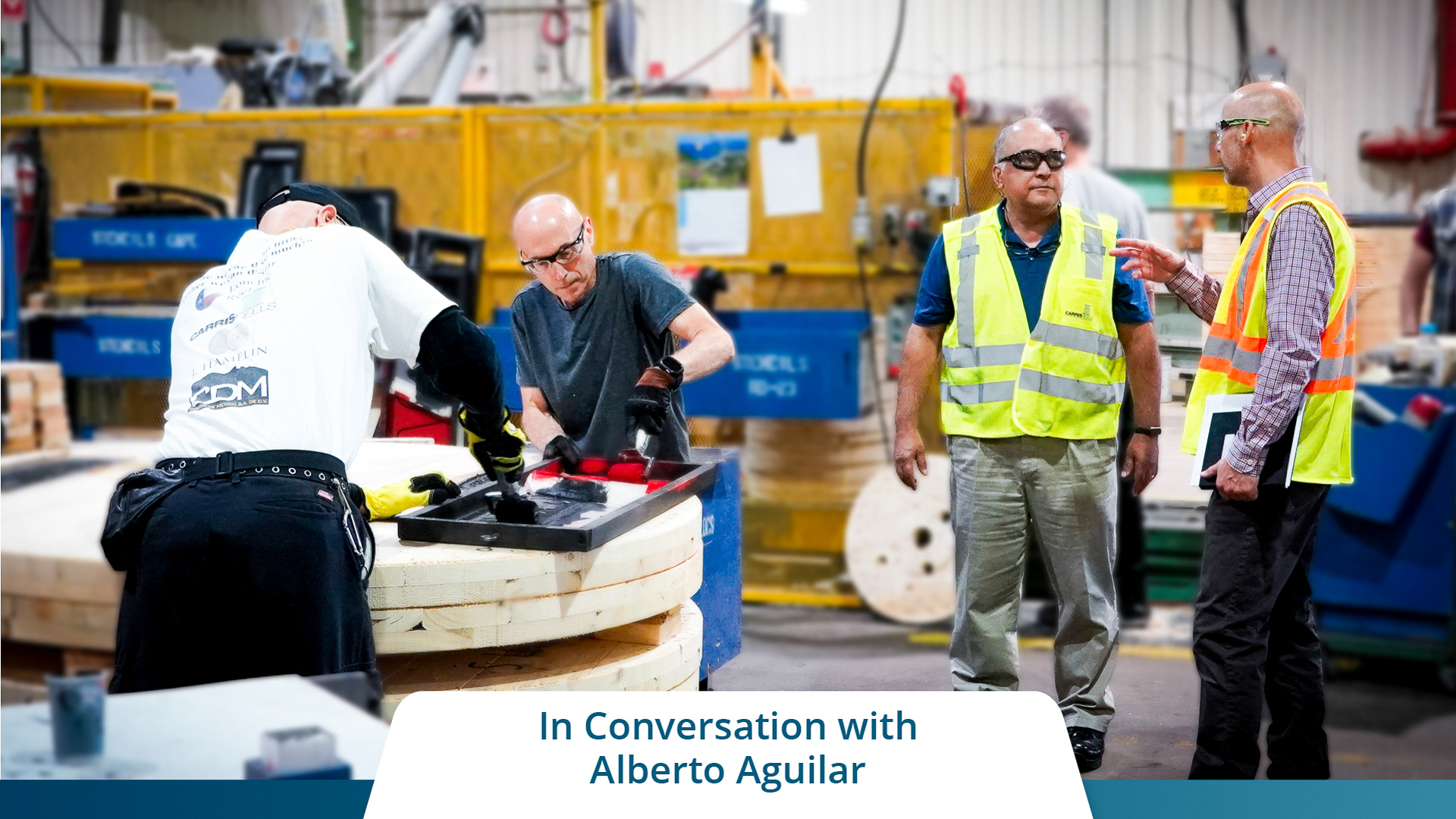
Alberto Aguilar is president and CEO of Carris Reels, an employee-owned company that manufactures reels, spools, and related packaging materials used across a wide range of industries. Born and raised in Mexico, Aguilar now lives in Vermont and serves on the New England Advisory Council, which provides the Federal Reserve Bank of Boston with on-the-ground economic insights from leaders of small and mid-sized businesses. We spoke to Aguilar about Carris Reels and how the company has navigated recent challenges.
Tell us a little bit about your company. The product is in the name, but people might not know what reels are used for.
We manufacture reels and spools for the wire and cable industry, as well as for products like rope and hose. They’re made from wood, plywood, and plastic. The cable that you connect your TV? That comes on one of our reels. When you’re driving on the highway and see powerlines, reels are what allow those cables to be installed. Reels play a silent but very important role in the industry.
In a way, we’re like a candy wrapper. What we manufacture needs to look good, function well, and protect what’s inside. In manufacturing, we’re the middle child – we sit between the company producing the linear product and the retailer or end user. People don’t always think about us, but we’re essential to the whole operation.
Carris Reels started as a small Vermont plant, but has expanded across North America, including into Mexico. What drove that decision?
Reels are bulky and need a lot of space, so closeness to our customers is important due to high freight cost. In 1999, I was hired to start a plastics manufacturing facility in Monterrey, Mexico. While it was part of Carris Reels, it was essentially a startup. I had to find the land, oversee construction, and then run the operation.
At the time, our plastics division was relatively small, and expanding made sense – particularly in Mexico, where we had a strong customer base. That facility continues to serve our customers in Mexico and South America, but not only in reels. We inject plastic parts for other industries.
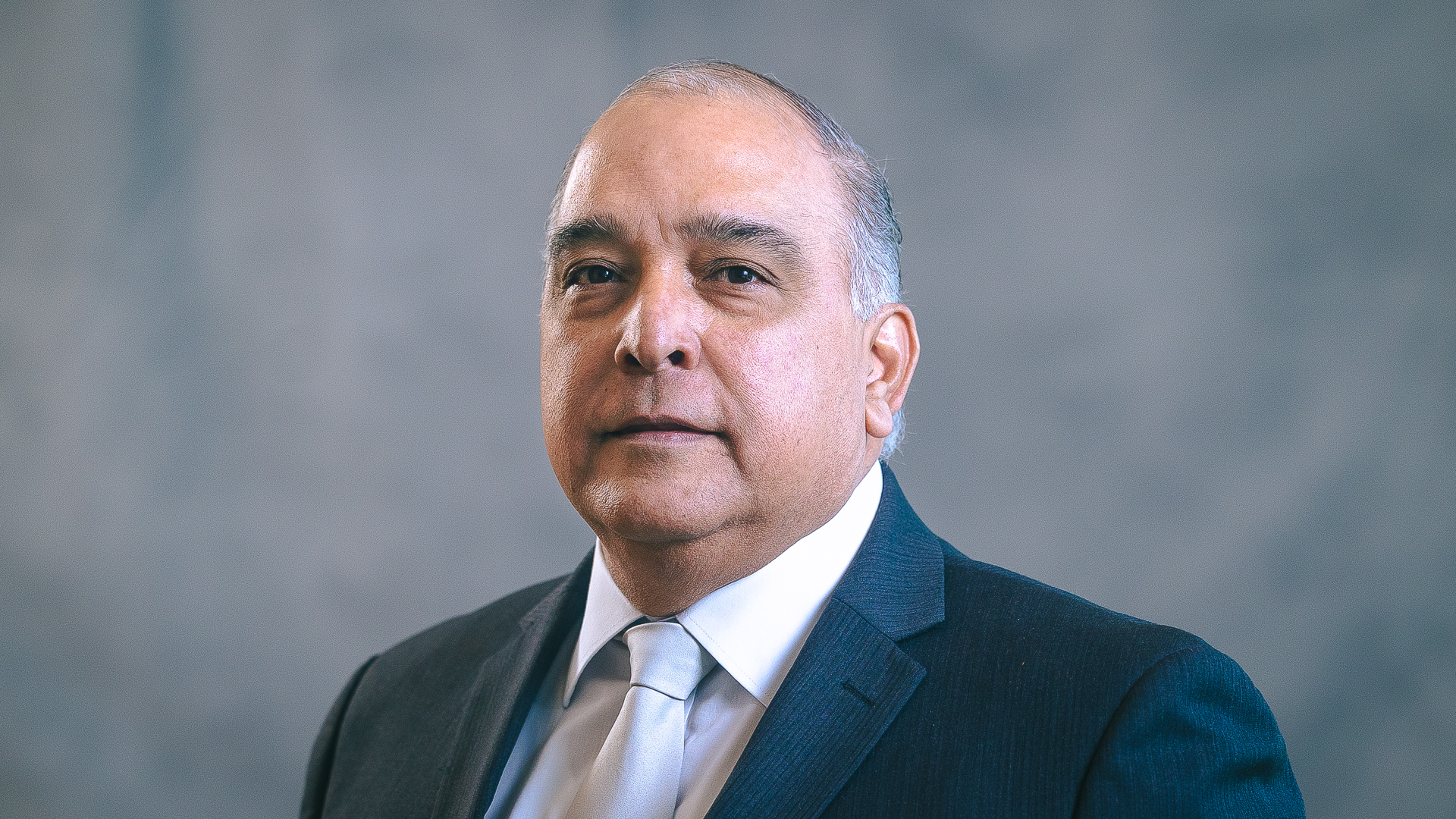
Steve Osemwenkhae/Federal Reserve Bank of Boston
Have recent tariffs and trade policy affected the business?
Yes, they’ve had an impact. But they’ve also created opportunities to strengthen relationships with U.S.-based suppliers and deepen partnerships with customers.
Because we source components from around the globe, tariffs affect everything from price to delivery timelines. For example, we invested in a piece of equipment at the end of 2024 that won’t be arriving until closer to the end of 2026. Tariffs have increased our costs, and it is not easy to pass those along. As a result, we have spent a lot of time deepening our lines of communication with our customers and being as transparent as possible.
What is driving Carris Reels’ continued growth?
I’m especially excited about our sustainability efforts. On the wood side, we recently earned the Forest Stewardship Council certification, which means we source wood from responsibly managed forests. We recycle both plastic and wood reels by the tens of thousands every month. Plus, 95% of our plastic reels are made with recycled or reprocessed plastic.
Our industry continues to grow. Despite the talk of “wireless” technology, more connectivity still requires more wire. We’ve supported wind and solar projects, and the expansion of data centers – which require a tremendous amount of cabling – has been another driver.
How have you ensured you have the workforce needed to keep growing?
Maintaining a strong workforce is critical. Carris Reels is 100% employee-owned and governed, so our employees truly have skin in the game. There’s a shared interest in building long-term value and mentoring younger talent to ensure the business continues growing for many years to come.
There are many strong competitors in our market, but we believe there's room for everyone. We'll all be here for the long run, if we do things the right way.
Can you tell us about your experience serving on the New England Advisory Council?
I have gained valuable insight into how interest rate decisions are made, and the many factors that influence them. I’ve also learned how challenging those decisions are, given the wide range of input from very different industries, geographies, and businesses of varying sizes.
I have learned a lot from my peers on the council – it’s a very impressive group of business leaders. There are always “golden nuggets” and takeaways after every meeting. My goal is to make those exchanges mutually valuable by sharing my perspective while learning from others to strengthen our collective understanding.
Media Inquiries?
Contact our media relations team. We connect journalists with Boston Fed economists, researchers, and leadership and a variety of other resources.

 About the Authors
Allison Ross is a member of the communications team at the Federal Reserve Bank of Boston.
Email: Allison.Ross@bos.frb.org
Site Topics
Keywords
- Vermont ,
- advisory councils ,
- tariffs ,
- employment ,
- New England economic conditions