Fed presidents: AI not driving surge in U.S. productivity – yet 
Boston, Richmond Fed presidents discuss inflation, jobs report at tech disruption conference

Federal Reserve Bank of Boston


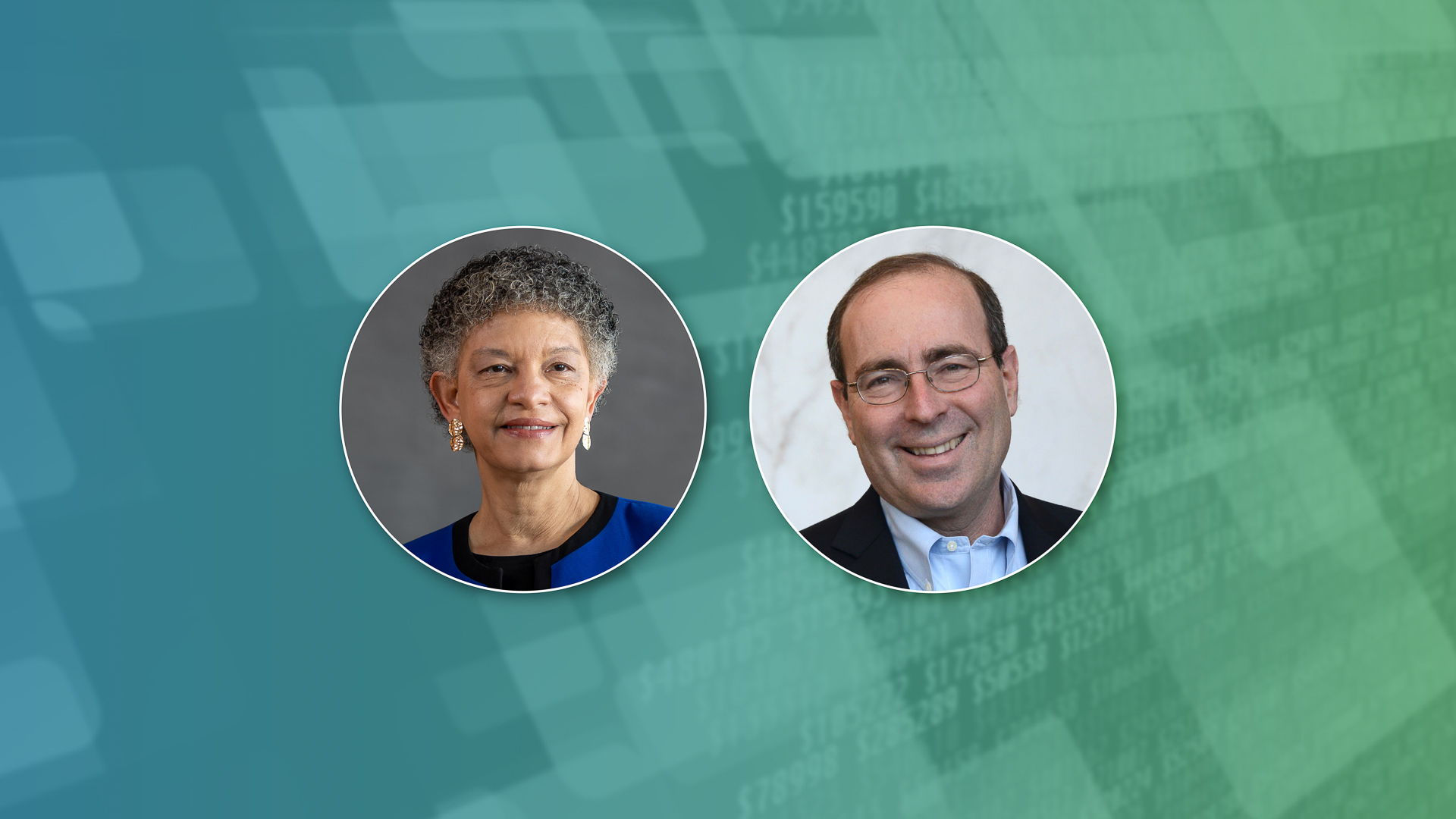
Artificial intelligence is not the driving force behind the recent surge in U.S. productivity, according to Boston Fed President Susan M. Collins and Richmond Fed President Tom Barkin.
But both see AI adoption potentially fueling future productivity gains.
Collins said she has seen an uptick in AI experimentation, although its effects may not yet be widespread. She said business leaders frequently describe to her how they’re using AI to enhance ongoing work, rather than replace staff.
“I do think it’s important … to think about how to effectively train and prepare our workforces for the changes that are coming,” she said.
The discussion between Collins and Barkin about AI’s role in the U.S. economy took place Tuesday during the 2026 Technology-Enabled Disruption Conference: Shaping the Future of Finance and Payments.
Collins and Barkin also shared their views on inflation and the labor market during a virtual panel discussion moderated by Axios Chief Economic Correspondent Neil Irwin.
The conference was organized by the Federal Reserve Banks of Boston, Atlanta, and Richmond.
Collins said gatherings like Tuesday’s align with the Federal Reserve’s mandate to promote maximum sustainable employment and price stability because they help the Fed better understand the labor market’s evolution and productivity. And when a new technology – like AI – gains traction, it’s critical that the Fed is well-informed of its potential benefits and risks, she said.
“(We’re) in relatively early days,” Collins said. “That really speaks, in my view, to the value … of coming together (and) sharing and deepening our understanding of what the opportunities and challenges are going to be.”
What’s driving productivity?
So, if it’s not AI, what is driving the recent increase in U.S. productivity?
Barkin said that many companies began investing in automation about three years ago, due to concerns about worker shortages and retirements following the COVID-19 pandemic. They also revamped their staffing models and updated their operations. Now, they’re reaping the benefits of increased productivity from these changes, he said.
“In addition, we’ve got this famously ‘low hire, low fire’ economy,” he said.
Barkin noted that low turnover enhances productivity, and companies tend to slow hiring in uncertain economic environments like the one we’re in. He added that U.S. productivity may see additional benefits from AI adoption in the future.
Collins: Holding interest rates in current range likely appropriate “for some time”
The discussion also covered the U.S. labor market, which Collins described as “complicated.” She noted that the recently revised hiring numbers for 2025 were lower than previously thought, with only 15,000 jobs added to the economy each month on average.
“It’s harder to find a job. … That is real,” she said. “It might reflect uncertainty, (or) it might reflect productivity … enabling firms to meet demand without needing to hire additional workers.”
She described the January 2026 jobs report as promising because it indicated slightly more stability. At the same time, she added that it’s critical to consider a wide range of data – both statistics and on-the-ground reports from business leaders – and avoid overreliance on specific datapoints.
Collins said that given concerns about persistent inflation, it will likely be appropriate to hold interest rates in the current range “for some time.”
“Again, there are different scenarios that are possible, and it’ll be important to continue to take that really patient, deliberate approach to making (monetary) policy decisions,” she said.
Barkin noted that inflation is above the Fed’s target of 2%. He said consumers seem to be pushing back against rising prices, and that’s led to companies in certain industries to feel more constrained about price increases.
Barkin added that public inflation data itself often impacts whether businesses decide to raise their prices or not.
“That’s a reference number that’s out there for every pricing decision,” he said. “Until you actually bring the inflation rate down, you’re going to see individual companies feeling like they need to push further.”
Learn more about the 2026 Technology-Enabled Disruption Conference on bostonfed.org.
Media Inquiries?
Contact our media relations team. We connect journalists with Boston Fed economists, researchers, and leadership and a variety of other resources.

 About the Authors
Amanda Blanco is a member of the communications team at the Federal Reserve Bank of Boston.
Email: Amanda.Blanco@bos.frb.org
Site Topics
Keywords
- inflation ,
- labor market conditions ,
- AI